Why Are My Pears So Hard? How to Ripen Them Fast
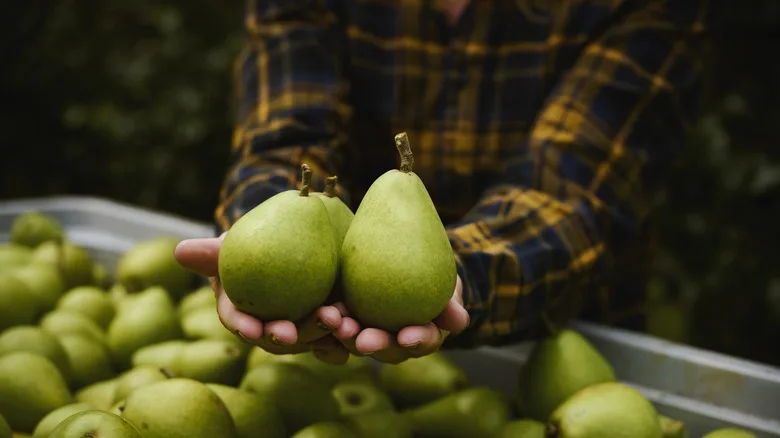
Image source: Bing (Web (fair-use with source credit))
If you're wondering why are my pears so hard, you're definitely not alone. Most pears sold in grocery stores are picked mature but completely unripe. They arrive rock solid because commercial cold storage pauses the ripening process for shipping.
European pears actually require a specific chilling period before they can soften properly. According to postharvest research from Oregon State University Extension, winter varieties like Bosc need up to six weeks of cold conditioning at 30 to 32 degrees Fahrenheit. Let's figure out exactly what your fruit needs right now.
Quick Answer
🌱 Master Gardener Quick Answer
Pears are hard because they were picked unripe. European pears need cold storage first. Asian pears are meant to stay crisp.
Without proper chilling, European pears never soften. They just rot from the inside out.
Why Your Pears Are Still Rock Hard (The Quick Answer)
Your pears are hard because they haven't completed their required ripening steps yet. Unlike apples or peaches, European pears (Pyrus communis) are climacteric fruit. This means they continue to ripen after being harvested.
But there is a catch. They don't just soften by sitting on your kitchen counter indefinitely.
If you leave a freshly bought pear on the counter without chilling it first, it often fails to ripen. Instead of turning buttery and sweet, the flesh breaks down unevenly. You end up with a mealy texture or internal browning near the core.
The starch never fully converts to sugar.
Supermarkets sell pears this way intentionally. Hard fruit survives transport without bruising. As of 2026, commercial supply chains still rely heavily on controlled atmosphere storage to pause ripening.
The store essentially hands you a paused biological clock. You have to restart it yourself.
Restarting that clock requires understanding your specific variety. A Bartlett pear behaves very differently than an Anjou or a Bosc. If you treat them all the same, you'll likely ruin half of them.
The solution always starts with identifying exactly what you brought home.
Once you know the variety, you know the rules. Summer pears need very little intervention. Winter pears demand patience and precise temperatures.
We'll walk through those exact conditions next so you stop guessing.
The Decision Tree: Identifying Your Pear and Its Problem
Figuring out why your fruit won't soften requires answering two quick questions. First, what type of pear do you have? Second, has it been properly chilled?
Your answers dictate everything that happens next.
If you skip this step, you might spend days waiting for a pear to soften that was never supposed to. Or you might throw away perfectly good fruit because you missed the chilling requirement. Let's break down the decision path.
European vs. Asian Pears: Are You Waiting for the Wrong Texture?
Asian pears (Pyrus pyrifolia) are naturally hard and crisp when ripe. If you bought one expecting it to turn soft like a Bartlett, you'll be waiting forever. They belong to a completely different botanical category regarding texture.
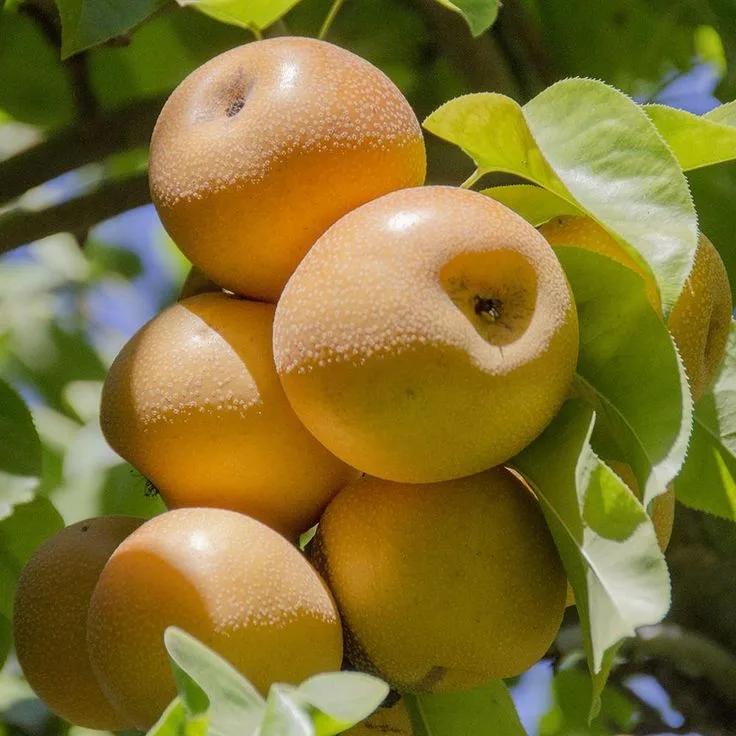
Image source: Bing (Web (fair-use with source credit))
Asian pears ripen fully on the tree. You buy them ready to eat. Their flesh is gritty, juicy, and apple-like.
Varieties include Hosui, Kosui, Shinseiki, and Chojuro. They do not produce the melting texture of European types.
European pears, on the other hand, must be picked before they are fully ripe. If left on the tree too long, they rot from the center outward. That's why they reach you feeling like baseballs.
They genuinely need your help to finish the job.
Here is a quick way to tell them apart if the sticker is gone:
| Feature | European Pears | Asian Pears |
|---|---|---|
| Shape | Classic teardrop or bell | Round, apple-like |
| Skin | Thin, sometimes russeted | Thick, often speckled |
| Ripe Texture | Soft, buttery, melting | Crisp, crunchy, juicy |
| Ripening Location | Off the tree | On the tree |
| Common Varieties | Bartlett, Anjou, Bosc | Hosui, Kosui, 20th Century |
If your pear is round and feels heavy for its size, eat it now. It's already ripe. If it's shaped like a traditional pear and feels rock solid, move to the next step.
Summer vs. Winter Varieties: The Cold Conditioning Requirement
Now we split European pears into two groups. Summer pears and winter pears. This distinction determines how much cold conditioning they need before they will soften at room temperature.
Bartlett is the classic summer pear. It requires the shortest chilling time. Usually, two to seven days at 30 to 32 degrees Fahrenheit is enough.
Sometimes the supermarket's refrigerated truck ride provided this already.
Winter pears like Anjou, Bosc, Comice, and Winter Nelis are stubborn. They require two to six weeks of continuous cold storage. If you buy these straight from a farm stand in October, they won't ripen on your counter.
They'll just shrivel.
If you suspect your winter pears weren't chilled long enough, put them in your refrigerator immediately. Leave them there for at least two weeks. Don't try to rush this phase.
The cold triggers the internal enzymes responsible for breaking down pectin in the cell walls.
Without that enzymatic trigger, no amount of paper bags or bananas will save them. The biology simply won't activate. Once the chilling requirement is met, you're ready to start the actual ripening workflow.
How to Ripen Hard European Pears (Step-by-Step Workflow)
Ripening pears properly is a three-phase process. You manage the temperature, trap the ethylene gas, and monitor the physical changes daily. Skipping a phase usually results in ruined fruit.
Ethylene is a natural plant hormone that drives the ripening process. Pears produce it themselves once their chilling requirement is satisfied. Our goal here is to concentrate that gas around the fruit while maintaining the right ambient temperature.
Follow this exact sequence for the best results. Don't jump ahead to the paper bag method if the fruit hasn't been chilled. You'll only accelerate spoilage rather than true ripening.
Phase 1: Chilling Mature-Green Pears in the Fridge
Place your firm pears in the crisper drawer of your refrigerator. Set the temperature as close to 30 to 32 degrees Fahrenheit as possible. Keep them away from strong-smelling foods since pears absorb odors easily.
Leave summer varieties like Bartlett here for about five days. Leave winter varieties like Bosc or Anjou here for two to four weeks. If you're unsure when they were harvested, aim for the longer end of the spectrum.
Do not store them in sealed plastic bags during this phase. Pears respire constantly. Trapped moisture inside plastic encourages mold growth rapidly.
Leave them loose or place them in perforated produce bags.
Once the chilling period ends, remove only the pears you plan to eat within the week. Leave the rest in the fridge. Cold storage keeps the remaining fruit paused until you need them.
Phase 2: Counter Ripening, Paper Bags, and Ethylene Tricks
Move your chilled pears to a spot on the counter between 65 and 75 degrees Fahrenheit. Direct sunlight will cook them unevenly, so pick a shaded area. This temperature range optimizes the starch-to-sugar conversion.
For faster results, place the pears inside a brown paper bag. Fold the top shut loosely. The paper traps the ethylene gas the fruit emits while still allowing enough airflow to prevent condensation.
Never use sealed plastic bags for this step.
You can speed things up further by adding a companion fruit. A ripe banana or an apple produces high levels of ethylene. Toss one into the paper bag with your pears.
This increases the gas concentration significantly.
Check the bag every single day. Remove any fruit showing signs of mold or excessive softness immediately. One bad pear will quickly spoil the rest in a confined space.
Expect this phase to take three to seven days depending on the variety.
Phase 3: The "Check the Neck" Test for Perfect Softness
Don't squeeze the body of the pear to check for ripeness. The flesh bruises incredibly easily. Squeezing the middle leaves brown spots underneath the skin that ruin the texture.
Instead, use the standard industry method recommended by growers and organizations like USA Pears. Apply gentle pressure with your thumb right at the base of the stem. This area is called the neck.
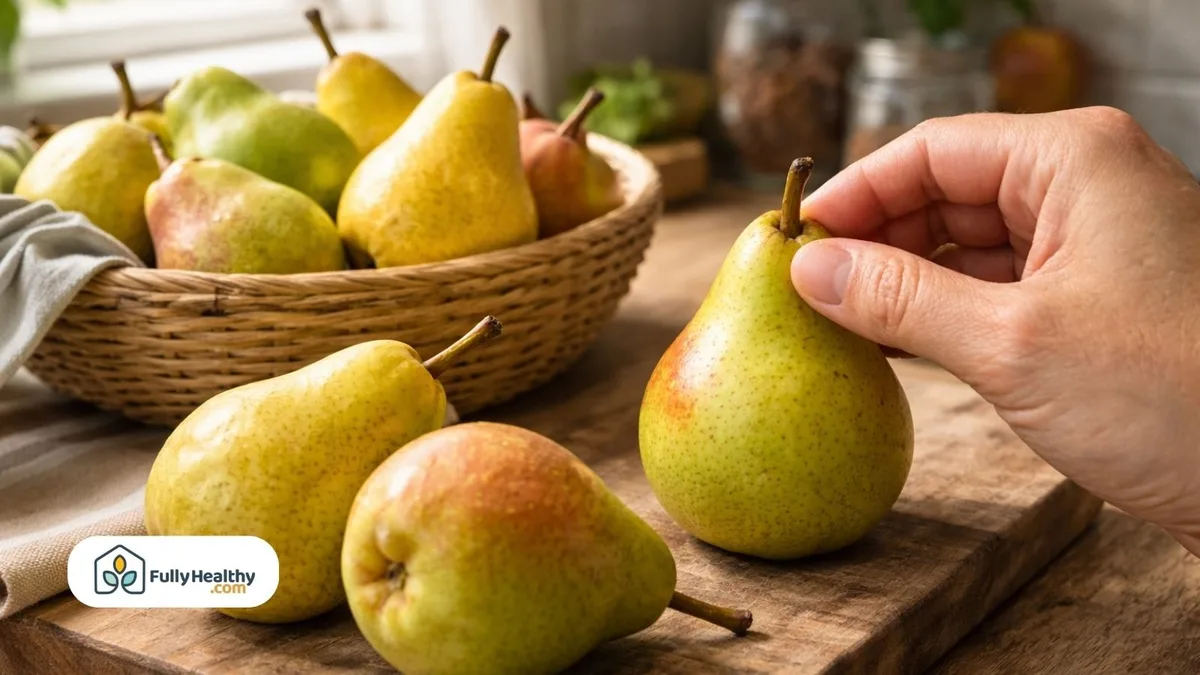
Image source: Bing (Web (fair-use with source credit))
If the neck yields slightly to your touch, the pear is ripe. It should feel similar to pressing the fleshy part of your palm near your thumb. If it still feels rigid, return it to the paper bag for another day.
Smell the stem area too. A ripe European pear develops a distinct floral, sweet aroma. If it smells like nothing, it needs more time.
If it smells fermented or alcoholic, you waited too long and it's spoiling.
Once a pear passes the neck test, eat it immediately or move it back to the refrigerator. The fridge will hold a perfectly ripe pear for about two days before it overripens. Timing is everything here.
Common Mistakes That Keep Pears Hard or Ruin Them Entirely
People make the same few errors repeatedly when trying to soften pears. Understanding these mistakes saves you from throwing away expensive fruit. Most failures come down to impatience or misunderstanding the biology.
Leaving unchilled winter pears on the counter is the biggest mistake. They will sit there for weeks. Eventually, the skin wrinkles and the flesh turns spongy.
They never achieve that buttery texture because the cold trigger never happened.
Another common error is picking backyard pears too early. Pears must reach physiological maturity on the tree before harvest. If you pick them when they are too small or immature, they will never ripen off the tree.
They simply dry out.
Harvest mature-green pears when they snap cleanly from the branch with a slight upward twist. If you have to pull hard, they aren't ready. Check the seeds inside a test fruit.
Mature seeds are dark brown, not white.
Using plastic bags instead of paper bags causes rapid failure. Plastic traps moisture alongside ethylene. High humidity combined with room temperature creates the perfect environment for fungal growth.
Your pears will rot before they ripen.
Finally, confusing color change across varieties trips people up. Bartlett pears shift from green to bright yellow when ripe. Anjou and Bosc pears barely change color at all.
Waiting for a Bosc pear to turn yellow means waiting until it rots. Rely on the neck test, not your eyes.
Ignoring these boundaries guarantees disappointment. Respect the chilling times and use breathable materials. Your success rate will improve drastically.
Real Scenarios: Grocery Store Pears, Backyard Harvests, and Baking Needs
Different situations require slightly different approaches. Let's look at three common scenarios you probably recognize. Each one has a specific workflow based on where the fruit came from and what you need it for.
If you just bought hard pears from a major supermarket, assume they've had some chilling during transit. Commercial logistics networks keep produce near 32 degrees Fahrenheit for days. Put them in a paper bag with a banana immediately.
They usually soften within four to six days.
Backyard harvests are trickier. If you picked your own European pears this autumn, you control the entire timeline. Place them in your refrigerator's crisper drawer right after harvesting.
Start pulling them out for counter ripening only when you want to eat them. This extends your harvest window by months.
Sometimes you actually want hard pears. Baking recipes like poached pears or pear tarts require firm flesh. If you use fully ripe fruit for these dishes, it collapses into mush during cooking.
Buy firm Anjou or Bosc pears. Skip the paper bag entirely. Peel and slice them immediately while the cellular structure is still tight.
Aggregate user reviews of baking forums consistently highlight this point. Home bakers frequently complain about soggy tarts because they used ripe fruit. Firmness is a feature, not a flaw, when heat is involved.
Match the texture to your final goal.
Frequently Asked Questions
Why won't my grocery store pears soften on the counter?
Supermarket pears are kept in commercial cold storage to pause ripening during shipping. If they didn't get enough chilling time, they won't soften properly at room temperature. Put them back in your fridge for a week.
Then try the paper bag method again.
Can you eat hard European pears safely?
You can eat firm European pears without getting sick, but the texture is unpleasant. The flesh feels gritty because the stone cells haven't broken down yet. They also lack sweetness since the starch hasn't converted into sugar.
It's much better to wait for proper ripening.
How long does it take for a Bartlett pear to ripen?
Bartlett pears usually take three to five days on the counter after proper chilling. Placing them in a brown paper bag with a ripe banana speeds this up significantly. Check the neck daily using gentle thumb pressure.
Once it yields slightly, the fruit is ready.
Do Asian pears ever get soft like regular pears?
Asian pears are meant to stay crisp and crunchy permanently. They ripen fully on the tree before harvest, unlike European varieties. If you wait for an Asian pear to turn soft, it is actually rotting.
Eat them while they feel firm and heavy.
What does it mean if my pear smells like alcohol?
A fermented or alcoholic smell means the pear has overripened and started spoiling. The natural sugars have begun converting into ethanol through anaerobic fermentation. Don't eat fruit that smells fizzy or strongly of alcohol.
Compost it and check your remaining pears sooner next time.
🥕 Horticulturist Recommended: Organic Vegetable Nutrition & Care
To eliminate foliage fungal diseases and boost bountiful vegetable yields naturally, our test gardens recommend organic OMRI-listed soil nutrition and gentle drip hydration:
- OMRI-Listed Organic Plant Food & Vegetable Fertilizer:Check Organic Vegetable Fertilizers on Amazon →
- Heavy-Duty Garden Soaker Hose & Drip Irrigation Kit:Check Garden Soaker Hoses on Amazon →
*FTC Disclosure: As an Amazon Associate, Home Gardening Blog earns from qualifying purchases. Learn more about our hands-on garden testing methodology.*
🌱 Related Vegetable, Fruit & Herb Care Guides:

Similar Posts