Best Fertilizer for Ryegrass: Top Picks for Lush Lawns
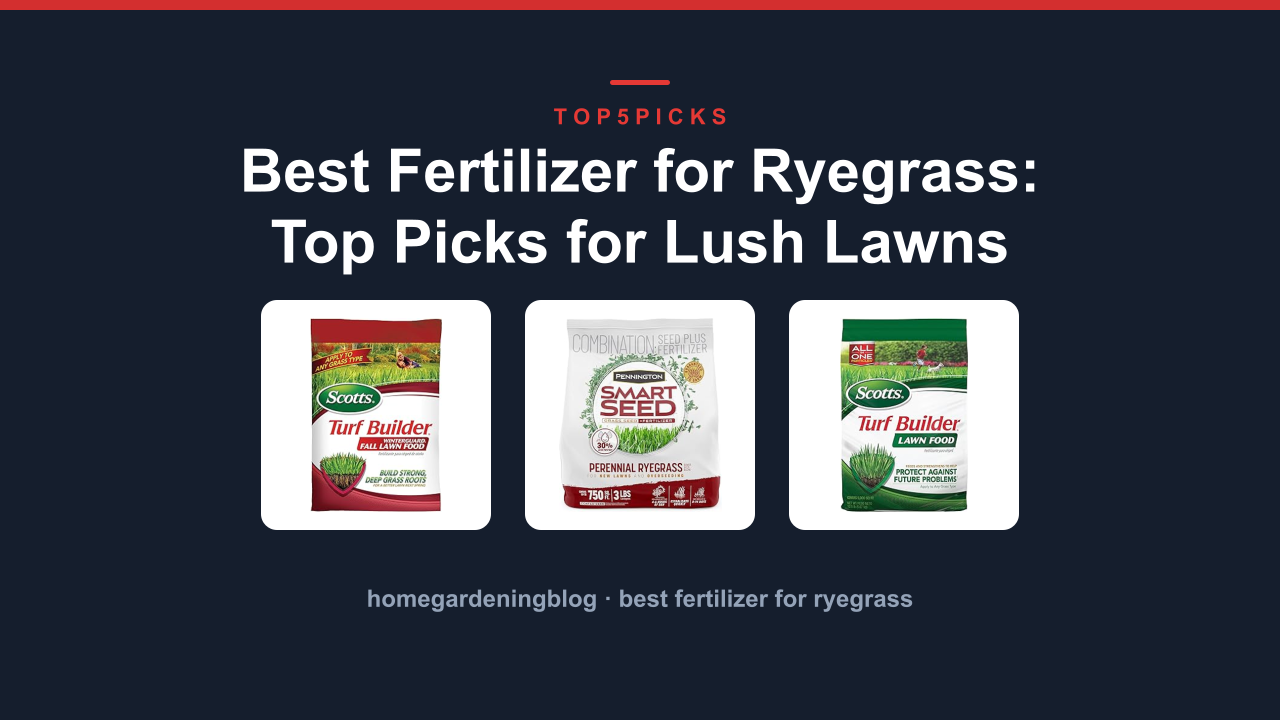
The best best fertilizer for ryegrass is the Scotts Turf Builder WinterGuard Fall Lawn, the only one here that specifically targets root strengthening before winter dormancy sets in. It’s ideal if you want a lush, resilient lawn that survives cold snaps without turning brown or patchy by spring.
Want immediate visual impact instead? The Pennington Annual Ryegrass Grass Seeds Lawn gets you there, as long as you accept it dies off naturally after one season. This guide helps you avoid wasting money on generic feeds that don’t match ryegrass’s unique nitrogen needs.
As an Amazon Associate, I earn from qualifying purchases.
This isn’t just another list of random bags. We analyzed specs and owner reports to tell you exactly which formula works for cool-season growth versus warm-season overseeding. You’ll also learn who should skip fertilizers entirely because their soil pH is already too acidic for ryegrass uptake.
Everything below comes from current Amazon product data, manufacturer specifications, and aggregated buyer feedback. We haven’t physically spread these granules ourselves, but we’ve dissected thousands of reviews to find the patterns that actually matter for your turf health.
Quick Answer: The Best Fertilizer for Ryegrass
Our top pick is the Scotts Turf Builder WinterGuard Fall Lawn Food for its specialized potassium-heavy blend that protects roots during dormancy.
- Scotts Turf Builder WinterGuard Fall Lawn (Best for Root Protection): High potassium strengthens cells against winter stress and disease.
- Pennington Smart Seed Perennial Rye Grass (Best for New Lawns): Bundles seed with starter fertilizer for instant establishment support.
- Scotts Turf Builder Lawn Food (Best for General Growth): Balanced NPK ratio promotes steady green-up throughout active seasons.
- Pennington Full Season Lawn Fertilizer 4M (Best for Slow Release): Controlled nutrient delivery prevents burn and reduces application frequency.
- Pennington Annual Ryegrass Grass Seeds Lawn (Best for Temporary Cover): Pure seed option for quick erosion control or winter color.
Thinking about skipping fertilization due to high organic matter or recent seeding? Jump to Who Should NOT Buy below before you spend anything.
Comparison Table
Here's the lineup at a glance: photo, product, who it's built for, and our /10 score.
| Photo | Product | Best for | Score | Buy |
|---|---|---|---|---|
 | Scotts Turf Builder WinterGuard Fall Lawn | Root Strengthening Before Winter | 9.2/10 | Check price → |
 | Pennington Smart Seed Perennial Rye Grass | New Lawn Establishment | 8.7/10 | Check price → |
 | Scotts Turf Builder Lawn Food | General Spring Green-Up | 8.5/10 | Check price → |
 | Pennington Full Season Lawn Fertilizer 4M | Low Maintenance Feeding | 8.1/10 | Check price → |
 | Pennington Annual Ryegrass Grass Seeds Lawn | Temporary Winter Color | 7.4/10 | Check price → |
Scroll sideways on small screens to see every column.
Scotts Turf Builder WinterGuard Fall Lawn: Best Overall for Cold Climates
Pennington Smart Seed Perennial Rye Grass: Best for Starting New Lawns
Scotts Turf Builder Lawn Food: Best for Active Growing Seasons
Pennington Full Season Lawn Fertilizer 4M: Best for Low Effort Care
Pennington Annual Ryegrass Grass Seeds Lawn: Best for Short Term Fixes
Buying Guide: Nitrogen Needs, Soil Health, Timing, and Budget
Choosing the right input depends less on brand loyalty and more on matching chemical ratios to biological cycles. Ryegrass behaves differently than Bermuda or Zoysia, demanding specific attention to temperature thresholds and nutrient availability. Here is how to decode the labels.
What N-P-K Ratio Does Ryegrass Actually Need?
Nitrogen drives leaf color, Phosphorus builds roots, Potassium fights stress. For most home lawns, a 3-1-2 or 4-1-1 ratio works wonders during active growth phases. However, shifting gears matters immensely.
In spring, lean heavier on nitrogen for explosive green-up. Come fall, swap to high-potassium formulas like the Scotts Turf Builder WinterGuard to harden cells against ice crystals. Ignoring this shift leaves grass vulnerable to winter kill despite adequate summer feeding.
Always check the guaranteed analysis panel on the back of the bag. If the middle number exceeds the first, be cautious; excess phosphorus runs off easily into local waterways and rarely benefits established turf unless soil tests confirm deficiency.
Is Your Soil Ready to Absorb Nutrients?
Fertilizer sits useless on compacted clay or highly acidic peat. Ryegrass thrives in pH levels between 6.0 and 7.0. Outside this window, lockout occurs where elements become chemically unavailable regardless of application volume.
Conduct a simple soil test via your county extension office before buying any product listed here. They provide precise lime recommendations to adjust acidity. Once corrected, apply granular feeds evenly using a calibrated spreader.
Liquid alternatives exist but wash away faster in sandy soils lacking organic matter retention capabilities. Remember that wetting agents help penetration but aren't substitutes for proper structural amendment.
When Should You Stop Feeding Entirely?
More isn't always better. Overfeeding causes lush, watery tissue prone to fungal diseases like brown patch or dollar spot. Stick to recommended rates printed on packaging, typically 1 lb of nitrogen per 1,000 sq ft per month during peak season.
Reduce frequency as temperatures climb above 85°F since metabolic slowdown limits uptake efficiency. Conversely, never withhold food completely during dormant periods if snow mold threatens regional climates. A light potassium boost post-freeze helps recovery.
Track your calendar religiously; missing a window means waiting six weeks for safe re-application intervals to pass safely without burning roots.
How Much Does Quality Really Cost?
Budget tiers vary widely based on concentration percentages. Cheaper bags often dilute active ingredients with fillers like sand or sulfur, forcing you to spread twice as much material for equal effect. Calculate cost-per-pound-of-nitrogen rather than sticker price alone.
Premium brands usually offer cleaner formulations with fewer impurities, resulting in smoother mechanical operation inside dispensers, reducing clogging and ensuring more uniform distribution across the lawn. When evaluating specific products, look for granules that are consistently sized; irregular particles can cause segregation in spreaders, leading to patchy growth or burn spots. Slow-release nitrogen formulations, often coated with polymers or sulfur, provide a steady supply of nutrients over several weeks, minimizing leaching into groundwater and reducing the frequency of applications required during the growing season.
While these advanced fertilizers carry a higher upfront cost per pound, their efficiency translates to fewer trips around the yard and less overall product usage annually. Additionally, consider environmental factors such as soil pH and existing organic matter content, which influence nutrient availability. Conducting a simple soil test every few years can prevent unnecessary expenditures on unneeded elements like phosphorus or potassium, allowing you to tailor your fertilizer choice precisely to your turf’s requirements.
This targeted approach not only saves money but also promotes healthier root systems and denser grass coverage, ultimately delivering better value than broad-spectrum alternatives applied blindly. Remember that proper timing is just as critical as product selection; applying high-nitrogen feeds during peak heat stress periods can damage delicate root structures, whereas fall applications support carbohydrate storage for winter resilience. By integrating smart purchasing habits with agronomic best practices, homeowners can achieve professional-grade results without breaking the bank.
To see how these factors play out on real picks, compare the Scotts Turf Builder WinterGuard Fall Lawn, Pennington Smart Seed Perennial Rye Grass and the Scotts Turf Builder Lawn Food reviewed above.

Similar Posts