Why Banana Tree Leaves Get Brown Spots & How to Fix Them
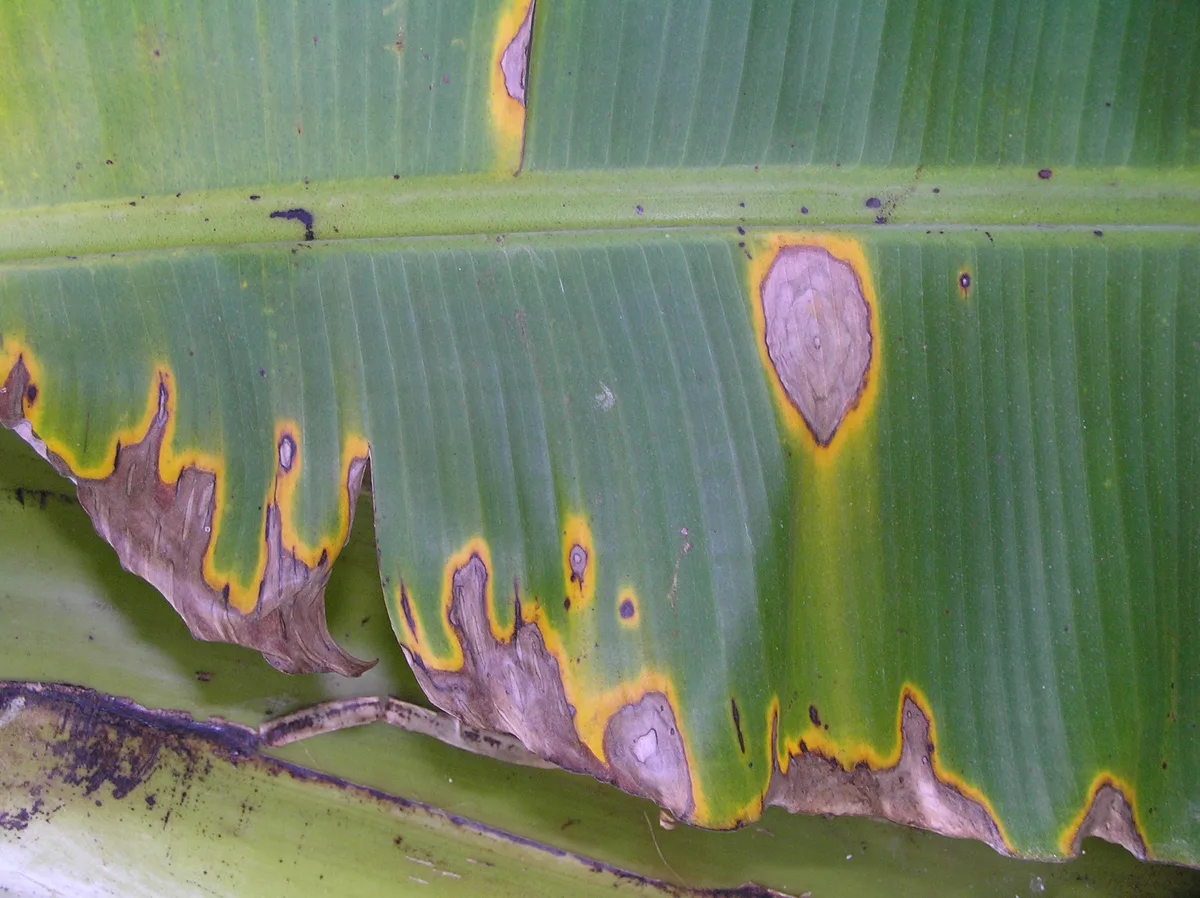
Seeing banana tree leaves brown spots usually means your plant is stressed by disease or poor growing conditions. The exact cause depends on the shape, color, and location of the damage. You need to identify the specific symptom pattern before applying any treatment.
In our research across university extension databases, optimal banana growth requires 50% relative humidity minimum. Temperatures between 78°F and 86°F drive rapid fungal spore germination if moisture lingers on the foliage. Let's walk through the diagnostic process so you can treat the right problem.
Image source: Bing (Web (fair-use with source credit))
Quick Answer
Banana tree leaves brown spots signal disease or environmental stress. Fungal infections create dry spots with yellow rings. Bacterial issues cause wet streaks along leaf veins.
Nutrient problems turn leaf edges crispy and brown. Check the spot texture first to diagnose correctly.
Why Your Banana Leaves Are Spotting (And How to Triage It Fast)
Brown spots on banana leaves are a symptom rather than a single disease. Your triage process starts with a close visual inspection of the damaged tissue. You must determine if the issue is biotic or abiotic before taking action.
Biotic problems involve living pathogens like fungi or bacteria. Abiotic problems stem from environmental stress like drought or nutrient starvation. Mixing these up leads to wasted time and dead plants.
Applying fungicide to a potassium deficiency will not fix anything.
Grab a magnifying glass and look at the affected leaf blade. Note the exact location of the damage on the plant. Older basal leaves show different problems than emerging spear leaves.
This distinction matters for accurate diagnosis.
Fungal spores spread rapidly in warm, humid climates. As of 2026, Black Sigatoka remains the most destructive foliar disease globally per Promusa. It attacks younger leaves faster than older Yellow Sigatoka strains.
Catching it early saves your photosynthetic area.
Your goal is to route the symptoms into the correct diagnostic branch. We use three main variables to do this. Those variables are lesion texture, color pattern, and leaf position.
Once you have those answers, the treatment path becomes clear.
The Visual Diagnostic: Matching Brown Spots to the Right Problem
You need to match what you see to the specific pathogen or stressor. Use this decision tree to route your symptoms correctly. Look closely at the center color, border shape, and moisture level.
These traits separate harmless sunburn from devastating bacterial wilt.
Sigatoka (Fungal): Yellow Halos and Dry Lesions
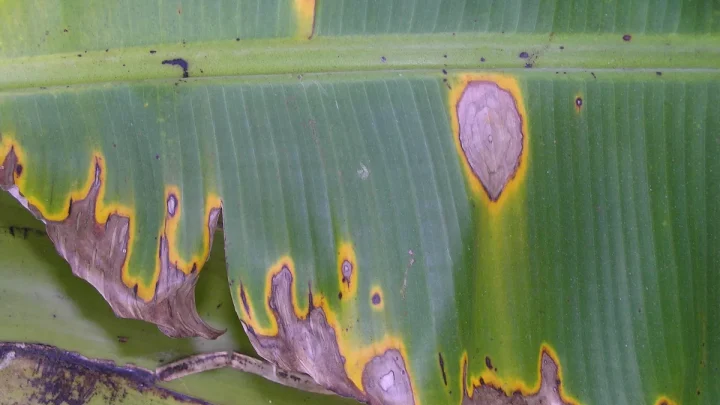
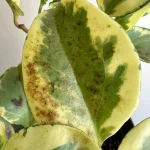
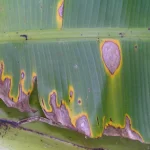
Sigatoka disease starts as tiny rust-colored freckles on older leaves. These spots expand into elongated streaks with distinct yellow halos. The center of the lesion eventually turns dark brown or black.
The tissue feels completely dry and papery to the touch.
Yellow Sigatoka is caused by Pseudocercospora musae. Black Sigatoka is caused by Pseudocercospora fijiensis and acts much more aggressively. Both thrive when rain leaves moisture sitting on the leaf surface.
Wind drives the spores from infected debris onto healthy foliage.
If you see defined spots with bright chlorotic rings, you have Sigatoka. The lesions track randomly across the leaf blade. They do not follow the lateral veins strictly.
This random scattering separates fungus from bacterial infections.
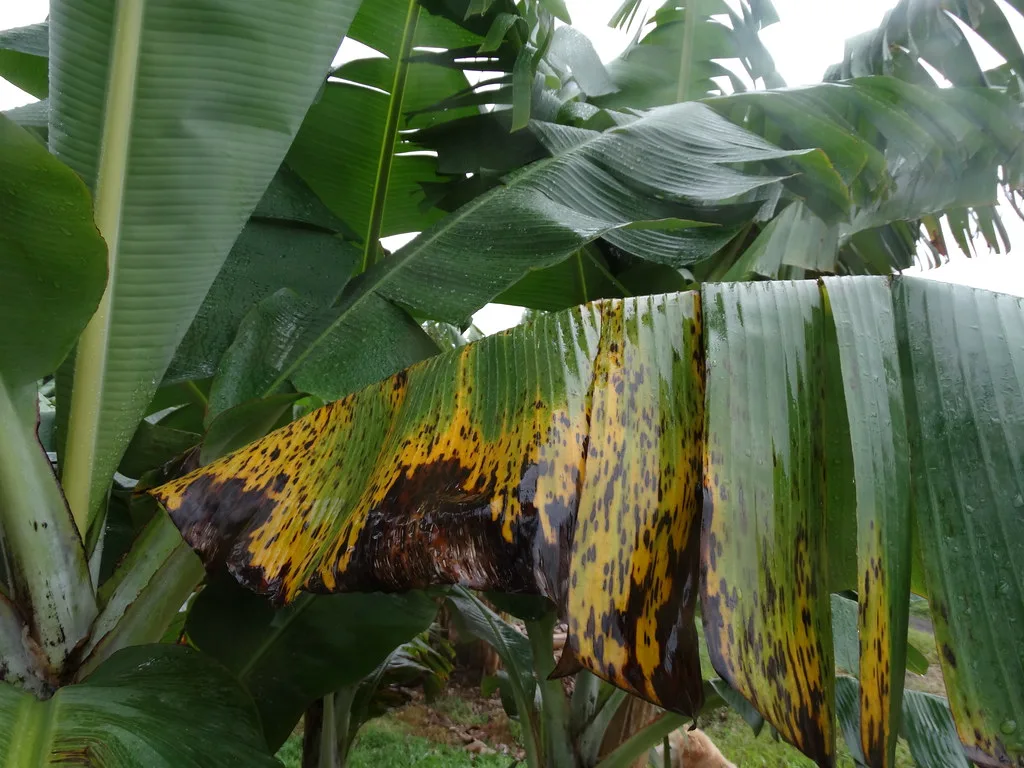
Image source: Bing (Web (fair-use with source credit))
Bacterial Wilt (Moko or BXW): Water-Soaked Streaks and Vascular Rot
Bacterial wilt looks entirely different from fungal spotting. The initial lesions appear greasy, translucent, and water-soaked. They quickly turn brown but retain a mushy texture for days.
These streaks follow the leaf veins tightly rather than scattering randomly.
Moko disease comes from Ralstonia solanacearum race 2. Xanthomonas wilt, often called BXW, comes from Xanthomonas vasicola. Both destroy the vascular system inside the pseudostem.
If you cut the trunk open, you will see dark brown internal rot.
If your spots feel wet and track along the veins, suspect bacteria immediately. Stop pruning with your current tools right away. Unsterilized machetes spread Moko disease through an entire grove in hours.
Quarantine protocols require destroying infected mats to save neighboring plants.
Abiotic Stress: Crispy Margins, Sunscald, and Potassium Starvation
Not every brown mark involves a pathogen. Environmental stress causes uniform damage patterns across the foliage. Potassium deficiency triggers marginal scorching where the outer edges turn brown first.
The tissue gets crispy and tears easily in the wind.
Potassium regulates water movement through stomata in the leaf blade. Without enough potash, the plant cannot manage transpiration rates. The oldest leaves sacrifice themselves to feed the new growth.
A soil test confirms low potassium levels quickly.
Sunscald creates large, bleached tan patches on sun-facing surfaces. This happens frequently when indoor dwarf Cavendish plants move outside abruptly. The UV radiation literally cooks the unadapted cellular tissue.
Hardening off prevents this shock entirely.
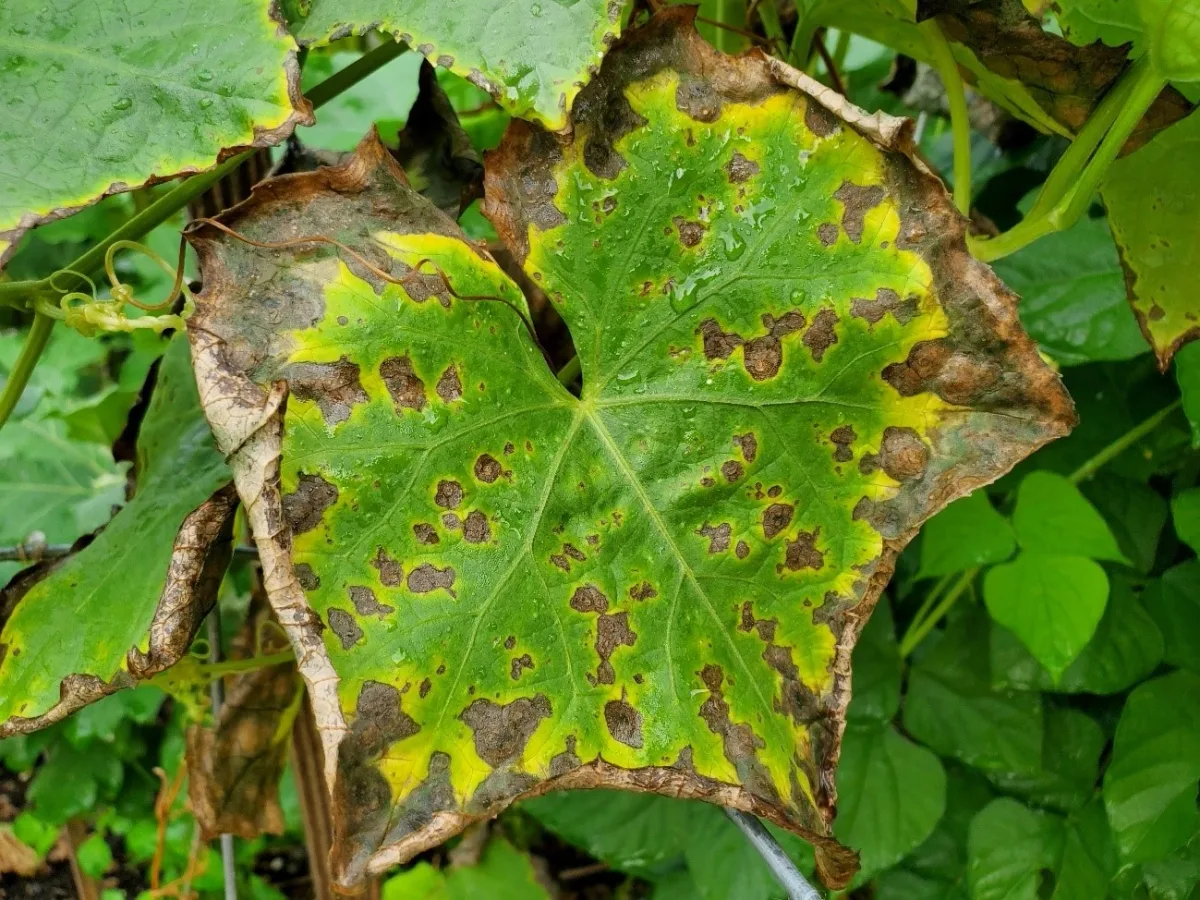
Image source: Bing (Web (fair-use with source credit))
Pests: Spider Mites and Underside Speckling
Spider mites leave tiny brown specks clustered on leaf undersides. They suck sap directly from the cells near the midrib. Heavy infestations produce fine webbing between the leaf stalks.
Indoor bananas suffer from mites far more than outdoor plants.
Low indoor humidity allows mite populations to explode rapidly. Central heating dries out the air below their survival threshold. Wipe the undersides with a damp cloth to confirm their presence.
Insecticidal soap controls them without harsh chemical residues.
Step-by-Step Treatment Workflow for Each Diagnosis
Once you identify the cause, follow the matching workflow exactly. Do not mix treatments between categories. Fungal protocols rely on airflow and protectant sprays.
Bacterial protocols demand strict sanitation and plant removal.
Here is the breakdown of required tools based on your diagnosis:
| Diagnosis | Primary Tools Needed | Disposal Method |
|---|---|---|
| Sigatoka (Fungal) | Pruning shears, copper fungicide | Bag and trash infected leaves |
| Bacterial Wilt | Sterilized machete, 10% bleach | Solarize chopped plant material |
| Abiotic Stress | Soil test kit, high-potash fertilizer | Leave damaged leaves attached |
| Spider Mites | Damp cloth, insecticidal soap | Wipe debris into trash bin |
Workflow for Sigatoka Management:
- Prune heavily infected basal leaves using clean shears.
- Bag the removed foliage immediately to trap airborne spores.
- Thin out excess suckers in the banana mat to improve airflow.
- Apply a copper-based protectant spray early in the morning.
- Ensure leaves dry completely before nightfall to stop germination.
Workflow for Bacterial Wilt Response:
- Soak all cutting tools in a 10% sodium hypochlorite solution.
- Cut the infected plant down at the soil line carefully.
- Chop the pseudostem into small pieces for rapid drying.
- Leave the debris in direct hot sun to kill the bacteria.
- Avoid planting new Musa species in that exact hole immediately.
Workflow for Abiotic Stress Recovery:
- Test the soil pH and NPK ratios using a reliable kit.
- Apply an 8-10-14 fertilizer to boost potassium levels fast.
- Water deeply until the top four inches feel consistently moist.
- Move potted plants into dappled shade for two weeks gradually.
- Add three inches of mulch around the base to retain moisture.
Common Mistakes That Spread Disease or Kill the Plant
Treating banana diseases requires precision. Small errors compound quickly and destroy healthy tissue. Our analysis of extension reports shows growers repeat the same few mistakes constantly.
Avoiding these keeps your plants alive longer.
The biggest error is using dirty tools on bacterial infections. Cutting a Moko-infected plant and moving to a healthy one guarantees transmission. You must sterilize blades between every single cut.
Bleach solutions work best for field sanitation.
Composting Sigatoka-infected leaves is another critical failure. Fungal spores survive standard backyard composting temperatures easily. When you spread that compost later, you reinfect the root zone.
Always bag diseased tissue and send it to the landfill.
Overwatering mimics nutrient deficiency symptoms perfectly. Soggy soil suffocates roots and stops potassium uptake entirely. The leaf margins turn brown just like true potash starvation.
Growers then add more water thinking the plant is thirsty.
Applying fungicides to abiotic problems wastes money and time. Copper sprays do nothing for sunscald or wind burn. They only add unnecessary chemical load to your garden soil.
Diagnose the texture and pattern before opening any bottles.
Ignoring quarantine rules for bacterial wilt devastates local agriculture. USDA APHIS regulations exist because Ralstonia spreads uncontrollably once established. Reporting suspected cases protects neighboring farms and gardens.
Silence costs everyone their crop eventually.
Long-Term Maintenance to Keep Banana Foliage Clean
Preventing brown spots requires consistent daily habits. Reactive spraying never beats proactive care. A healthy banana plant naturally resists most fungal pressure on its own.
Your main job is keeping the growing environment stable.
Focus your maintenance efforts on three core areas:
- Moisture management: Water the soil directly at the base. Never wet the foliage from overhead if you can avoid it. Leaves that stay dry overnight rarely develop Sigatoka lesions.
- Nutrient scheduling: Feed established plants with a high-potassium fertilizer every four to six weeks during the growing season. Consistent potassium levels prevent marginal scorching entirely.
- Mat hygiene: Limit each clump to one fruiting stalk, one half-grown follower, and one small pup. Overcrowded mats trap humidity and block airflow.
Mulch heavily around the root zone to retain soil moisture. Keep that mulch pulled back three inches from the pseudostem. Piling organic matter against the trunk invites rot and bacterial entry points.
Routine inspections catch problems before they spread across the canopy. Walk your plants twice a week during warm, wet weather. Look specifically at the oldest leaves near the bottom first.
That is where trouble almost always starts.
If you spot early freckling, remove that single leaf immediately. Bag it and dispose of it off-site. Catching a localized infection in week one saves the entire fruit bunch later.
University extension research confirms that maintaining at least eight functional leaves per stem is required for proper fruit filling.
Frequently Asked Questions
Should I cut off banana leaves with brown spots?
Remove leaves only when spots cover more than half the surface area. Partially green leaves still produce energy for the plant. Always use sterilized shears to prevent spreading pathogens.
Bag the removed tissue instead of composting it.
How do I treat Black Sigatoka on my banana tree?
Prune infected lower leaves to reduce spore loads immediately. Thin out surrounding suckers to improve air circulation through the mat. Apply a copper-based fungicide protectant early in the morning.
Repeat applications after heavy rainfall washes the residue away.
Why are the edges of my banana leaves turning brown?
Crispy brown margins usually indicate potassium deficiency or underwatering. Test your soil to verify nutrient levels before adding fertilizer. Switch to a high-potash blend like an 8-10-14 formula.
Water deeply whenever the top two inches of soil feel completely dry.
Can overwatering cause brown spots on banana leaves?
Yes, soggy soil suffocates roots and blocks nutrient uptake. This stress mimics potassium starvation and causes marginal browning. Ensure your planting site drains well after heavy rain.
Container plants need drainage holes that never sit in standing water.
Is bacterial wilt contagious to other banana plants?
Bacterial wilt spreads extremely fast through contaminated pruning tools. Moko disease and Xanthomonas wilt require strict tool sterilization between cuts. Soak blades in a 10% bleach solution for thirty seconds minimum.
Destroy heavily infected plants to protect your remaining crop.

Similar Posts