The Purple Tree From What Dreams May Come Explained
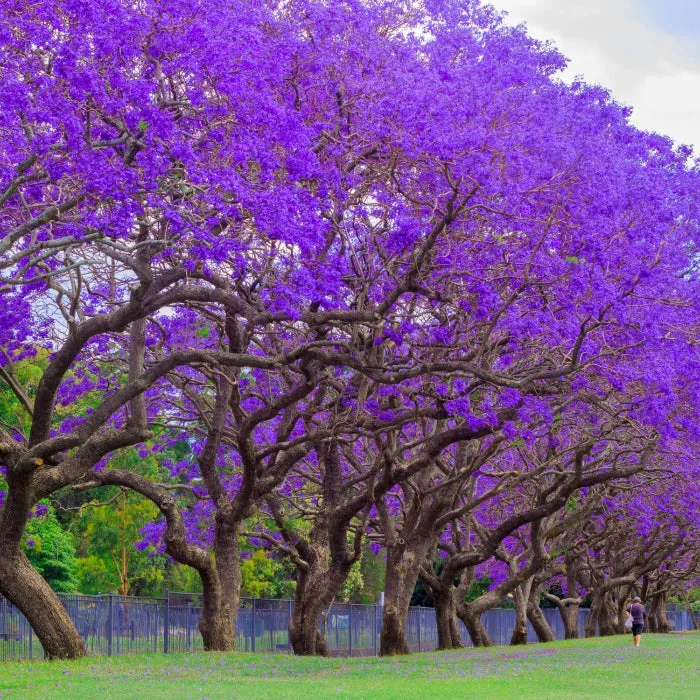
The purple tree what dreams may come tree is a cinematic creation, not a real botanical species. That iconic painted landscape was built on a soundstage using artistic license and set design. No living tree produces those exact saturated violet blooms year-round in reality.
Real trees with similar aesthetics exist, but they have strict seasonal limitations and regional hardiness requirements. USDA Plant Database records confirm most purple-flowering ornamentals thrive only in zones 7 through 10 as of 2026. Let’s separate Hollywood fantasy from horticultural fact so you can find the right tree.
Quick Answer
The purple tree what dreams may come tree is fictional. It was a painted set piece for the 1998 film. No real species matches its permanent violet coloration.
Jacaranda mimosifolia offers the closest visual match. Real purple trees bloom briefly each spring.
The Movie Tree Isn’t Real: Separating Film Magic from Botanical Fact
Image source: Bing (Web (fair-use with source credit))
That breathtaking scene where Chris Nielsen walks through a vibrant painted afterlife remains one of cinema's most memorable visuals. The tree anchoring that landscape looks impossibly vivid against the surreal backdrop. Many viewers spend years searching for this specific plant at local nurseries.
We need to be direct about what you are actually seeing on screen. Production designers constructed that environment entirely from imagination rather than botanical accuracy. The colors were enhanced through lighting gels and post-production effects to create emotional resonance.
Vincent Ward’s vision prioritized feeling over biological realism throughout the entire sequence.
This disconnect between memory and nature causes genuine frustration for gardeners. You might remember endless fields of perfect violet blossoms defying seasonal change. Actual trees operate under rigid biological clocks and climate constraints instead.
Understanding this gap prevents costly mistakes when selecting landscape specimens for your own yard.
Real alternatives capture the spirit without matching the impossible saturation. Jacaranda mimosifolia provides stunning lavender-blue flowers in late spring or early summer. Royal Empress trees offer pale violet blooms before leaves emerge in March.
Both require specific growing conditions that differ dramatically from the film’s eternal paradise setting.
Accepting the fictional origin actually frees you to appreciate real botanical beauty. Living trees bring texture, fragrance, and wildlife value that paint cannot replicate. They also demand respect for their dormancy cycles and environmental needs.
This shift in expectation leads to far greater satisfaction in long-term garden planning.
Visual Identification Guide: Matching the On-Screen Look to Real Species
Identifying the right substitute requires focusing on flower structure first. Color alone misleads because soil pH and light exposure alter pigmentation significantly. Petal shape and cluster arrangement remain consistent identifiers across varying growing conditions.
Use these morphological cues before relying on hue memory from the movie.
Jacaranda displays fern-like compound leaves with tubular five-petaled flowers. Blooms form large terminal panicles reaching twelve inches long. This creates the soft cloud effect seen in the film’s wide shots.
Foliage remains green while flowers provide all the purple impact during peak season.
Paulownia tomentosa features heart-shaped leaves and upright flower spikes. Individual blossoms resemble foxglove with spotted throats inside each tube. The overall silhouette reads more vertical than the spreading Jacaranda canopy.
Spring blooms appear on bare wood before any foliage emerges at all.
Crape Myrtle cultivars like 'Purple Magic' show crinkled crepe-paper petals. Flowers cluster in dense rounded heads along new growth tips. Bark exfoliates in smooth patches revealing cinnamon tones underneath.
This species offers extended summer bloom time unlike the brief spring displays of other options.
| Species | Flower Shape | Bloom Season | Leaf Type |
|---|---|---|---|
| Jacaranda | Tubular Panicle | Late Spring | Fern-like Compound |
| Paulownia | Foxglove Spike | Early Spring | Heart-shaped Simple |
| Crape Myrtle | Crepe Cluster | Summer | Oval Simple |
| Purple Plum | Small Rosette | Early Spring | Serrated Oval |
Compare these structural details against reference photos rather than mental impressions. Film grading distorts color values beyond natural recognition thresholds. Botanical illustrations from university extension services provide accurate baseline comparisons.
Trust documented morphology over nostalgic recollection when making identification decisions.
Top Purple-Flowering Trees That Capture the Cinematic Aesthetic
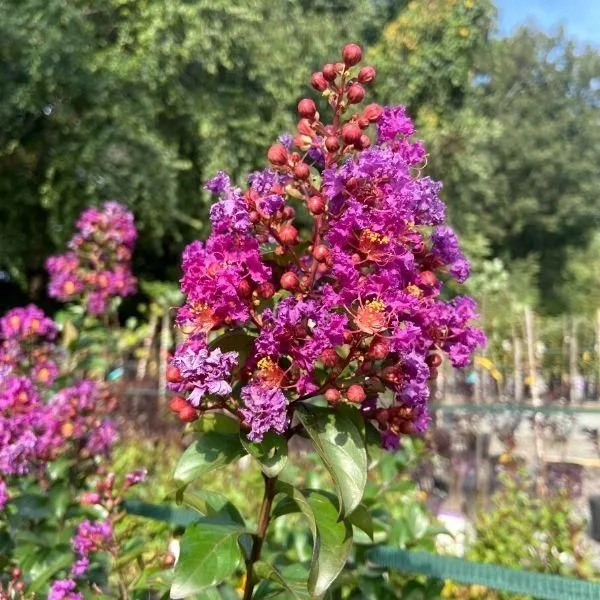
Image source: Bing (Web (fair-use with source credit))
Jacaranda mimosifolia stands as the closest living approximation to the film’s aesthetic. Native to Argentina, it thrives in frost-free climates within USDA zones 9b through 11. Mature specimens reach thirty feet tall with graceful arching branches.
The ferny foliage provides delicate textural contrast against bold floral masses.
Royal Empress trees grow rapidly to forty feet in favorable conditions. Their fragrant vanilla-scented blooms cover naked limbs each March. Fast growth makes them ideal for quick establishment in new landscapes.
Be aware that Paulownia spreads aggressively by seed in many eastern states.
Magnolia liliiflora 'Nigra' offers deep wine-purple tulip-shaped flowers. This smaller specimen fits residential yards better than towering canopy trees. Blooms open gradually over several weeks in mid-spring.
Dark coloring holds well even under intense afternoon sun exposure.
Chitalpa tashkentensis combines desert willow and catalpa genetics successfully. Lavender trumpet flowers appear continuously from May through September. Exceptional drought tolerance suits arid western gardens perfectly.
Sterile flowers prevent messy fruit drop on patios or walkways below.
Selection depends heavily on your specific microclimate and space constraints. Southern California landscapes favor Jacaranda for reliable performance and scale. Southeastern growers achieve better results with adapted Crape Myrtle selections.
Northern zones must settle for hardier shrubs like Smoke Tree instead.
Verify cold hardiness ratings against your exact location before purchasing. Microclimates within urban areas can extend viable ranges slightly. Consult local cooperative extension offices for proven cultivar recommendations.
Regional adaptation matters more than generic zone maps suggest for marginal species.
Purple Foliage vs. Purple Blooms: Choosing Your Type of Color Impact
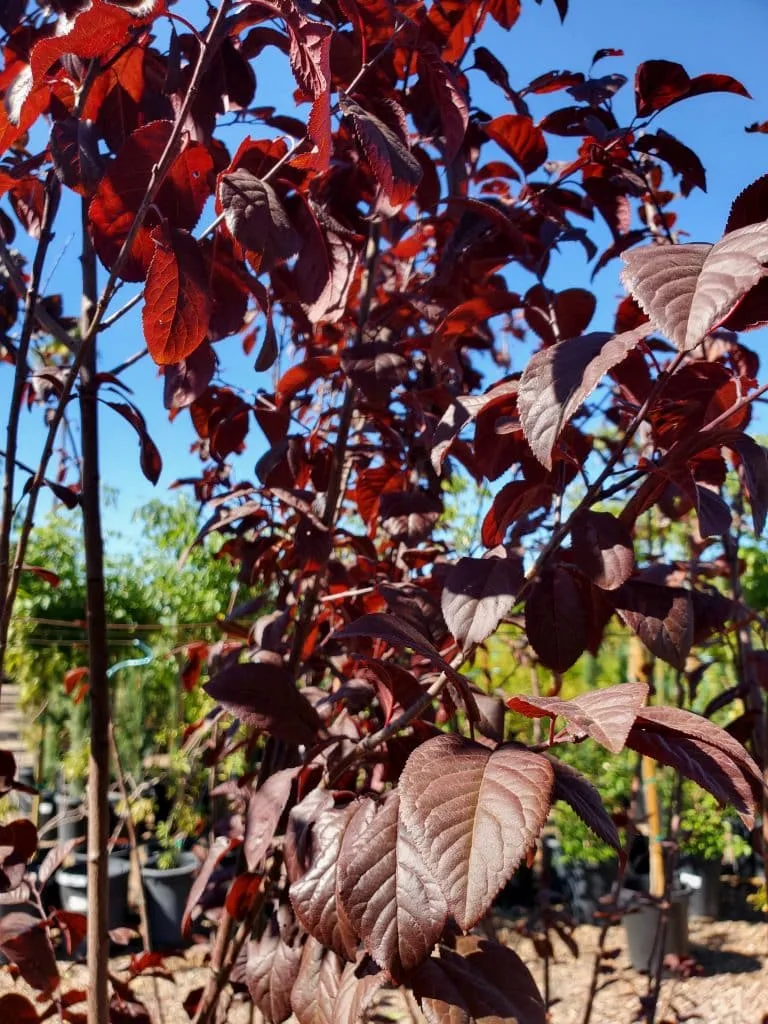
Image source: Bing (Web (fair-use with source credit))
Understanding this distinction prevents disappointment after planting season ends. Flowering trees deliver intense color for two to four weeks annually. Foliage varieties maintain burgundy or plum tones throughout the growing season.
Each strategy serves different design purposes in landscape composition.
Bloom-focused species create dramatic focal points during peak periods. Jacaranda and Paulownia transform completely when flowers open en masse. Afterward they revert to standard green canopy appearance until next year.
This ephemeral quality mirrors natural rhythms rather than static artificiality.
Foliage-driven trees like Prunus cerasifera 'Krauter Vesuvius' provide constant presence. Deep purple leaves persist from spring emergence through autumn leaf drop. New growth often shows brighter copper tones before maturing darker.
Winter interest comes from dark branch silhouettes against gray skies.
Smoke Tree (Cotinus coggygria) bridges both categories effectively. Pinkish-purple plumes float above wine-colored leaves in summer. Foliage intensifies to scarlet-orange in fall before dropping.
Shrub habit allows flexible placement in mixed borders or foundation plantings.
Consider maintenance implications alongside visual preferences. Flowering types may produce messy fruit requiring cleanup efforts. Some purple-leaf plums suffer from borers or fungal diseases regionally.
Foliage varieties generally demand less seasonal attention once established properly.
Match color duration to your actual viewing patterns and lifestyle. Weekend visitors might prefer spectacular bloom events timed strategically. Daily residents often appreciate steady background color framing outdoor living spaces.
Neither choice replicates the movie exactly, but both satisfy genuine horticultural desires.
Critical Growing Constraints and Invasiveness Warnings
Many purple-flowering trees carry serious ecological risks outside native ranges. Paulownia tomentosa appears on invasive species lists across fifteen US states. Seeds colonize disturbed areas and outcompete native vegetation aggressively.
Check your state’s noxious weed registry before planting this species anywhere.
Jacaranda produces abundant sticky pods that stain pavement permanently. Fallen flowers create slippery hazards on sidewalks during wet weather. Root systems seek moisture aggressively near foundations and sewer lines.
Municipal ordinances frequently prohibit street planting for these practical reasons.
Cold hardiness limits restrict options significantly in northern regions. Most true purple-flowering trees die below twenty degrees Fahrenheit. Zone 6 gardeners should consider hardy shrubs instead of tender trees.
Attempting to push zone boundaries usually results in winter kill and wasted investment.
Soil drainage requirements eliminate some sites regardless of climate preference. Royal Empress demands excellent drainage or roots rot quickly. Heavy clay soils require substantial amendment before planting succeeds.
Wet locations favor Redbud or Dogwood alternatives with better moisture tolerance.
Pest susceptibility varies dramatically among candidate species. Purple Leaf Plum faces chronic borer pressure in many areas. Japanese Maples suffer verticillium wilt in poorly drained sites.
Research regional pest profiles through university extension publications before committing.
Legal restrictions may override personal preference entirely. Homeowner associations often ban known invasive species outright. City right-of-way regulations limit allowable street tree selections.
Always verify compliance before investing money and labor into establishment.
Care, Sourcing, and Establishment for Long-Term Success
Establishing purple-flowering trees requires patience during the first two years. Root systems must develop fully before top growth accelerates significantly. Water deeply twice weekly throughout the first growing season without fail.
Mulch heavily to retain moisture and regulate soil temperature fluctuations.
Sourcing quality stock prevents decades of disappointment or failure. Avoid big-box retailers selling mislabeled or root-bound specimens. Specialty nurseries offer verified cultivars with accurate hardiness ratings.
Ask for graft union inspection on named varieties like 'Purple Magic' Crape Myrtle.
Container-grown trees establish faster than balled-and-burlapped field stock. Check for circling roots before planting or girdling will kill the tree eventually. Tease outer roots outward into surrounding soil at planting time.
Never plant deeper than the original nursery soil line.
Fertilization needs vary dramatically among species discussed here. Jacaranda thrives in lean soils and resents excess nitrogen. Paulownia responds vigorously to balanced feeding in early spring.
Soil testing through USDA NRCS guides precise amendment decisions.
Pruning timing affects bloom production directly on flowering types. Spring bloomers set buds on previous year's wood exclusively. Prune immediately after flowers fade to avoid removing next season's display.
Summer bloomers like Crape Myrtle flower on new growth instead.
Monitor for transplant shock symptoms during establishment periods. Leaf scorch or premature drop signals water stress or root damage. Adjust irrigation frequency based on actual soil moisture checks.
Recovery typically takes one full growing cycle before normalizing.
Common Questions About the What Dreams May Come Tree
Is there a real tree that looks exactly like the movie?
No living species replicates the film's permanent saturated violet coloration. That tree was a painted set piece enhanced with lighting effects. Real alternatives like Jacaranda offer seasonal blooms in similar hues.
Expect brief flowering windows rather than year-round cinematic intensity.
Where can I buy a Jacaranda tree safely?
Purchase from reputable specialty nurseries specializing in subtropical ornamentals. Verify USDA zone compatibility matches your specific location first. Avoid unverified online sellers shipping mislabeled seedlings.
Local botanical gardens often maintain vendor recommendation lists for regional growers.
Why did my purple tree stop blooming after planting?
Young trees prioritize root establishment over flower production initially. Transplant shock commonly delays blooming for one to three years. Excessive nitrogen fertilizer promotes foliage at expense of flowers.
Ensure adequate sun exposure since shade suppresses bloom formation significantly.
Are purple-flowering trees toxic to pets or children?
Toxicity varies considerably among species covered in this guide. Paulownia seeds contain saponins causing gastrointestinal distress if ingested. Jacaranda foliage is generally considered non-toxic to mammals.
Always verify specific species safety through ASPCA databases before planting near play areas.
How long do purple trees live in cultivation?
Lifespan depends heavily on species selection and site conditions. Jacaranda routinely survives fifty years in suitable climates. Purple Leaf Plum averages twenty years before decline sets in.
Proper siting and maintenance extend functional lifespan substantially beyond minimums.
Can I grow these trees indoors as houseplants?
Most purple-flowering trees require full sun and winter chill unavailable indoors. Jacaranda may survive temporarily but rarely blooms inside. Dwarf Crape Myrtle cultivars adapt better to container culture.
True success requires greenhouse conditions matching outdoor light intensity levels.

Similar Posts