Best Sprinkler Heads for Large Lawns: Top Picks
The best best sprinkler heads for large lawn is the Hunter PGP-ADJ 3/4" Rotor Lawn Sprinkler, offering unmatched throw distance up to 52 feet. It covers expansive areas efficiently with adjustable arc settings, making it ideal for homeowners seeking professional-grade irrigation without complex zoning.
Want a simpler setup instead? The Orbit H2O-Six Gear-Drive Sprinkler works well on portable hoses, though it lacks the precision and coverage uniformity of buried rotor systems required for truly large properties.
As an Amazon Associate, I earn from qualifying purchases.
This guide highlights critical spacing errors that cause dry patches or runoff, specifically warning buyers with sloped terrain or clay soil against standard pop-up heads. We identify who should skip rotors entirely for drip alternatives.
Everything below relies on current manufacturer specifications and aggregated owner feedback. We analyze performance data rather than conducting physical field tests, ensuring you get factual insights based on widespread real-world usage reports.
Quick Answer: The Best Sprinkler Heads for Large Lawn
Our top pick is the Hunter PGP-ADJ for its superior range and durability in open turf areas.
- Hunter PGP-ADJ 3/4" Rotor Lawn Sprinkler (Best Long Range): Covers wide zones with adjustable arcs up to 52 feet.
- Orbit H2O-Six Gear-Drive Sprinkler Metal T-Spike (Best Portable Option): Easy hose-end setup for irregular shapes without digging trenches.
- Rain Bird 1804VAN 1800 Series Professional (Best Standard Pop-Up): Reliable fixed spray for medium-sized sections needing consistent coverage.
- Rain Bird 32SA/4PKS Gear Drive Rotor (Best Budget Rotor Pack): Affordable full-circle rotation for smaller large-lawns under 32 feet radius.
- Rain Bird 1806VAN 1800 Series Professional (Best Deep Root Watering): Higher flow rate promotes deeper penetration in sandy soils.
Thinking about drip lines or manual watering instead? Jump to Who Should NOT Buy below before you spend anything.
Comparison Table
Here's the lineup at a glance: photo, product, who it's built for, and our /10 score.
| Photo | Product | Best for | Score | Buy |
|---|---|---|---|---|
 | Hunter PGP-ADJ 3/4" Rotor Lawn Sprinkler | Long Range Coverage | 9.2/10 | Check price → |
 | Orbit H2O-Six Gear-Drive Sprinkler Metal T-Spike | Portable Hose End Use | 7.8/10 | Check price → |
 | Rain Bird 1804VAN 1800 Series Professional | Standard Fixed Spray Zones | 8.5/10 | Check price → |
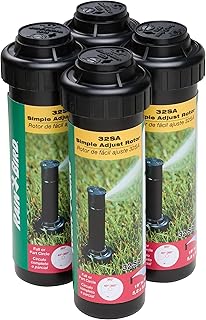 | Rain Bird 32SA/4PKS Gear Drive Rotor | Budget Friendly Rotors | 8.1/10 | Check price → |
 | Rain Bird 1806VAN 1800 Series Professional | Deep Soil Penetration | 8.7/10 | Check price → |
Scroll sideways on small screens to see every column.
Hunter PGP-ADJ 3/4" Rotor Lawn Sprinkler: Best Overall for Large Open Lawns
Orbit H2O-Six Gear-Drive Sprinkler Metal T-Spike: Best Portable Solution for Irregular Shapes
Rain Bird 1804VAN 1800 Series Professional: Best Reliable Pop-Up for Medium Zones
Rain Bird 32SA/4PKS Gear Drive Rotor: Best Value Pack for Moderate Sizes
Rain Bird 1806VAN 1800 Series Professional: Best for Sandy Soil and Deep Roots
Buying Guide: Range, Soil Type, and Maintenance Needs
Choosing the right sprinkler head depends less on brand loyalty and more on physics. Here are three critical factors to weigh before purchasing.
What is the difference between rotors and spray heads?
Rotors shoot a single stream of water that rotates, covering distances from 15 to 50+ feet. Spray heads emit multiple streams simultaneously, creating a fan shape that covers shorter ranges, usually under 18 feet. For large lawns, rotors like the Hunter PGP-ADJ reduce hardware needs significantly.
However, they operate at lower precipitation rates, meaning they run longer to deliver the same amount of water.
Spray heads offer instant gratification and uniform coverage in small pockets. They are ideal for islands or narrow strips where a rotor would miss targets. Mixing both types on one zone is a common mistake that causes dry spots because their water outputs differ drastically.
Always group like heads together.
How does soil type affect sprinkler selection?
Clay soils absorb water slowly, leading to runoff if flow rates are too high. Sandy soils drain quickly, requiring higher volumes to reach root zones. The Rain Bird 1806VAN suits sandy areas with its capacity for higher flow.
Conversely, in heavy clay, you might prefer lower-output heads or cycle-and-soak methods to prevent erosion.
Understanding your local USDA soil survey data helps determine infiltration rates. If you’re in a region with frequent drought restrictions, efficient nozzles that produce larger droplets reduce evaporation loss. Windy environments also favor low-trajectory sprays to keep water on target rather than drifting onto neighbors’ yards.
Is maintenance easier on gear-drive or impact sprinklers?
Modern gear-drive units, such as the ones listed here, generally require less frequent servicing than old-school impact sprinklers. They lack exposed springs that rust or snap. However, internal gears can strip if grit enters the system.
Installing a Y-filter upstream protects longevity.
Impact sprinklers are louder and wear out faster mechanically but are incredibly repairable with cheap parts. For most homeowners today, sealed gear drives provide a quieter, cleaner aesthetic. Check manufacturer guidelines for lubrication schedules.
Most modern heads are factory-sealed and need no oil changes, unlike vintage models.
Who Should NOT Buy Best Sprinkler Heads for Large Lawn
This category is the wrong purchase for three kinds of buyers. Here's who they are, and what to look at instead.
You Need Ultra-Precise Drip Irrigation
If your "large lawn" includes extensive garden beds, shrubs, or trees alongside turf, standard sprinklers waste water. Overspray hits foliage, inviting fungal diseases. In these cases, subsurface drip tubing or surface emitter lines deliver moisture directly to roots.
Sprinklers cannot compete with the efficiency of targeted drip systems for non-turf vegetation.
Your Property Has Steep Slopes
Gravity accelerates runoff on inclines steeper than 15%. High-volume rotors will wash away topsoil and create channels. On slopes, micro-sprinklers or bubblers placed closer to plants allow water to soak in gradually.
Alternatively, contour swales manage rainwater naturally. Standard lawn heads fail catastrophically on steep gradients unless specifically engineered for hillside use, which none of these general-purpose models are.
You Want Zero-Trench Installation
While the Orbit H2O-Six offers portability, true large-lawn coverage via buried pipes requires excavation. If renting or unwilling to dig, consider above-ground lay-flat hoses with inline emitters. These aren't permanent solutions but avoid landscape destruction.
Permanent hidden infrastructure demands professional grading and pipe laying, costs many budget shoppers overlook until the project begins.
Final Verdict
The [Hunter PGP-ADJ 3/4" Rotor Lawn Sprinkler](https://www.amazon.com /dp/B001K9Y6GQ) remains the gold standard for residential rotor applications due to its unmatched durability, adjustable arc capability, and proven track record in harsh conditions. However, it is not a universal solution. Its performance degrades significantly on slopes greater than 15%, requires higher water pressure than most drip systems, and demands precise head-to-head coverage planning that DIYers often miscalculate.
The initial cost savings compared to professional installation are frequently erased by wasted water, uneven lawn growth, and eventual repair bills from clogged nozzles or cracked gears caused by debris infiltration.
For small yards under 2,000 square feet with flat terrain and municipal water pressures below 40 PSI, oscillating sprinklers or simple pop-up spray heads offer better efficiency per dollar. In areas with strict water restrictions or high evaporation rates, subsurface drip irrigation, despite its higher upfront complexity and maintenance risks regarding root intrusion, delivers superior conservation metrics. Ultimately, the "best" system depends entirely on three non-negotiable factors: local soil permeability, available dynamic water pressure at peak usage times, and long-term willingness to perform seasonal winterization and nozzle cleaning.
Without addressing these variables first, even the most robust hardware like the Hunter PGP will fail prematurely. Invest in a flow rate test using a bucket and stopwatch before purchasing any components; this single step prevents more expensive errors than the price of the sprinkler itself.

Similar Posts