Why Is There No Fruit on My Plum Tree? 7 Common Causes
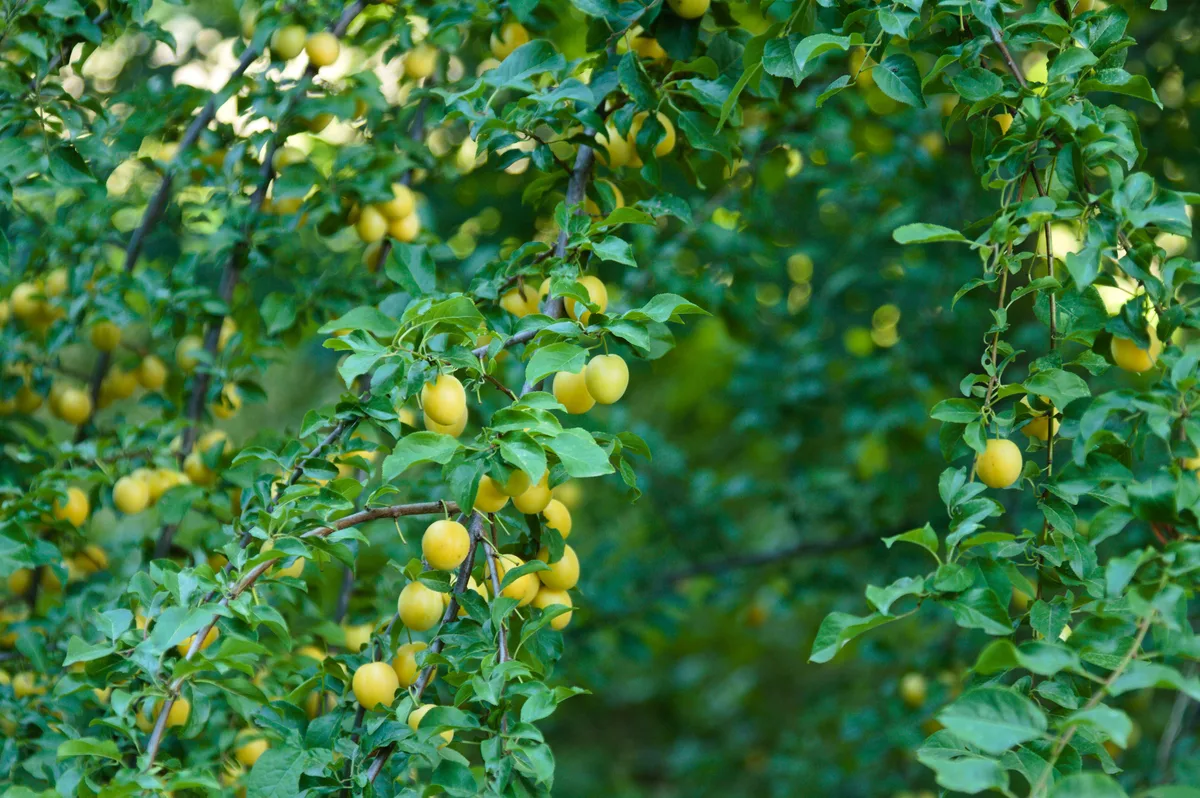
Finding no fruit on plum tree branches after a full season of waiting is incredibly frustrating. You water the tree, keep weeds away, and expect a harvest. Instead, you get bare wood.
In our research across university extension programs, most backyard plum failures trace back to three specific issues. These include tree age, missing pollinators, or late spring frosts. Standard trees need 3 to 6 years to produce their first crop as of 2026.
Let's walk through the exact diagnostic steps to find your problem.
Image source: Web (Bing) / pexels.com (Web image (fair-use with source credit))
Quick Answer
No fruit on plum tree branches usually means a pollination issue. Most Japanese plums require a second compatible variety nearby. Late spring frosts also kill flower buds before they open.
Younger trees simply need more time to mature. Check your tree age and bloom history first.
Why Your Plum Tree Has No Fruit (The 3-Step Diagnostic)
Fixing a barren plum tree starts with a simple decision tree. You need to ask three questions in a very specific order. The answer to each question points you down a different path.
First, check the age of your tree. A young tree will not fruit no matter what you do. Second, look at your bloom history from early spring.
Did flowers actually open? Third, inspect the ground for tiny dropped fruit.
If your tree is old enough but never bloomed, you have a climate or pruning problem. If it bloomed heavily but set zero fruit, you have a pollination problem. If tiny plums formed and fell off, you have a pest or stress problem.
This workflow eliminates guesswork. You stop buying random fertilizers hoping something sticks. Instead, you target the exact bottleneck preventing your harvest.
Grab a notebook and walk out to your tree. We are going to evaluate each condition one by one. By the end of this process, you will know exactly what to change before next spring.
Step 1: Is Your Plum Tree Actually Old Enough to Produce?
Plum trees do not fruit the year you plant them. They spend their first few seasons building roots and structural wood. Rushing this process only stresses the tree.
Standard rootstock trees typically take 3 to 6 years to produce a real crop. Dwarf varieties grow faster and often fruit in 2 to 4 years. If your tree falls inside these windows, patience is your only required action.
Pushing heavy nitrogen fertilizer on a young tree makes this worse. Nitrogen forces rapid vegetative growth instead of flower bud formation. The tree gets taller and leafier but stays completely barren.
Keep young trees consistently watered during dry spells. Pull competing weeds away from the trunk. Wait for the wood to mature naturally.
| Rootstock Type | Typical Years to First Fruit | Mature Height Range |
|---|---|---|
| Standard | 3 to 6 years | 15 to 20 feet |
| Dwarf | 2 to 4 years | 8 to 10 feet |
Once your tree passes that maturity threshold without producing, move to the next step. Age is no longer your excuse. We need to look closer at the branches themselves.
Step 2: Did It Bloom? (Splitting the Decision Tree)
Your memory of early spring holds the biggest clue. Did the tree produce white blossoms? This single observation splits our troubleshooting into two entirely different paths.
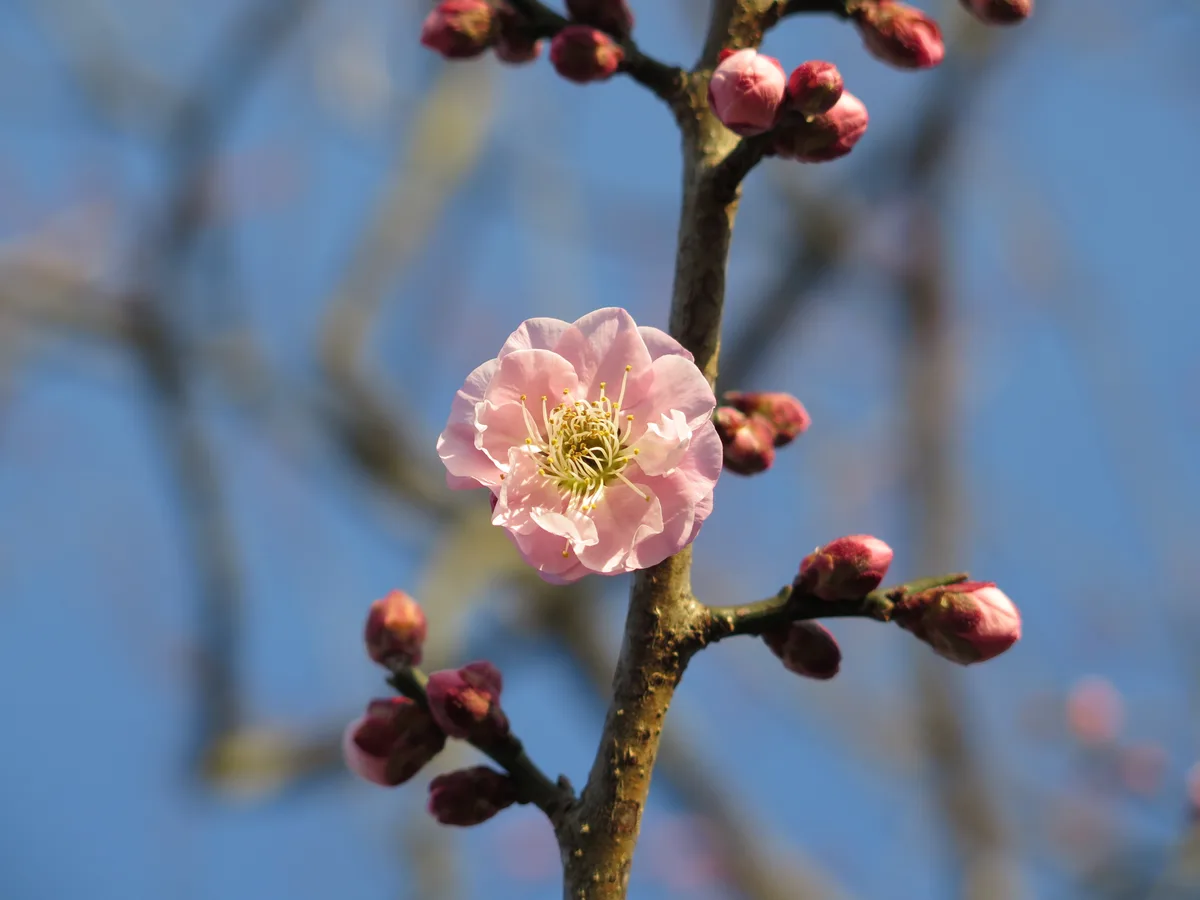
Image source: Bing (Web (fair-use with source credit))
Path A: No Flowers at All (Chill Hours, Nitrogen, and Pruning Mistakes)
Zero flowers means zero fruit. Stone fruit trees require specific environmental triggers to form flower buds. When those triggers fail, the tree grows leaves instead.
Late spring frosts are a common culprit. Plum trees wake up early in the season. A hard freeze after a warm spell kills swollen buds instantly.
They turn brown and drop before opening.
Insufficient winter chill causes the same blank branches. Most European plums (Prunus domestica) need 500 to 1,000 hours between 32°F and 45°F. Without this cold exposure, buds never break dormancy.
University extension programs like Purdue Extension publish detailed guides matching cultivars to local chill zones.
Improper pruning also removes next year's blooms. Plums set flower buds on wood that grew the previous summer. Heavy winter pruning cuts away all your future fruit.
Excess lawn fertilizer near the drip line floods roots with nitrogen. The tree prioritizes green growth over reproduction. Pull synthetic fertilizers back several feet from the canopy edge.
Path B: Full Bloom but Zero Fruit (Pollination Partners and Bee Activity)
A tree covered in blossoms that drops them all faces a pollination failure. The flowers opened, but pollen never reached the stigma. Without fertilization, the petals just fall away.
Most Japanese plums (Prunus salicina) absolutely require cross-pollination. You must plant a second, different Japanese variety within 50 feet. Both trees must bloom at the exact same time.
Self-fertile European varieties like Stanley can fruit alone. However, aggregate reviews report much heavier crops when a partner tree is nearby. Never assume a single tree will give you maximum yields.
Weather plays a massive role here too. Honeybees stop flying when temperatures drop below 55°F. They also stay in the hive during heavy rain or high winds.
If your tree bloomed during a miserable week, pollinators stayed home. Broad-spectrum insecticides sprayed nearby will also wipe out local bee populations. Stop spraying chemicals while blossoms are open.
Step 3: Tiny Plums Formed but Dropped Early (Curculio and Water Stress)
Sometimes pollination works perfectly. You spot pea-sized green plums forming behind the fading petals. Then, a few weeks later, the ground is littered with tiny aborted fruit.
Plum curculio (Conotrachelus nenuphar) is the primary suspect here. This small snout-nosed beetle targets stone fruit right after petal fall. The female chews a crescent-shaped slit into the young skin to lay eggs.
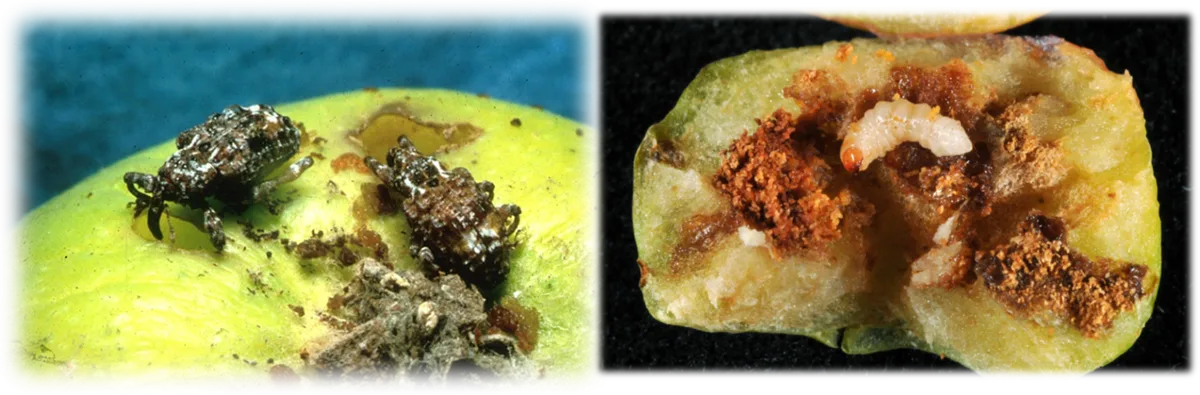
Image source: Web (Bing) / fff.hort.purdue.edu (Web image (fair-use with source credit))
Damaged fruit stops growing and drops prematurely. Pick up the fallen plums and inspect them closely. Look for distinct half-moon scars on the skin.
That confirms curculio activity.
Managing this pest requires precise timing. Lay a light-colored sheet under the tree at dawn. Shake the branches sharply to dislodge the beetles.
They play dead and fall onto the fabric for easy collection.
Targeted sprays applied exactly at 90% petal drop offer another control method. Do not spray earlier or you will harm the bees finishing their work. Always follow label instructions and pre-harvest intervals strictly.
Severe drought stress causes identical fruit drop. A tree lacking water will abort its entire crop to survive. Maintain consistent soil moisture during early fruit development.
Never let the soil turn to dust around the root zone. Deep watering beats frequent shallow sprinkling every time. Mulch helps retain that critical moisture during hot spells.
European vs. Japanese Plums: Matching the Right Tree to Your Climate
Picking the wrong plum species for your local climate guarantees empty branches every single year. European and Japanese plums behave completely differently in the orchard. Getting this right dictates your entire harvest strategy.
Japanese plums (Prunus salicina) bloom very early in spring. That makes them incredibly vulnerable to late frosts in northern regions. They also almost always need a second compatible variety planted nearby.
European plums (Prunus domestica) wake up later. This delayed bloom protects their flowers from sudden cold snaps. Many European types are self-fertile, meaning one tree can technically produce fruit alone.
If you live in a warmer southern climate, low-chill Japanese varieties work best. Cultivars like Methley or Santa Rosa thrive where winters stay mild. They just need fewer chill hours to trigger flowering.
For colder zones with harsh winters, stick to European or American hybrid plums. These trees require 500 to 1,000 chill hours to set buds properly. Planting a high-chill tree in Florida means it will never bloom.
| Feature | European Plums | Japanese Plums |
|---|---|---|
| Bloom Timing | Late spring | Early spring |
| Pollination Needs | Often self-fertile | Require cross-pollinator |
| Chill Hour Requirement | High (500 to 1,000+) | Low to moderate |
| Best Pruning Style | Central leader | Open center (vase shape) |
| Primary Use | Drying, canning, cooking | Fresh eating |
Always check your local USDA hardiness zone before buying a sapling. A $15 soil test from your county extension office helps too. It confirms if your pH and nutrient levels match your chosen species.
Common Pruning and Fertilizer Mistakes That Kill Your Harvest
Bad pruning is the fastest way to accidentally remove next year's crop. Plum trees store flower buds on specific types of wood. If you cut the wrong branches, you cut off your fruit.
Japanese plums produce heavily on one-year-old wood. They prefer an open-center shape that looks like a vase. You want sunlight reaching deep into the middle of the canopy.
European plums fruit mostly on older, stubby growth called spurs. They tolerate a central leader shape similar to a pine tree. Cutting away old wood on a European plum removes those vital fruiting spurs.
Timing matters just as much as technique. Heavy winter pruning stimulates wild vegetative growth instead of flowers. It also leaves fresh wounds exposed to fungal infections during wet months.
Silver leaf disease (Chondrostereum purpureum) targets stone fruit through winter cuts. Spores spread easily in damp, cold weather. Always sterilize your shears between trees to prevent spreading pathogens.
Our research shows summer pruning yields much better results for backyard growers. Wait until late spring or early summer after the tree fully leafs out. Remove dead wood, crossing branches, and vertical water sprouts.
Water sprouts are those straight-up shoots that grow rapidly toward the sky. They never produce fruit and steal energy from the rest of the tree. Cut them flush with the branch collar.
Fertilizer mistakes cause identical problems. Broadcasting high-nitrogen lawn food near the drip line forces leafy growth. The tree abandons reproduction to focus entirely on getting taller.
Switch to a balanced organic compost applied lightly in early spring. Established backyard trees rarely need heavy synthetic feeding. Keep nitrogen levels moderate to encourage flower bud formation over foliage.
Biennial bearing happens when a tree produces a massive crop one year. It exhausts itself and drops zero fruit the following season. Thinning excess fruit by hand during heavy years prevents this cycle.
Frequently Asked Questions
Why does my plum tree bloom but never produce fruit?
A blooming tree without fruit usually lacks proper pollination. Most Japanese plums require a second compatible variety within 50 feet. Bad weather keeping bees grounded during bloom also causes total crop failure.
How many years does a plum tree take to bear fruit?
Standard plum trees typically need 3 to 6 years to produce their first real crop. Dwarf rootstock varieties fruit faster, often yielding plums in 2 to 4 years. Younger trees focus purely on root development.
Do I need two plum trees to get fruit?
It depends entirely on the species you planted. Japanese plums almost always require a second different variety for cross-pollination. Many European plums are self-fertile but still yield heavier crops with a partner nearby.
What causes tiny green plums to fall off the tree early?
Premature fruit drop usually points to plum curculio damage or severe drought stress. Female beetles chew crescent-shaped slits into young fruit to lay eggs, causing it to abort. Consistent watering during early fruit development prevents stress-related dropping.
When is the best time to prune a plum tree?
Summer pruning after the tree has fully leafed out gives the best results. Winter pruning invites fungal diseases like silver leaf and stimulates unwanted vegetative growth. Focus on removing water sprouts, dead wood, and crossing branches during warm months.

Similar Posts