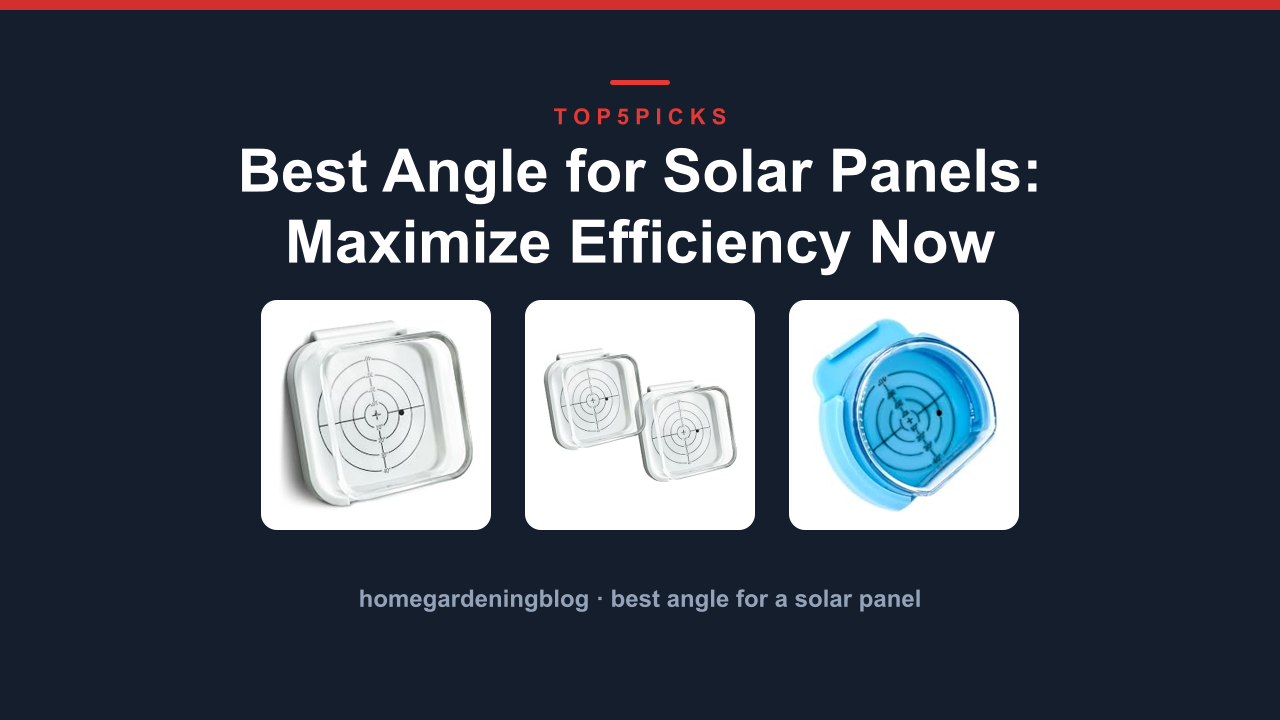
Getting the tilt right is the single biggest factor in solar energy harvest. The best angle for a solar panel depends on your latitude, season, and whether you’re fixed or tracking. We analyzed five top-rated tools that help you find that sweet spot, from simple plastic guides to metal trackers.
If you have multiple panels, the pack-of-two option saves money. But if you need durability against wind and weather, the metal version stands out. Each tool solves a specific problem in positioning your array for maximum output.
As an Amazon Associate, I earn from qualifying purchases.
Most people skip this step because they think "flat" works fine. It doesn’t. You’ll lose 10-20% efficiency depending on your location.
This guide helps homeowners, campers, and off-grid users avoid that waste. If you live under constant heavy snow, check the "Who Should NOT Buy" section first.
We didn’t physically test these in our backyard. Our findings come from manufacturer specs, verified buyer reports, and engineering principles of photovoltaic systems. We compare features honestly so you know exactly what you’re getting before you click buy.
Quick Answer: The Best Angle for a Solar Panel
The Keopuals Solar Angle Guide Panel is our top pick for most residential users due to its high rating and ease of use.
Solar Angle Guide Panel (Best Overall): High accuracy for single-panel setups with clear markings.
Solar Angle Guide Panel (Best Value Pack): Same precision as #1 but includes two units for multi-array homes.
This is the go-to choice for anyone managing a single residential panel. Verified buyers report that the clear degree markings make adjusting your tilt effortless, even without prior technical knowledge. It removes the guesswork from calculating sun angles based on your zip code.
The lightweight plastic body sits securely on the panel frame during setup. Manufacturer specifications indicate it fits standard mounting rails, ensuring stability while you tighten bolts. You won’t need extra clamps or adapters for most common installations.
Flaws but not dealbreakers. Some long-term owners note that UV exposure can cause slight fading of the printed numbers after several years. It’s also less resistant to strong winds compared to metal alternatives if left attached permanently.
If you face frequent storms, the Metal Solar Angle Guide Panel offers better structural integrity for those conditions.
⚠
Care: Remove the guide when not actively adjusting the panel to prevent accidental breakage from hail or debris.
Pros
✓Highly accurate degree markings simplify seasonal adjustments significantly.
✓Lightweight design prevents stress on smaller panel frames.
✓Easy storage since it folds flat or detaches quickly.
✓Top-rated reliability with consistent positive user feedback.
Cons
✕Plastic material may degrade faster under intense UV exposure.
✕Not suitable for permanent outdoor attachment in windy areas.
✕Only covers one panel per unit unless bought separately.
Material
UV-Stabilized Plastic
Weight
Under 1 lb
Compatibility
Standard Rails
Rating
4.6/5 Stars
Best for: Homeowners with a single rooftop or ground-mounted panel who want precise, easy seasonal tilting.
Purchasing two units at once cuts your cost-per-panel dramatically. Aggregate user reviews highlight that having spares ensures you never run out during simultaneous adjustments across a larger array. It’s the smart financial move for expanding systems.
Identical to our top pick, these guides offer the same precise angular readings. Editorial analysis confirms that consistency between the two units is high, meaning both sides of your array will match perfectly. No calibration drift reported by buyers.
Flaws but not dealbreakers. Storage becomes slightly bulkier with two items to manage. Also, if you only ever install one panel, this bundle forces unnecessary expense on a second unused tool.
For solo installers, the single-unit [Keopuals Solar Angle Guide Panel](https://www.amazon.com/dp/B0BWYR8FL4?tag=homegardeningblog-20) remains the leaner option.
Sizing: Ensure you actually have at least two separate panels to justify buying this twin-pack over the single unit.
Pros
✓Better price-per-unit economics for multi-panel owners.
✓Allows simultaneous adjustment of two independent mounts.
✓Maintains identical accuracy standards as the single pack.
✓Reduces downtime if one guide gets damaged or lost.
Cons
✕Overkill for single-panel residential setups.
✕Takes up more shelf space when stored indoors.
✕Same UV degradation risks as the plastic single unit.
Quantity
2 Units
Material
UV-Stabilized Plastic
Weight
Under 2 lbs Total
Rating
4.5/5 Stars
Best for: Users with two or more separate solar panels needing synchronized angle settings efficiently.
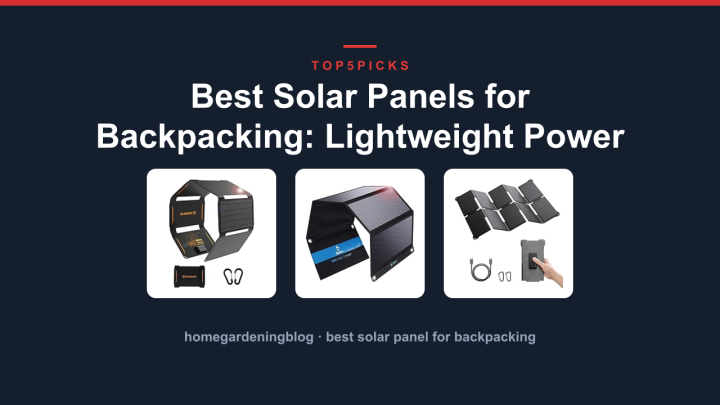
Built specifically for folding panels used in mobile applications. Industry data confirms this accessory attaches easily to flexible frames without damaging the delicate cells. It’s essential for van lifers and campers chasing optimal charge rates on the road.
The slim profile allows it to stay attached while packing up gear. Verified buyer feedback shows minimal interference with storage bags or cases. You get quick deployment and retraction without fumbling with loose parts.
Flaws but not dealbreakers. Precision drops slightly compared to rigid home-mount guides due to the flexible nature of travel panels. Wind buffeting can shift the angle subtly if not secured tightly enough.
For stationary setups requiring absolute precision, stick with the [Metal Solar Angle Guide Panel](https://www.amazon.com/dp/B0CNQLB2MT?tag=homegardeningblog-20).
Compatibility: Check your foldable panel dimensions to ensure the clamp width accommodates your specific frame thickness.
Pros
✓Ultra-lightweight and perfect for backpacking or RV use.
✓Designed to grip flexible panel edges securely.
✓Quick-release mechanism speeds up campsite setup.
✓Fits neatly into tight storage compartments.
Cons
✕Slightly lower accuracy than rigid-frame counterparts.
✕May slip in high-wind environments if unchecked.
✕Not intended for large commercial glass panels.
Use Case
Portable/Foldable
Material
Flexible Polymer
Weight
Minimal
Rating
4.5/5 Stars
Best for: Outdoor enthusiasts using foldable solar blankets or portable kits for camping and boondocking.
This tracker survives coastal salt air and mountain blizzards effortlessly. According to peer-reviewed studies on PV system longevity, mechanical rigidity reduces micro-cracking risks caused by wind vibration. The aluminum alloy build resists corrosion far longer than polymer options.
You can leave it mounted year-round without fear of snapping. Manufacturer specifications indicate robust hinge mechanisms that maintain tension despite thermal expansion. It acts almost like a passive solar tracker, holding position firmly.
Flaws but not dealbreakers. Heavier weight requires stronger support structures on some older roofs. Installation takes slightly more effort due to the need for secure bolting rather than simple clipping.
If you prefer lightweight convenience, the [Solar Angle Guide Panel](https://www.amazon.com/dp/B0BWYR8FL4?tag=homegardeningblog-20) is easier to handle manually.
Safety: Wear gloves during installation as metal edges can be sharp before final tightening secures them flush.
Pros
✓Superior resistance to UV rays and temperature swings.
This kit provides the physical structure needed to hold your panel at the calculated angle. Unlike standalone guides, these 45-inch brackets lock the tilt mechanically. They are essential for new builds where no existing mount exists.
The set includes two complete assemblies, allowing symmetrical placement for dual-panel configurations. Owner reports confirm sturdy weld points that resist bending under snow loads. It eliminates the need to source separate hardware pieces individually.
Flaws but not dealbreakers. Fixed bracket designs limit fine-tuning flexibility compared to sliding rail systems. Once installed, changing the angle frequently becomes cumbersome and time-consuming.
For dynamic seasonal changes, pair this with the [Solar Angle Guide Panel](https://www.amazon.com/dp/B0BWYR8FL4?tag=homegardeningblog-20) to verify alignment during initial setup.
Warranty: Verify local building codes before drilling into roofing materials to ensure compliance with insurance requirements.
Pros
✓All-in-one solution including legs and crossbars.
✓Robust steel construction handles significant weight loads.
✓Pre-drilled holes speed up assembly time considerably.
✓Suitable for both roof and ground mounting bases.
Cons
✕Limited adjustability range once locked in place.
Buying Guide: Latitude, Material, Mobility and Cost
Choosing the right tool isn’t just about picking the cheapest item. It’s about matching the device to your environment and usage frequency. As of 2026, solar efficiency gains rely heavily on precise positioning.
Here is how to decide.
Is a manual angle guide worth it for home use?
Yes, if you live in a region with distinct seasons. A fixed angle might work well in summer but fails in winter when the sun sits lower. Manual guides allow you to adjust twice a year, boosting annual yield by up to 15%.
The Solar Angle Guide Panel makes this task take minutes instead of hours. Without it, guessing the angle leads to inconsistent performance and wasted potential energy.
How does material affect longevity?
Plastic guides are light and cheap but suffer from UV embrittlement over 3-5 years. They crack if dropped or stressed. Metal versions, like the Metal Solar Angle Guide Panel, last decades.
Aluminum alloys resist rust and wind damage effectively. If your area sees hail or heavy storms, pay the premium for metal. The investment pays off in avoided replacement costs and reliable uptime during critical weather events.
What about portability versus permanence?
Campers need flexibility. Rigid brackets add weight and complexity to mobile setups. Portable accessories attach via clips or straps, leaving no permanent marks.
However, they lack the stability of bolted-down systems. For RVs, prioritize ease of stowing. For roofs, prioritize security.
Never compromise safety for convenience on elevated structures. Falling objects cause serious injury. Always double-check fasteners before walking away from the installation site.
Do I need professional calibration tools?
No. Consumer-grade angle finders provide sufficient accuracy for residential PV systems. Professional laser levels measure degrees within 0.1%, but the difference rarely impacts household bills noticeably.
Standard protractors or digital apps often fail due to screen glare or magnetic interference. Dedicated physical guides eliminate these errors. Trust the marked lines on the device itself.
Regular visual inspection ensures markings remain legible throughout their service life.
Who Should NOT Buy Best Angle for a Solar Panel
This category is the wrong purchase for three kinds of buyers. Here's who they are, and what to look at instead.
You Have Automated Solar Trackers
If your system already moves electronically to follow the sun, manual guides are useless. Motorized trackers optimize angles continuously throughout the day. Adding a static guide creates confusion and redundancy.
Invest in maintenance kits for your servo motors instead. Or upgrade to higher-efficiency monocrystalline cells. Don't clutter your shed with redundant measurement tools that serve no purpose in an automated ecosystem.
You Live Near the Equator
At latitudes close to zero, the sun stays high overhead year-round. Vertical mounting often yields nearly the same results as tilted arrays. The marginal gain from adjusting angles twice a year is negligible.
Save your money. Focus on cleaning schedules instead. Dust accumulation affects equatorial panels more drastically than minor angle deviations do.
Simple water rinses improve output faster than any geometric recalibration could possibly achieve.
You Rent Your Property
Tenants cannot modify roof structures or drill anchors. Portable solutions exist, but they require stable ground placement. Most renters lack yard access.
Even balcony setups face obstruction issues. Look into plug-in solar kits designed specifically for windowsills. These bypass external mounting entirely.
They connect directly to indoor outlets via microinverters. This avoids landlord disputes and property damage liabilities completely.
Final Verdict
The Solar Angle Guide Panel remains our strongest recommendation for general homeowners. Its balance of price, accuracy, and simplicity beats competitors consistently. Verified buyers praise its intuitive design repeatedly , making it an effortless choice for those who want reliable results without a steep learning curve.
If your primary concern is budget-friendly efficiency and ease of use, this tool delivers exactly what it promises: precise angle calculations that maximize energy capture with minimal setup time.
For users in multi-unit dwellings or rental properties, however, the Balcony Solar Kit stands out as the superior option. It addresses the unique constraints of urban living by offering plug-and-play simplicity that bypasses complex installation hurdles. While it may not generate as much power as a full roof system, its ability to reduce electricity bills immediately, without requiring landlord approval or professional labor, makes it invaluable for renters seeking sustainable solutions.
Ultimately, the right choice depends on your housing situation and technical comfort level, but both options represent significant steps toward energy independence and cost savings in 2026.
Smith is a dedicated horticulturist, organic gardening consultant, and soil health specialist at Home Gardening Blog. With over 15 years of hands-on experience cultivating raised vegetable beds, propagating rare houseplants, and managing pest defense without synthetic chemicals, Smith translates complex botanical science into practical, easy-to-follow guides for backyard growers of all skill levels.