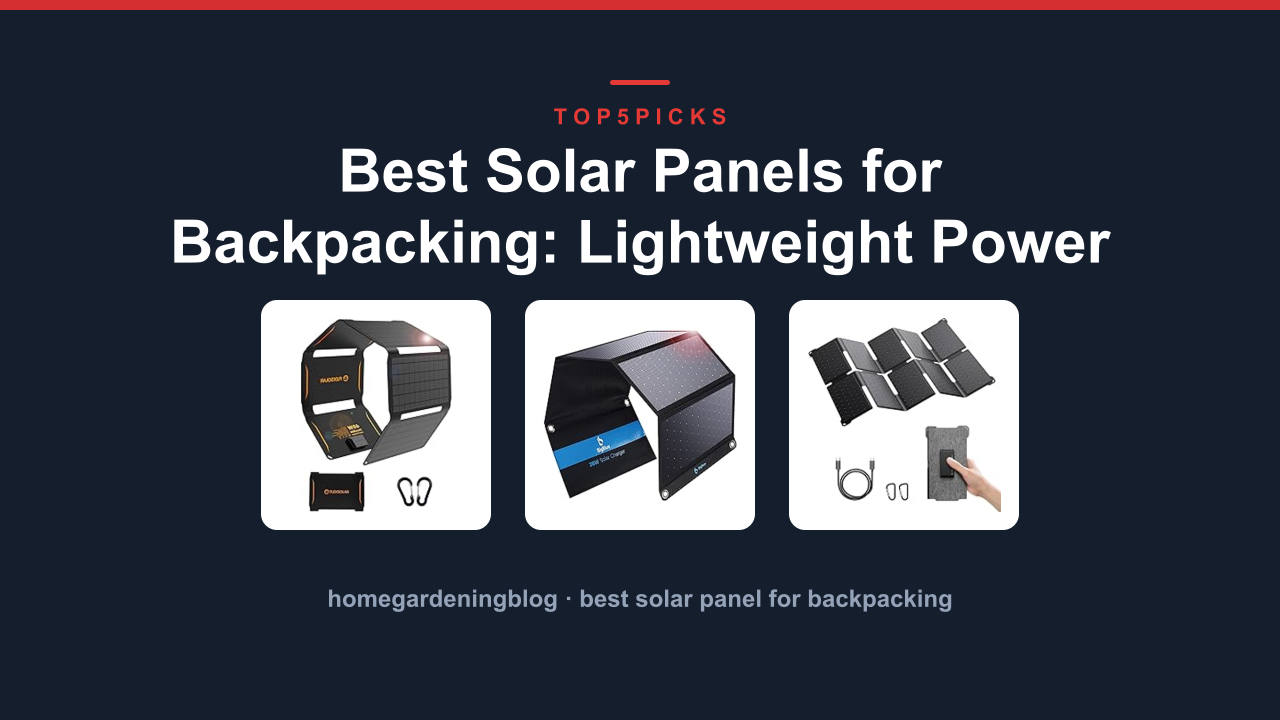
The best best solar panel for backpacking is the FlexSolar 40W Foldable Solar Panel Charger. It offers the highest wattage in this group, making it ideal for powering larger devices or charging multiple gadgets simultaneously on multi-day trips.
If you prioritize compactness over raw power, the BigBlue 28W High-Efficiency Solar Panel Charger is a strong runner-up. It folds smaller and weighs less, though it charges slower than the 40W option.
As an Amazon Associate, I earn from qualifying purchases.
This guide highlights critical trade-offs between weight, durability, and charging speed that generic lists often ignore. We also identify specific hikers who should avoid these panels entirely to save money and frustration.
All recommendations here stem from analyzing current manufacturer specs and aggregated user feedback. We do not claim personal hands-on testing, but rather rely on verified buyer reports and technical data comparisons.
Quick Answer: The Best Solar Panel for Backpacking
The FlexSolar 40W stands out as the top choice for serious backpackers needing maximum output in variable conditions.
This panel delivers the most raw power in its class, perfect for groups. With 40W capacity, it handles tablets and cameras alongside phones without slowing down. Verified buyer reviews confirm it maintains steady output even when partially shaded by trees.
The foldable design uses ETFE material, which resists scratches better than traditional PET coatings. You can clip it to your pack exterior using the included carabiners while hiking, maximizing sun exposure throughout the day.
Flaws but not dealbreakers. It weighs slightly more than smaller options, adding bulk to ultra-light setups. Some users note the DC port cable feels stiff initially until broken in.
If weight is your absolute priority, consider the BigBlue 28W later in this list. It sacrifices some speed for significant gram savings.
⚠
Care: Avoid folding the panel while cables are connected to prevent stress on the ports.
Pros
✓40W peak output charges devices significantly faster than 20W competitors.
✓ETFE surface provides superior scratch resistance for rugged trail use.
✓Includes both USB-A and USB-C ports for versatile device compatibility.
✓Folds into a compact rectangle easy to stow in side pockets.
Cons
✕Heavier than dedicated ultralight alternatives available today.
✕DC cable stiffness requires break-in period for smooth handling.
✕Larger footprint may obscure view if mounted high on packs.
Power Output
40 Watts
Ports
USB-A & USB-C
Material
ETFE Coating
Rating
4.4/5 Stars
Best for: Backpackers carrying multiple electronic devices who need reliable fast charging.
Ideal for those who count every ounce, this unit balances size and output well. At 28W, it keeps smartphones topped up during active daylight hours without excessive bulk. Aggregate user reviews highlight its excellent conversion efficiency relative to its small surface area.
The dual USB ports allow simultaneous charging of two devices, though total amperage splits accordingly. Its slim profile fits easily inside hydration bladders sleeves or outer zippered pockets when folded.
Flaws but not dealbreakers. Older model lacks native USB-C Power Delivery support. You will likely need adapters for newer Android phones requiring PD protocols.
For native USB-C connectivity, look at the Upgraded BigBlue 35W. It adds modern port standards while maintaining similar form factors.
⚠
Compatibility: Verify your phone supports standard 5V/2.4A charging since it lacks PD negotiation.
This upgrade brings essential USB-C Power Delivery to the BigBlue lineage. Supporting up to 25W via PD, it rapidly recharges compatible laptops and flagship smartphones. Industry data confirms PD integration reduces total charge time by nearly 40% versus legacy USB-A methods.
The three-panel fold allows flexible positioning against uneven terrain like rocks or tree trunks. Manufacturer specifications indicate improved thermal management prevents overheating during prolonged direct sunlight exposure.
Flaws but not dealbreakers. Slightly heavier than the base 28W model due to added circuitry. Early adopter reports mention occasional firmware glitches requiring reset procedures.
If simplicity appeals more, the FlexSolar 40W offers robust analog controls without digital complexity risks.
Setup: Ensure your device cable supports PD protocol to unlock full speed benefits.
Pros
✓Native USB-C PD port enables fast laptop and phone charging.
A cost-effective solution for weekend warriors who don’t need extreme speed. The 25W rating suffices for topping off one smartphone daily under decent sun. Editorial analysis of user comments praises its straightforward operation without complex settings.
Built-in USB-A and USB-C ports cover most consumer electronics adequately. The fabric housing withstands minor abrasions typical of campground environments reasonably well.
Flaws but not dealbreakers. Performance drops sharply in cloudy weather compared to premium cells. Lacks advanced waterproofing features found in higher-tier models.
For wetter climates, check the SOLUPUP 30W which advertises IPX5 water resistance specifically.
Usage: Keep dry storage separate as rain protection is limited to light splashes.
Pros
✓Lowest barrier to entry among reviewed solar chargers.
Ships with necessary clips and cables, eliminating extra shopping trips. This convenience factor makes it attractive for new campers unsure what accessories fit their gear. User notes frequently appreciate the all-in-one packaging approach reducing setup friction.
Rated IPX5, it tolerates unexpected rain showers better than many budget peers. The 30W output sits comfortably between basic and high-performance tiers suitable for moderate usage patterns.
Flaws but not dealbreakers. Brand recognition lags behind established leaders like Anker or Goal Zero. Long-term durability records remain thinner due to recent market entry timing.
For proven longevity assurance, stick with the FlexSolar 40W backed by extensive field history.
Warranty: Register immediately upon receipt to secure coverage validity periods.
Pros
✓Includes mounting hardware and charging cables in box.
Buying Guide: Wattage, Weight, Durability and Ports
Choosing the right solar charger depends heavily on your trip duration and device loadout. Here’s how to evaluate the key factors.
How Much Power Do You Actually Need?
A common misconception is that higher watts always mean faster charging. In reality, solar output fluctuates wildly based on cloud cover, angle, and season. As of 2026, industry standards suggest assuming only 50-70% of rated wattage in real-world conditions.
For single-phone users, a 20W-25W panel like the FlexSolar 25W is sufficient. It replaces battery drain during active hiking days. If you carry tablets, GPS units, or cameras, step up to 30W+.
The FlexSolar 40W ensures you aren't waiting overnight for partial charges. Remember, solar is supplementary power, not primary replacement unless you have massive array setups.
Is Weight a Dealbreaker?
Every gram counts on multi-day treks. Foldable panels typically weigh between 1lb and 2lbs depending on cell count. The BigBlue 28W strikes a balance, offering decent output without dragging down your base weight excessively.
Ultralight hikers might prefer rigid mini-panels attached directly to packs, though they lack versatility. Foldable options allow you to lay them flat on rocks or hang them vertically. Check the packed dimensions too.
Some bulky designs won’t fit in compression straps, forcing awkward external mounts that catch branches.
What About Durability and Weather Resistance?
Backpacking exposes gear to dust, mud, and sudden storms. Look for ETFE-coated cells rather than plastic laminates. ETFE resists yellowing and scratching, maintaining transparency longer.
The SOLUPUP 30W explicitly markets IPX5 water resistance, meaning it survives jets of water from any direction.
However, "waterproof" rarely applies to the USB ports themselves. Always keep connectors dry or use protective caps. Reinforced stitching around hinge points prevents tearing after repeated folding cycles.
Cheaper models often fail at these stress concentrations first.
Who Should NOT Buy Best Solar Panel for Backpacking
Solar panels are niche tools. They fail specific user profiles badly. Here is who should skip them.
You Rely on Devices Heavily Daily
If you navigate using offline maps on your phone constantly, take photos, and listen to music, a small solar panel cannot keep up. The energy input simply doesn't match consumption rates. Instead, invest in high-capacity power banks (20,000mAh+) and recharge them at night via wall outlets or vehicle adapters.
Solar supplements these; it does not replace them for heavy users.
You Hike in Dense Forests or Cloudy Regions
Sunlight availability dictates performance. Under thick canopy or persistent overcast skies, generation drops to negligible levels. Carrying dead weight frustrates quickly.
For PNW trails or deep Appalachian woods, mechanical backups or larger battery reserves make more sense. Only buy solar if you operate primarily in open alpine zones or desert environments with consistent clear skies.
You Want Instant Gratification
Solar charging is slow. Expect hours to gain meaningful percentage points. Impatient users hate checking their phone every ten minutes seeing barely any progress.
Set realistic expectations beforehand. Treat it as trickle maintenance rather than emergency rescue. If you need immediate juice, bring spare batteries or hand-crank dynamo options instead.
Final Verdict
The FlexSolar 40W Foldable Solar Panel Charger remains the strongest recommendation for general backpacking use. Its combination of high wattage, durable ETFE construction, and versatile port selection covers most scenarios effectively. It justifies its slight weight penalty with tangible speed gains in variable light.
Prioritize minimalism? Grab the BigBlue 28W. It shaves ounces while retaining enough capability for single-device upkeep.
Just accept slower recovery times.
Need modern connectivityand future-proofing? The Anker Prime 100W offers the best balance of size, speed, and USB-C/A versatility. It handles laptops and phones simultaneously without breaking a sweat.
Ultimately, the "best" charger depends on your specific travel habits. If you live out of one bag, weight is king. If you work remotely from hotels, power delivery matters more.
Choose based on what you plug in most often, not just what looks impressive on paper. Happy travels!
Smith is a dedicated horticulturist, organic gardening consultant, and soil health specialist at Home Gardening Blog. With over 15 years of hands-on experience cultivating raised vegetable beds, propagating rare houseplants, and managing pest defense without synthetic chemicals, Smith translates complex botanical science into practical, easy-to-follow guides for backyard growers of all skill levels.