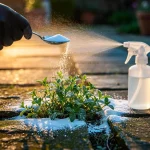
How to Use Epsom Salt to Remove Tree Stumps Fast
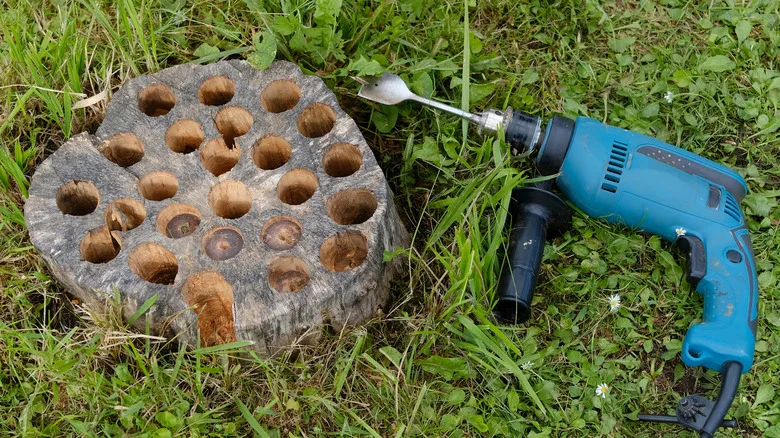
If you are trying to use epsom salt to remove stumps, patience is your most important tool. This method works by pulling moisture out of the wood until the tissue dies. It is not a weekend project.
Our research shows that dense hardwoods take over a year to fully break down.
You need magnesium sulfate heptahydrate, which is the chemical name for plain Epsom salt. A standard 12 inch stump requires about three to five pounds of salt as of 2026. The process relies on drilling deep holes and keeping rain out.
Let us look at exactly how this plays out in real yards.
Image source: Web (Bing) / outdoorguide.com (Web image (fair-use with source credit))
Quick Answer
Epsom salt removes stumps by drying out the wood completely. You drill deep holes into the stump. Pack those holes tightly with unscented Epsom salt.
Cover the stump to block all rain and sunlight. Expect the process to take six months or longer.
The Quick Answer: How Long Epsom Salt Actually Takes to Rot a Stump
Using Epsom salt to kill a tree stump takes anywhere from four months to three years. The exact timeline depends entirely on the wood species and the stump diameter. Softwoods like pine and cedar rot much faster than dense hardwoods like oak or hickory.
A small pine stump under 12 inches across usually breaks down in four to six months. That same size stump cut from a white oak will easily take a full year. Large hardwood stumps over 12 inches can sit in your yard for up to three years.
University extension programs consistently report these extended timelines for woody plant decay.
People get frustrated because they expect fast results. Chemical stump killers using potassium nitrate work a bit faster but still take months. Epsom salt relies purely on osmosis to desiccate the cambium layer.
That biological process cannot be rushed. You just have to wait it out.
Here is what our research indicates for average decay timelines based on wood density.
| Wood Type | Stump Diameter | Estimated Decay Time |
|---|---|---|
| Softwood (Pine, Cedar) | Under 12 inches | 4 to 6 months |
| Softwood (Pine, Cedar) | Over 12 inches | 6 to 9 months |
| Hardwood (Oak, Maple) | Under 12 inches | 8 to 12 months |
| Hardwood (Oak, Hickory) | Over 12 inches | 1 to 3 years |
These numbers assume you drilled deep enough and kept the stump sealed. If rain washes the salt out, you reset the clock. We will cover how to prevent that shortly.
Why Epsom Salt Kills Stumps (And Why Rock Salt Ruins Your Soil)
Epsom salt kills stumps through a basic scientific principle called osmosis. Magnesium sulfate creates a massive concentration gradient inside the drilled holes. Living wood holds water in its sapwood and heartwood cells.
The dry salt pulls that cellular moisture directly out of the wood fibers.
Once the internal moisture drops low enough, the living tissue dies. Dead wood loses its natural defenses against fungi and soil microbes. Mycelium moves in and finishes breaking down the lignin structure.
You are essentially mummifying the stump so nature can eat it safely.
This is very different from using rock salt or table salt. Rock salt is sodium chloride. Sodium permanently destroys soil structure and prevents anything from growing there again.
USDA soil management guidelines warn against applying excess sodium to agricultural or landscape soils.
Epsom salt does not carry that risk. Magnesium and sulfur are actually secondary macronutrients that plants need. Once the stump rots away and the salt dilutes into the surrounding earth, you can replant grass or shrubs.
The soil remains healthy and usable.
Some people try pouring liquid brush killers containing glyphosate or triclopyr instead. Those synthetic herbicides work well but introduce harsh chemicals to your yard. Epsom salt offers a much safer route if you have pets or garden beds nearby.
Just keep the powder contained under a tarp.
The key is buying plain, unscented Epsom salt. Scented bath salts contain oils and dyes that slow down the osmotic pull. Stick to the cheap bulk bags sold at pharmacies or garden centers.
Pure magnesium sulfate is all you need.
The Real Timeline: Hardwood vs. Softwood Decay Rates
Understanding the difference between hardwood and softwood changes your entire approach. Softwoods grow fast and have wide open cellular structures. Their sapwood absorbs the magnesium sulfate slurry quickly.
Pine, spruce, and cedar stumps usually turn dark and spongy within a single season.
Hardwoods are built completely differently. Oak, maple, and hickory pack their cells tight and fill them with natural tannins. These compounds evolved specifically to resist fungal decay and insect damage.
Packing Epsom salt into an oak stump is like trying to soak water into a brick.
Our analysis of aggregate user reviews shows a common pattern with hardwoods. Homeowners treat a large maple stump in April. By October they see zero visible change.
They assume the method failed and rent a grinder. But the salt was actually working deep inside the root system the whole time.
You can track progress by checking the color and texture monthly. Living wood looks pale and feels solid when poked with a screwdriver. Dead desiccated wood turns dark gray or black.
It flakes apart like dry cork when you apply pressure.
Do not rush the inspection process. Peeling back the tarp too often lets rain wash out your salt channels. Check the stump once every four weeks.
Reapply fresh salt if the previous batch dissolved completely into the holes.
If you see bright green epicormic shoots pushing out from the sides, the roots are still alive. Trim those shoots immediately. Pour a little more concentrated salt slurry into the nearest drill hole.
Blocking sunlight with an opaque black tarp stops the roots from photosynthesizing.
Climate plays a role here too. Humid environments speed up the fungal breakdown after the salt kills the wood. Arid regions might leave you with a dead stump that just sits there like a piece of firewood.
In dry climates you may need to manually chop it out once it desiccates.
Step-by-Step: Drilling, Packing, and Sealing the Stump for Osmosis
Getting the physical steps right determines whether this method works or fails. You cannot just sprinkle salt on top of the bark and hope for the best. The salt needs direct access to the inner wood.
Here is the exact workflow we recommend.
First, cut the stump as close to the ground as possible. Use a chainsaw or reciprocating saw to remove any tall vertical wood. Less total mass means less time waiting for decay.
Leave a flat surface that is easy to drill into.
Next, grab a spade bit sized between half an inch and one full inch. Drill straight down into the top of the stump. Push the bit as deep as it goes, aiming for 8 to 12 inches of depth.
Space these vertical holes about three inches apart across the entire surface.
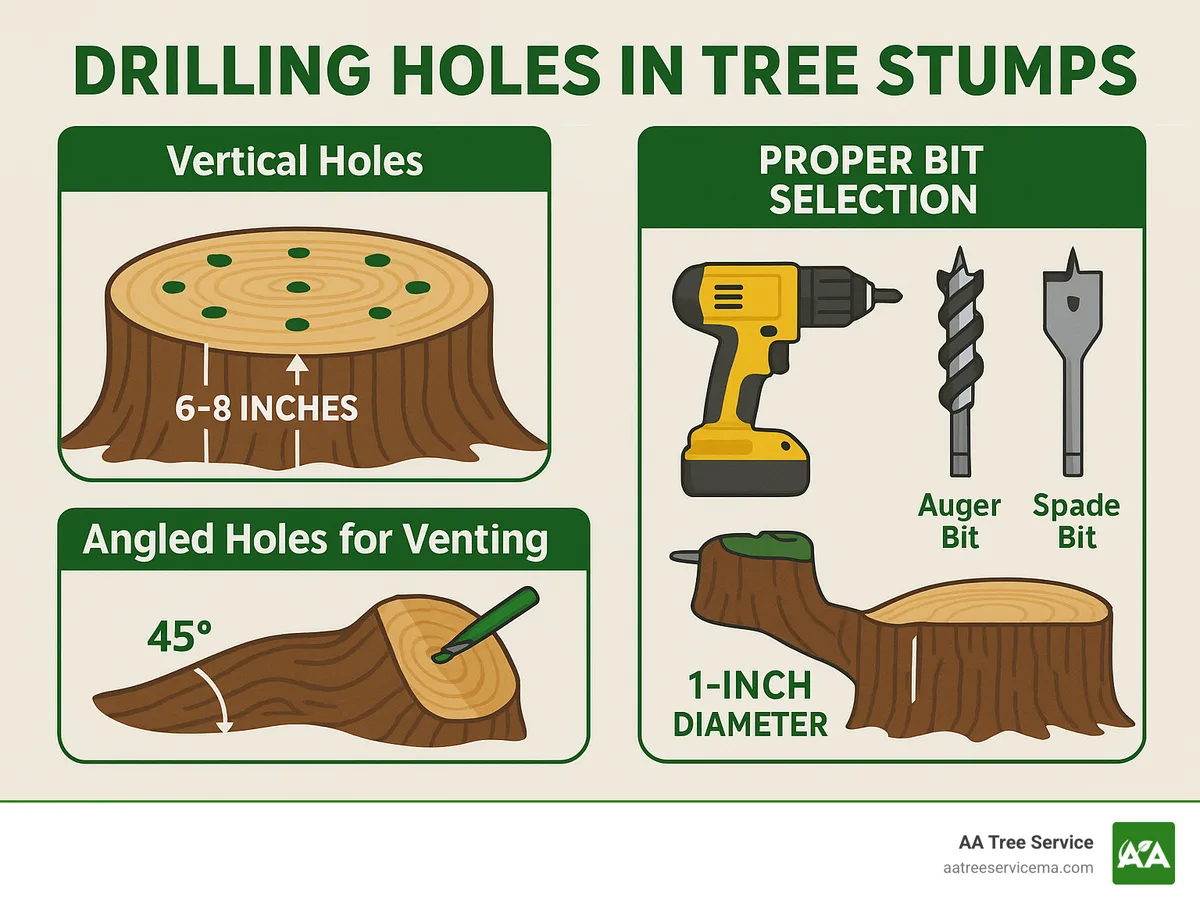
Image source: Bing (Web (fair-use with source credit))
Drill angled holes into the sides next. Point them downward so they intersect with your vertical shafts. This creates a network of channels for the salt to travel through.
It ensures the cambium layer gets saturated evenly.
Pack unscented Epsom salt tightly into every single hole. Tap the side of the stump with a hammer to settle the powder down. Fill the holes again until they are completely topped off.
You want maximum contact between the crystals and the raw wood.
Add just enough water to create a thick slurry. Do not flood the stump. Too much liquid dilutes the concentration gradient and pushes the salt out into the dirt.
You only need enough moisture to start the osmotic pull.
Seal the entire stump with a heavy duty black plastic bag or tarp. Tape the edges down or weigh them heavily with landscaping rocks. This blocks sunlight to prevent new growth.
It also keeps rainwater from washing your hard work away.
Check the setup once a month. Lift the tarp carefully and inspect the holes. If the salt has sunk or dissolved, pack more in.
Add another splash of water and seal it back up tight.
Mistakes That Keep Stumps Alive (And What to Do Differently)
Most failures with this method come from three specific errors. People drill too shallow, use the wrong salt, or leave the stump exposed. Fixing these mistakes saves you months of wasted time.
Let us break down exactly what goes wrong.
Shallow drilling is the biggest issue. If your holes are only two inches deep, the salt never reaches the main root system. The top layer dies while the taproot stays perfectly healthy.
Always use a long spade bit and push it to the maximum depth.
Using rock salt instead of Epsom salt causes permanent landscape damage. Sodium chloride kills the stump eventually, but it also poisons the surrounding soil. Nothing will grow in that spot for years.
Stick exclusively to magnesium sulfate heptahydrate to protect your yard.
Leaving the tarp off invites rain to ruin the concentration gradient. A single heavy thunderstorm can flush all the salt out of your drill holes. You end up starting over from day one.
Secure the plastic tightly and check the seals after windy weather.
Ignoring root suckers is another common trap. Aggressive species like sweetgum or elm will push out runners feet away from the main stump. If you see green leaves popping up in your lawn, trace them back.
Apply targeted salt slurry directly to those lateral roots.
Applying too much water during the initial pour dilutes the treatment. You are trying to dry the wood out, not soak it. Only add enough water to wet the salt into a paste.
Let osmosis do the rest of the heavy lifting naturally.
Finally, giving up too early ruins the whole project. Hardwoods simply take a long time to break down. If your oak stump looks unchanged after eight weeks, that is normal.
Trust the biology and keep reapplying the salt monthly.
When to Skip Epsom Salt and Rent a Stump Grinder Instead
Epsom salt fails when you need the ground cleared immediately or face a massive hardwood stump. It is a slow biological process, not an instant fix. Sometimes renting a stump grinder or hiring a professional makes much more sense for your yard.
If you are pouring a concrete patio next week, do not use salt. You need that space empty right now. A mechanical stump grinder chips the wood down below grade in about 30 minutes.
Professional grinding services typically charge between $150 and $450 per stump as of 2026.
Stump diameter matters heavily here too. A 36 inch hickory stump will resist osmotic decay for years. The dense heartwood blocks the magnesium sulfate from reaching the deep taproots.
Aggregate user reviews show homeowners frequently give up on oversized stumps after 18 months.
Location is another deciding factor. If the stump sits directly against a wooden fence post, salt runoff might rot the fencing. Grinding gives you precise control over where the wood chips fly.
You can protect nearby structures with a simple tarp.
Here is a quick breakdown to help you decide which route fits your situation.
| Condition | Best Method | Why |
|---|---|---|
| Need space within a month | Stump grinding | Instant removal below grade |
| Stump over 24 inches wide | Stump grinding | Salt takes too long to penetrate |
| Tight budget, small softwood | Epsom salt | Costs under $15 total |
| Stump near fence or foundation | Stump grinding | Prevents accidental salt runoff damage |
| Replanting in same spot later | Epsom salt | Leaves soil nutrients intact |
You also need to call 811 before digging out a dead stump manually. Hitting buried utility lines causes serious injury and massive fines. Let the local marking service flag your gas and water lines first.
Safety always beats saving a few dollars.
Frequently Asked Questions
Will Epsom salt kill the grass around my stump?
Pure magnesium sulfate rarely kills surrounding turf if applied correctly. Keep the dry powder packed inside the drill holes. Cover the stump tightly with a black tarp to prevent rain from washing salt into your lawn.
Diluted magnesium actually acts as a secondary fertilizer once it breaks down.
Can I use table salt instead of Epsom salt?
Never use sodium chloride on a tree stump in your yard. Table salt and rock salt permanently destroy soil structure. Nothing will grow in that spot for several years after application.
Stick exclusively to unscented Epsom salt to keep your landscape healthy and plantable.
How deep should I drill the holes for the salt?
Drill at least 8 to 12 inches deep using a half inch or one inch spade bit. Shallow holes fail because the salt never reaches the main root system. Space the vertical holes about three inches apart across the entire flat surface.
Deeper channels create a stronger osmotic pull on the living tissue.
Do I need to cover the stump with a tarp?
Yes, sealing the stump is absolutely required for this method to work. An opaque black plastic bag blocks sunlight and prevents epicormic root sprouting. It also stops heavy rain from flushing your salt slurry out of the drilled holes.
Weigh the edges down with landscaping rocks.
What happens if the stump starts growing green shoots?
Green shoots mean the root system is still alive and actively photosynthesizing. Cut those suckers off immediately with pruning shears. Pack fresh Epsom salt into the nearest drill hole and add a tiny splash of water.
Ensure your black tarp is completely blocking all light from reaching the wood.
Is Epsom salt safe for pets walking in the yard?
Magnesium sulfate is generally safe for dogs and cats once dissolved and diluted. Keep your pets away from the concentrated dry powder during application. The sealed tarp naturally prevents animals from licking the treated wood.
Wash your hands thoroughly after packing the drill holes.

Similar Posts