Does Baking Soda Kill Weeds? How to Use It Safely
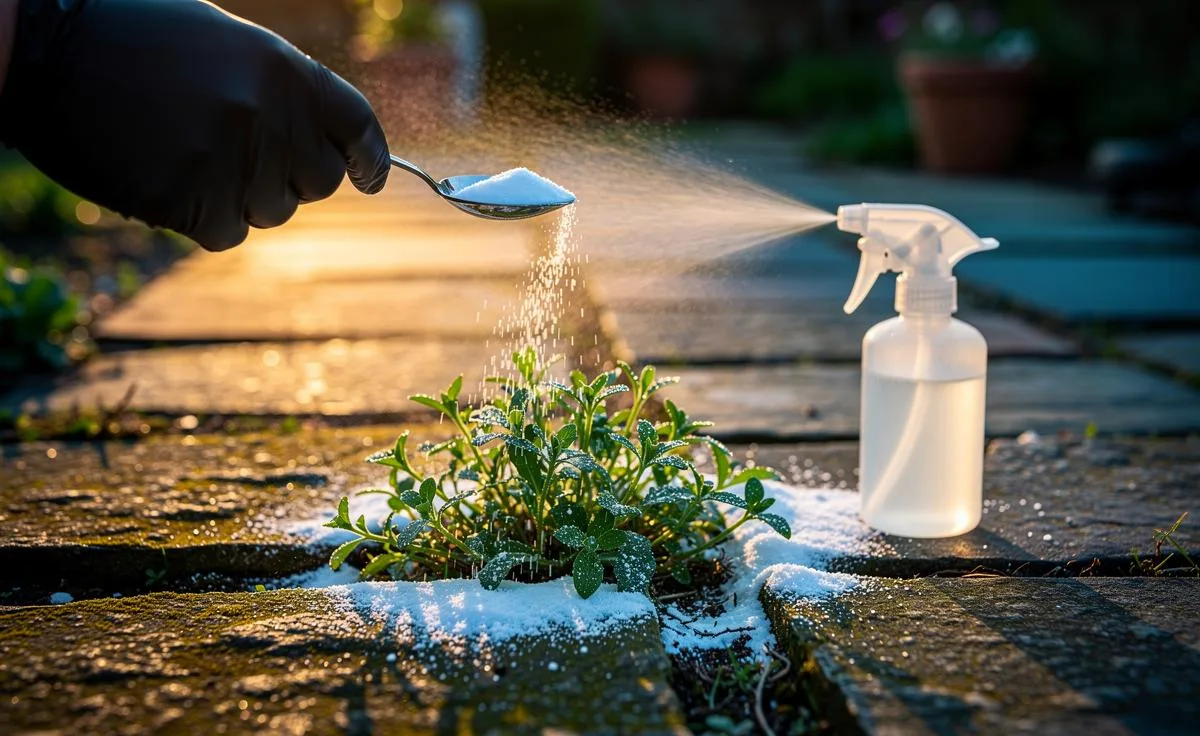
Using baking soda as weed killer works best on small annual weeds growing in hardscape cracks. It burns foliage through desiccation but rarely kills established root systems. This method suits spot treatment rather than broad lawn application.
You must understand the soil risks before spraying anywhere near garden beds.
Sodium bicarbonate solutions typically measure pH 8.3, which causes rapid cellular collapse in tender plant tissue. University extension research confirms effectiveness is limited to young seedlings without woody stems. We will walk through exactly when this approach makes sense for your specific situation.
Quick Answer
Baking soda as weed killer burns small annual weeds. It acts as a contact desiccant only. Established perennial weeds survive treatment easily.
High sodium levels damage soil structure over time. Use it strictly on hardscape cracks.
Baking Soda as Weed Killer: When It Works and When to Skip It
Image source: Bing (Web (fair-use with source credit))
Baking soda functions as a non-selective contact herbicide that damages plant cells through osmotic stress. It pulls moisture out of leaf tissue upon direct contact. The high alkalinity disrupts cellular integrity almost immediately.
This mechanism only affects green tissue it physically touches.
You should view this as a burn-down tool rather than a complete eradication method. It lacks systemic action, meaning nothing travels down to the roots. Perennial weeds with deep taproots simply resprout within weeks.
Annual weeds in the seedling stage are the primary viable targets.
Conditions Where Baking Soda Succeeds
- Young broadleaf weeds less than two inches tall
- Moss or algae growing on stone pavers
- Isolated weeds in driveway expansion joints
- Spot treatment away from desirable plant roots
- Dry weather windows lasting at least 48 hours
Situations Requiring Different Solutions
- Established dandelions, thistle, or bindweed
- Large infestations covering significant square footage
- Areas with existing high soil salinity or alkalinity
- Garden beds containing shallow-rooted ornamentals
- Lawns where grass recovery is the goal
Understanding these boundaries prevents wasted effort and accidental landscape damage. If your scenario falls outside the success conditions, skip ahead to the alternatives section. Forcing this method in the wrong context creates bigger problems than the weeds themselves.
How Sodium Bicarbonate Actually Kills Weeds (And What It Does to Soil)
The active ingredient is pure sodium bicarbonate, not a specialized formulation. When dissolved in water, it raises solution pH to approximately 8.3. This alkaline shock ruptures cell membranes in susceptible plants.
Desiccation follows as internal moisture leaks out rapidly.
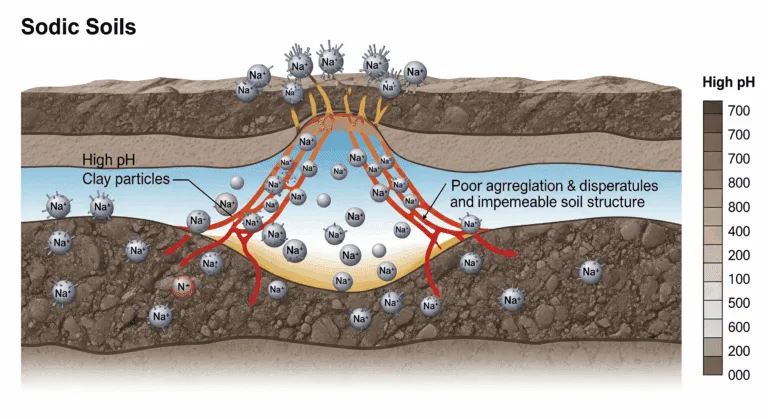
Image source: Bing (Web (fair-use with source credit))
Soil impact is where most users underestimate the risk. Sodium ions do not break down like organic compounds do. They accumulate in the soil profile with repeated applications.
USDA NRCS guidelines classify excess sodium as a primary cause of soil structure degradation.
High sodium levels displace calcium and magnesium on clay particles. This causes soil aggregates to disperse and seal surface pores. Water infiltration drops dramatically while runoff increases.
Recovery requires gypsum amendments and significant leaching rainfall over months.
Key Chemical Properties
| Property | Value / Effect | Practical Implication |
|---|---|---|
| Solution pH | 8.3 to 9.0 | Burns acid-loving plants fastest |
| Systemic Action | None | Roots remain viable after foliar spray |
| Soil Persistence | Months to years | Repeated use causes cumulative salt buildup |
| Rainfastness | Very low | Light rain washes treatment off before absorption |
| Selectivity | Non-selective | Damages any green tissue contacted |
This chemistry explains why results vary so wildly between users. Humidity, plant maturity, and soil buffering capacity all shift outcomes. What worked for someone else might fail completely in your yard.
Always test on a small area first to gauge local effectiveness.
The Decision Checklist: Should You Use Baking Soda in Your Specific Situation?
Run through these conditional checks before mixing any solution. If you answer no to more than one condition, choose an alternative method. This decision framework prevents costly soil remediation later.
Honest assessment now saves frustration and money down the road.
Pre-Application Evaluation
- Is the target weed an annual seedling under two inches? Mature perennials waste your time and sodium budget.
- Is the treatment zone isolated from garden soil by physical barriers? Driveway cracks are safe. Vegetable bed edges are not.
- Has soil pH been tested recently in the past year? Alkaline soils above pH 7.5 cannot buffer additional bicarbonate safely.
- Can you guarantee 48 hours of dry weather post-application? Rain within hours renders treatment useless and spreads salt elsewhere.
- Are nearby desirable plants protected from drift? Even fine mist can scorch sensitive foliage permanently.
Interpreting Your Results
If all five answers are yes, proceed with cautious optimism. Expect multiple applications spaced two weeks apart. Monitor treated areas for signs of soil crusting or poor drainage.
Stop immediately if negative symptoms appear.
Three or fewer yes answers mean this tool is wrong for your job. The risk-to-reward ratio tips toward damage. Horticultural vinegar, flame weeding, or manual extraction offer better outcomes.
Do not let sunk cost thinking push you forward when conditions are unfavorable.
This checklist exists because aggregate user reviews show inconsistent results stem from mismatched expectations. People who succeed used it surgically in ideal conditions. Those who regret it skipped evaluation steps.
Your situation determines viability, not internet anecdotes.
Safe Application Methods for Driveways, Patios, and Garden Edges
Proper technique minimizes collateral damage while maximizing contact time. Preparation matters as much as the mixture itself. Gather materials before starting to avoid mid-process improvisation.
Safety gear protects eyes and skin from alkaline irritation.
Standard Spray Mixture Ratio
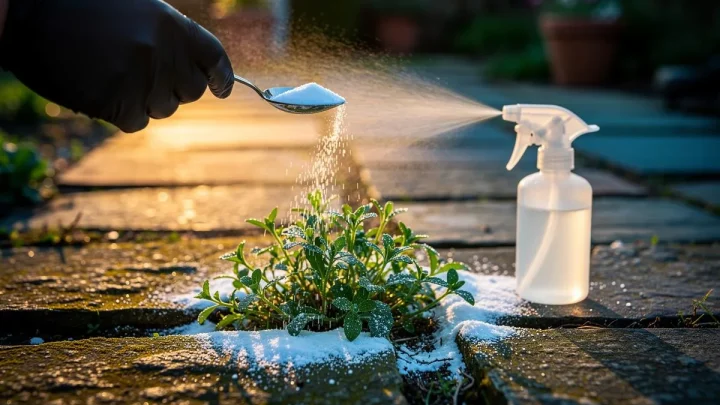
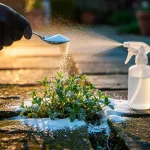
Mix one teaspoon of baking soda per quart of warm water. Warm water improves dissolution significantly over cold. Add half a teaspoon of liquid dish soap as a surfactant.
This breaks surface tension so solution sticks to waxy leaves instead of beading off.
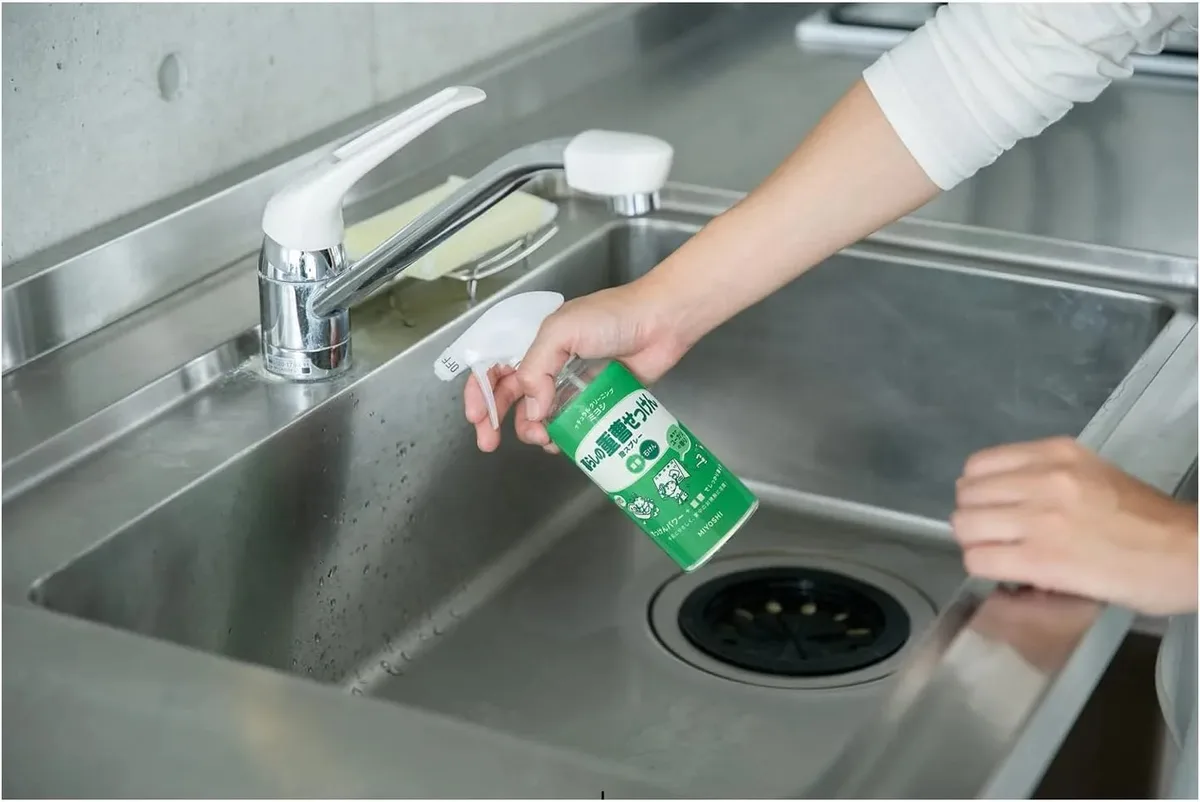
Image source: Bing (Web (fair-use with source credit))
Shake gently to combine without creating excessive foam. Transfer to a pump sprayer with adjustable nozzle. Set nozzle to coarse stream rather than fine mist.
Fine droplets drift easily and increase off-target exposure risk substantially.
Application Best Practices
- Apply during morning hours when dew has dried but heat is low
- Shield adjacent plants with cardboard or plastic sheeting
- Saturate foliage until runoff begins, then stop
- Avoid pouring directly onto soil whenever possible
- Clean sprayer thoroughly after use to prevent clogging
Dry powder application works for isolated crack weeds only. Pinch a small amount directly onto wet foliage. Do not broadcast powder across large areas.
Concentrated piles create localized salt zones that persist for seasons. Precision beats volume every time.
Reapplication timing depends on observed response. Wait seven to fourteen days before second treatment. Yellowing indicates partial success worth following up.
Complete browning means the top growth died but roots may survive. Watch for regrowth signals before committing to another round.
Critical Mistakes That Cause Permanent Soil Damage or Plant Loss
Most failures trace back to preventable errors rather than product limitations. Overapplication is the single biggest offender. More concentration does not equal faster kill.
It equals deeper soil contamination and longer recovery timelines.
Broadcast spraying across lawns or garden beds destroys soil biology indiscriminately. Sodium bicarbonate is non-selective by definition. Beneficial microbes, earthworms, and mycorrhizal fungi suffer alongside weeds.
Sterile soil supports future weed invasions more readily than healthy ecosystems do.
Ignoring weather forecasts wastes product and spreads salt unintentionally. Rain within six hours washes solution off target surfaces. Runoff carries dissolved sodium into planting beds and storm drains.
Check reliable local forecasts rather than guessing based on clouds.
Common Errors and Corrections
| Mistake | Consequence | Correct Approach |
|---|---|---|
| Doubling recipe strength | Severe leaf burn, soil toxicity | Stick to 1 tsp per quart maximum |
| Spraying near tree drip lines | Root zone salt accumulation | Maintain 3-foot buffer from trunks |
| Applying before rain | Wasted product, salt spread | Wait for 48-hour dry window |
| Using on vegetable gardens | Crop damage, soil ruin | Reserve for hardscape only |
| Skipping surfactant | Poor adhesion, rapid evaporation | Always include dish soap binder |
Assuming one application solves everything sets unrealistic expectations. Contact herbicides require patience and repetition. Budget three to four treatments minimum for stubborn patches.
Track progress with photos rather than memory to stay objective.
Neglecting post-treatment monitoring allows problems to compound silently. Soil damage shows up months later as poor drainage or stunted growth. Test treated zones quarterly for pH and salinity shifts.
Early detection enables correction before permanent structural loss occurs.
Better Alternatives When Baking Soda Is the Wrong Tool
Horticultural vinegar at 20% acetic acid concentration outperforms baking soda on mature broadleaf weeds. It acts as a faster contact burn with lower soil persistence risk. University extension trials show superior efficacy on waxy-leaved species.
This option suits driveway edges and patio gaps better than bicarbonate.
Iron-based herbicides like FeHEDTA offer selective lawn weed control without grass damage. They work systemically to kill broadleaves while sparing turfgrasses. Results appear within hours rather than days.
This chemistry is approved for organic use under NOP standards when formulated correctly.
Mechanical and Thermal Options
- Propane flame weeding destroys cell structure instantly without chemical residue
- Boiling water poured directly kills seedlings in cracks safely
- Manual extraction removes entire root systems for permanent control
- Corn gluten meal prevents germination but does not kill existing growth
- Mulching blocks light to suppress emergence in garden beds
Flame weeding requires careful fire safety protocols and dry conditions. Boiling water works best on very young plants before taproots establish. Neither leaves salt behind in soil profiles.
Both demand more physical effort than spraying but eliminate long-term contamination risks entirely.
Choosing alternatives depends on your specific constraint. Soil health concerns favor mechanical or thermal methods. Speed matters most for iron herbicides or flame tools.
Budget limitations might make boiling water the pragmatic winner. Match the tool to the actual problem rather than defaulting to pantry staples.
Frequently Asked Questions About Baking Soda Weed Control
Does baking soda kill weeds permanently?
No, it only burns foliage on contact without affecting roots. Perennial weeds resprout within weeks of treatment. Annual seedlings may die completely if caught early enough.
Permanent control requires systemic herbicides or physical root removal instead.
How long does baking soda stay active in soil?
Sodium ions persist for months to years depending on rainfall and drainage. Arid climates retain salt longer due to minimal leaching. Heavy rains accelerate removal but spread contamination downhill.
Soil testing reveals residual levels before replanting sensitive species.
Can I mix vinegar and baking soda for stronger weed killer?
Mixing them neutralizes both ingredients through acid-base reaction. The resulting solution is essentially salty water with reduced efficacy. Use either product alone at full strength for best results.
Combining household chemicals rarely improves performance and often wastes materials.
Is baking soda safe for pets after application?
Yes, once the solution dries completely on surfaces. Ingestion of wet concentrate can cause gastrointestinal upset. Keep animals away during application and drying period.
Rinse treated areas if accidental exposure occurs before drying finishes.
Will baking soda harm my lawn grass?
Yes, it burns grass blades and alters soil pH unfavorably. Turfgrasses prefer slightly acidic conditions around pH 6.5. Alkaline shock causes yellowing and thinning that lasts seasons.
Reserve this treatment for hardscape zones only, never broadcast over lawns.

Similar Posts