Holes in Basil Leaves? 5 Common Causes and How to Fix Them
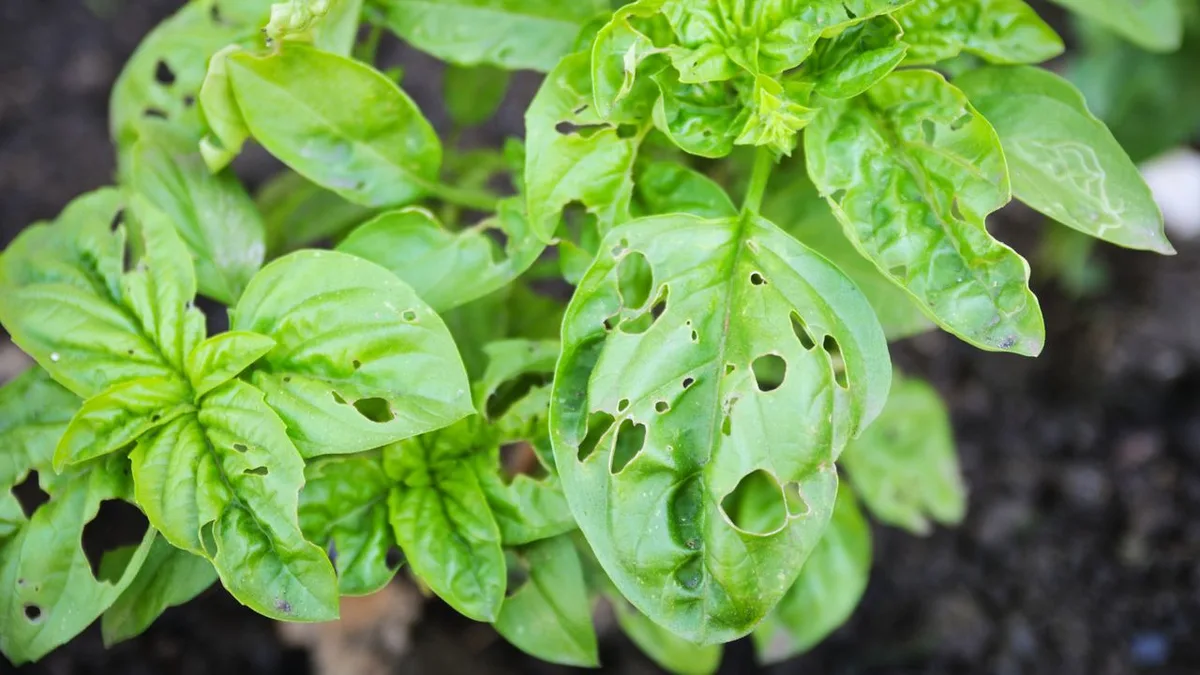
Finding holes in basil leaves usually means a specific insect or mollusk is feeding on your plant. The shape of the damage tells you exactly what is eating it. You just have to know what to look for.
Basil is a tender herb, and pests can strip a young plant in just a few nights. Our research into university extension data shows that slug activity peaks when nighttime temperatures stay above 50°F with high humidity. Let's figure out what is chewing up your herbs so you can stop it fast.
Quick Answer
Holes in basil leaves come from chewing pests. Slugs leave large smooth gaps. Beetles create jagged skeletonized edges.
Caterpillars chew big chunks near frass. Match the hole shape to the pest.
Image source: Bing (Web (fair-use with source credit))
What’s Actually Eating Your Basil? Match the Hole to the Pest
Different pests eat differently. The physical evidence they leave behind is your best diagnostic tool. You don't need to guess.
You just need to look closely at the leaf margins and the surrounding soil.
The 4 Damage Patterns That Tell You Everything
Damage patterns fall into four distinct categories. Each one points directly to a specific group of pests.
- Large, smooth holes: If the edges look cleanly cut, slugs or snails are your problem. They use a rasping mouthpart that leaves smooth curves.
- Skeletonized leaves: If only the veins remain, Japanese beetles (Popillia japonica) are feeding. They eat the soft tissue between the leaf veins.
- Big missing chunks with droppings: Caterpillars like cabbage loopers (Trichoplusia ni) take massive bites. Look for black or brown frass on the lower leaves.
- Tiny pinprick holes: Flea beetles (Phyllotreta spp.) create a "shot-hole" pattern. The holes are usually 1 to 2 mm across. Leafminers leave winding white trails instead of holes.
When to Check: Nocturnal vs. Daytime Feeders
Timing matters just as much as the damage itself. Some pests hide during the day. Others feed right out in the open.
If you see damage but no bugs at noon, check again after dark. Slugs, snails, and earwigs are strictly nocturnal feeders. Grab a flashlight and inspect the undersides of the leaves around 10 PM.
Japanese beetles and grasshoppers prefer the heat of the day. You'll spot them resting on the foliage in the afternoon. Knowing their schedule saves you hours of pointless searching.
The Decision Tree: Find Your Culprit and Pick the Right Fix
This workflow helps you match the physical signs to the exact treatment. Follow the branches based on what you observe. Don't skip steps, because treating the wrong pest wastes time and money.
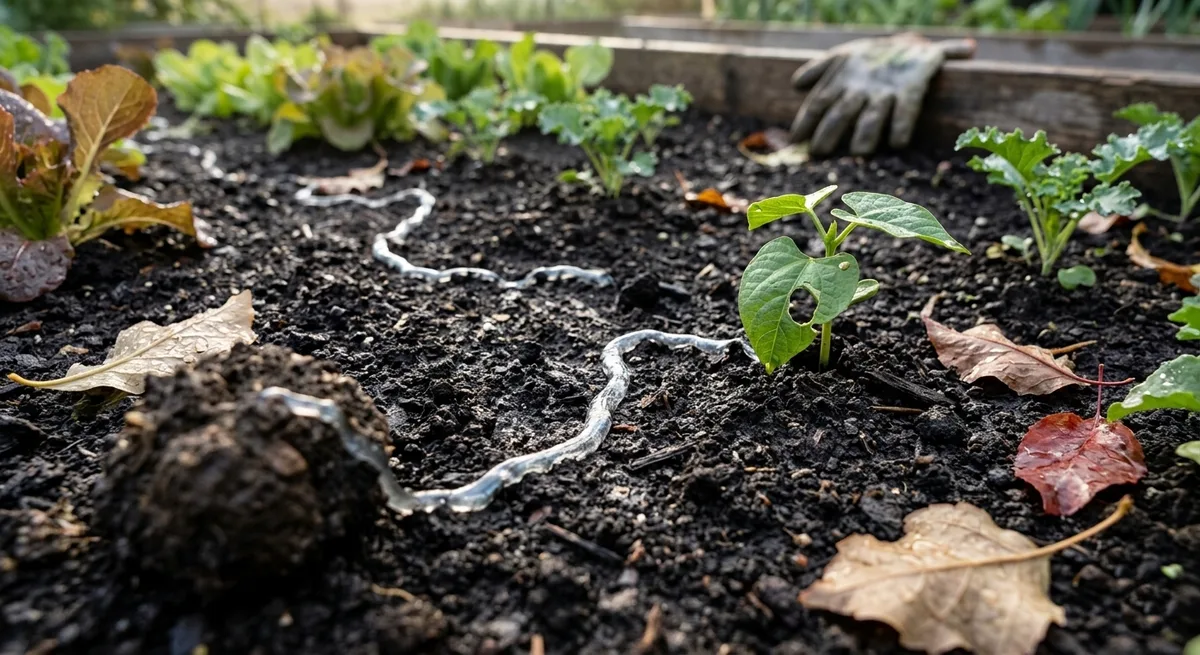
Image source: Bing (Web (fair-use with source credit))
Branch 1: Slugs and Snails (Large, Smooth Holes + Slime Trails)
If you find large irregular holes paired with silvery slime trails, you have gastropods. These are not insects. Standard bug sprays will not work on them.
The fix: Use iron phosphate baits. Iron phosphate is safe for pets and wildlife, unlike older metaldehyde baits which are highly toxic to dogs and cats. Scatter the pellets around the base of the basil in the evening.
You can also set up physical barriers. Copper tape around the rim of your pots creates a mild electric shock that repels slugs. Beer traps sunk into the soil work well too, but they require daily emptying.
Water your basil early in the morning. This lets the top layer of soil dry out before nightfall. Slugs hate crossing dry ground.
Branch 2: Japanese Beetles and Grasshoppers (Skeletonized or Jagged Edges)
If the leaves look like lace, adult Japanese beetles are feeding. If entire sections are ripped away with jagged edges, suspect grasshoppers. Both are daytime feeders.
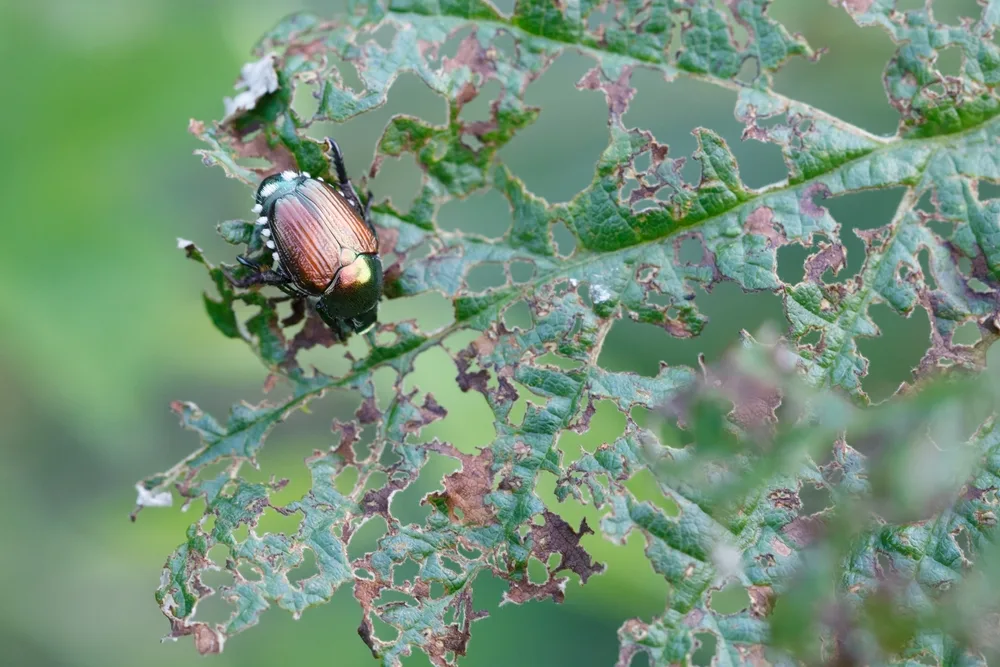
Image source: Bing (Web (fair-use with source credit))
The fix: Hand-picking is surprisingly effective for small gardens. Knock the beetles into a jar of soapy water first thing in the morning when they are sluggish. Per integrated pest management guidelines from university cooperative extension programs, physical removal remains a primary defense for home growers.
For heavier infestations, apply Spinosad. It is a natural bacterial derivative. Spray it late in the evening to protect foraging bees, as Spinosad is toxic to pollinators while wet.
Floating row covers offer a chemical-free alternative. Drape lightweight fabric over your basil plants. Secure the edges tightly to the soil so beetles can't crawl underneath.
Branch 3: Caterpillars like Cabbage Loopers (Big Chunks Missing + Frass)
If you see large missing pieces of foliage and tiny dark droppings, caterpillars are at work. Cabbage loopers are green and move by arching their backs.
The fix: Apply Bacillus thuringiensis, commonly called Bt. This is a naturally occurring soil bacterium. It specifically targets caterpillar digestive systems without harming beneficial insects, humans, or pets.
Spray Bt on both sides of the leaves. It breaks down quickly in UV light, so you'll likely need to reapply every five to seven days if rain washes it off or the sun degrades it.
Check the undersides of leaves for pale green eggs. Squish them before they hatch. Stopping the life cycle early prevents the rapid defoliation that happens once larvae mature.
Branch 4: Flea Beetles and Leafminers (Tiny Shot-Holes or Winding White Trails)
If the holes are barely a millimeter wide, flea beetles are jumping around your basil. If you see squiggly white lines inside the leaf tissue, leafminers are tunneling through.
The fix: For flea beetles, dust the leaves lightly with food-grade diatomaceous earth. Wear a mask while applying it to avoid inhaling the fine powder. Reapply after any rainfall.
Leafminers live inside the leaf. Sprays won't reach them. Pinch off and destroy any leaves showing those winding trails immediately.
Do not compost them, or the larvae will finish developing in your pile.
Neem oil works as an antifeedant here. It disrupts the hormonal cycles of chewing insects. Apply it only in the cool evening to prevent burning your basil leaves under the midday sun.
Safe Treatments for Edible Herbs: What Works Without Ruining Your Harvest
Because you plan to eat this basil, safety dictates your choices. You cannot use broad-spectrum synthetic pesticides meant for ornamental flowers. Every product must be explicitly labeled for edible herbs.
As of 2026, organic gardening relies heavily on OMRI-listed products. The Organic Materials Review Institute verifies which inputs meet strict organic standards. Always look for that certification on the bottle.
Organic Sprays, Baits, and Barriers Compared
Choosing the right tool depends on your specific pest and how soon you want to harvest. Here is how the standard options stack up against each other.
| Treatment | Target Pests | Pre-Harvest Interval | Safety Notes |
|---|---|---|---|
| Iron Phosphate Bait | Slugs, Snails | 0 days | Safe around pets and wildlife |
| Bacillus thuringiensis (Bt) | Caterpillars | 0 days | Harmless to bees and humans |
| Spinosad | Beetles, Thrips | 1 to 3 days | Toxic to bees until completely dry |
| Neem Oil | Broad spectrum | 0 days | Can burn leaves in direct sunlight |
| Diatomaceous Earth | Flea beetles, Crawlers | 0 days | Must be food-grade; wear a mask |
Pre-Harvest Intervals and Pollinator Safety
The pre-harvest interval (PHI) is the mandatory waiting period between spraying and picking. Manufacturer specifications dictate this timeline. A PHI of zero days means you can technically wash and eat the basil the same day.
Pollinator safety requires equal attention. Even organic sprays like Spinosad kill honeybees on contact. The EPA pesticide labels mandate applying these products when bees are not actively foraging.
Late dusk is always your safest window.
Insecticidal soap is another option, but understand its limits. It only works on soft-bodied sucking insects like aphids. It does absolutely nothing for the chewing pests making holes in your basil.
Don't waste your time spraying soap on beetle damage.
Mistakes That Waste Your Time (and Kill Your Basil)
Treating garden pests involves some trial and error. But certain mistakes guarantee failure. Avoid these common errors to keep your basil alive and productive.
Spraying insecticide on slugs. Slugs are mollusks, not insects. Bug spray does not affect them. You must use targeted baits or physical barriers.
Using the wrong chemistry just poisons your soil for nothing.
Applying neem oil at noon. Essential oils heat up rapidly in direct sunlight. If you spray neem oil on basil at 2 PM in July, the leaves will scorch and drop off. Always treat plants after the sun goes down.
Ignoring the soil environment. Overwatering creates a paradise for slugs and fungus gnats. Basil prefers soil that dries out slightly between waterings. Constant soggy mulch invites the very pests you are trying to fight.
Using broad-spectrum sprays immediately. Wiping out all insects removes predatory bugs that eat your pests. Ladybugs and parasitic wasps do free pest control. Reserve heavy treatments like Spinosad for severe outbreaks, and rely on hand-picking first.
Assuming it is a disease. Bacterial leaf spot causes dark lesions, not clean holes. If tissue is physically missing, something ate it. Don't waste fungicides on a caterpillar problem.
Look for frass or slime trails to confirm.

Similar Posts