Why Are My Sunflower Leaves Turning Black? Causes & Fixes
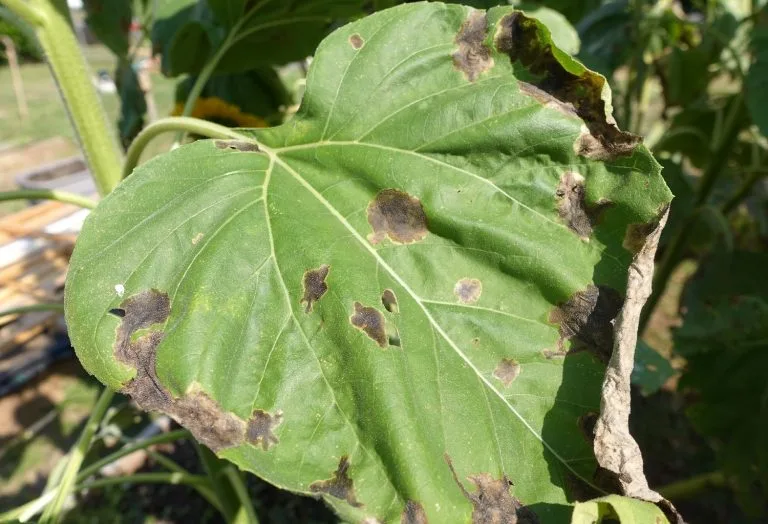
If you are wondering why are my sunflower leaves turning black, you are not alone. It is a stressful sight for any gardener. The dark spots usually point to a specific problem with water, weather, or disease.
Pinpointing the exact cause is your first step toward saving the plant.
Sunflowers need consistent conditions to thrive. Our research shows that fungal pathogens like Alternaria require about 10 to 12 hours of continuous leaf moisture to germinate. That single data point explains why wet summers trigger so many outbreaks.
Let us walk through exactly how to figure out what is attacking your plants.
Image source: Bing (Web (fair-use with source credit))
Quick Answer
Sunflower leaves turn black due to disease, frost, or overwatering. Fungal infections create dark spots on the foliage. Cold weather ruptures cells and turns tissue black.
Excess water suffocates roots and causes leaf collapse. Identify the pattern to apply the right fix.
Why Your Sunflower Leaves Are Turning Black (The Quick Diagnostic)
Black leaves on a sunflower are never just bad luck. They are a symptom. Your job is to read that symptom correctly before you start spraying chemicals or changing your watering schedule.
Start by looking at where the black color begins. Does it start at the edges? Is it in the center of the leaf?
Or did the whole leaf collapse overnight? These clues tell you everything.
Touch the affected area gently. If the black spot feels dry and papery, you are likely dealing with a fungal issue or environmental stress. If it feels wet, slimy, or mushy, bacteria or severe rot is usually the culprit.
Next, check the rest of the plant. Look at the stem base and the lower canopy. A problem isolated to one bottom leaf is very different from blackening spreading across the entire stalk.
Here is a quick reference table we use to match symptoms to causes.
| Symptom | Texture | Likely Cause |
|---|---|---|
| Spots with yellow rings | Dry, papery | Fungal leaf spot |
| Angular dark patches | Wet, slimy | Bacterial infection |
| Entire leaf edge blackening | Crispy or mushy | Frost damage |
| Lower leaves collapsing | Soggy, foul smell | Overwatering or root rot |
| Black powdery coating | Sticky underneath | Sooty mold from pests |
Use this table as your starting point. Once you match your plant's symptoms to a category, you can move straight into the decision tree below. That is where the real troubleshooting happens.
The Decision Tree: Is It Disease, Weather, or Water?
Figuring out the exact cause requires a simple if/then workflow. You do not need a lab coat. You just need to follow the clues your plant is giving you.
Ask yourself three questions in order. First, has the temperature dropped recently? Second, how wet is the soil?
Third, what shape are the spots? Your answers will route you down the correct path.
Branch 1: Fungal and Bacterial Infections (Alternaria, Septoria, and Bacterial Spot)
If your leaves have distinct spots rather than total collapse, you are likely on the disease branch. This is the most common reason home gardeners see blackening during warm, humid months.
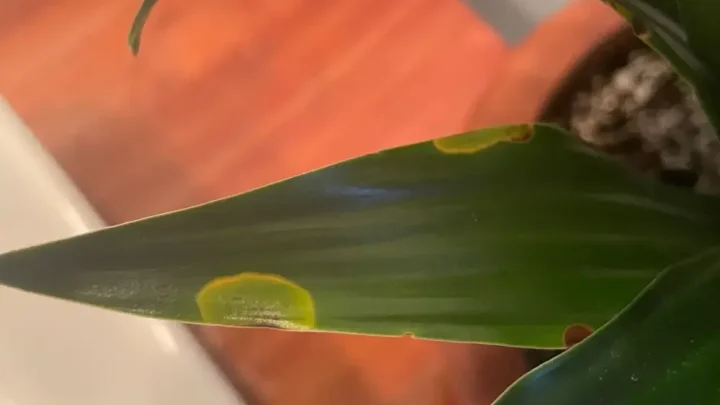
Fungal issues like Alternaria leaf spot (Alternaria helianthi) show up as dark brown or black lesions. They often feature concentric rings inside the spot. Septoria leaf spot looks similar but usually starts on the lowest leaves first.
Bacterial leaf spot (Pseudomonas syringae) behaves differently. The black spots are angular because bacteria cannot easily cross the leaf veins. They also look water-soaked when held up to the light.
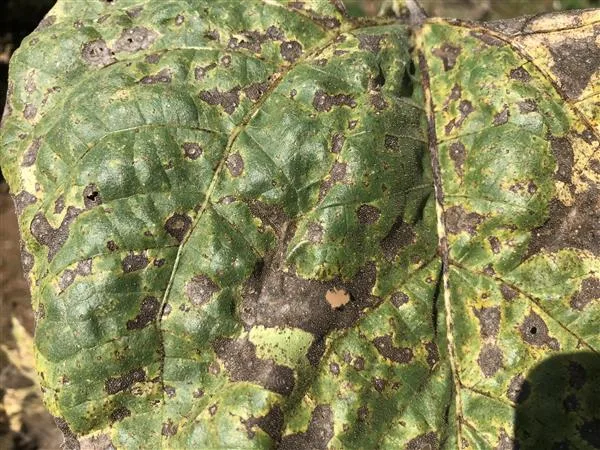
Image source: Web (Bing) / sunflowernsa.com (Web image (fair-use with source credit))
If you see white cottony growth near the soil line alongside blackening leaves, suspect Sclerotinia stalk rot. University extension programs consistently flag this as a major threat to both backyard and commercial sunflowers.
Follow this logic to confirm a disease diagnosis:
- If the spots are round with target-like rings, then suspect Alternaria.
- If the spots are angular and bounded by leaf veins, then suspect bacterial spot.
- If the blackening started at the bottom leaves and moved upward rapidly after heavy rain, then suspect Septoria or downy mildew.
- If the soil stays wet and the stem base feels soft, then suspect root rot pathogens.
Diseases spread fast when leaves stay wet. Overhead sprinklers are the worst offenders here. They guarantee the 10 to 12 hours of leaf wetness that fungal spores need to germinate and infect the tissue.
Branch 2: Environmental Stress (Frost Damage and Overwatering)
If there are no distinct spots, shift your focus to the environment. Weather and water habits kill sunflower leaves faster than most diseases.
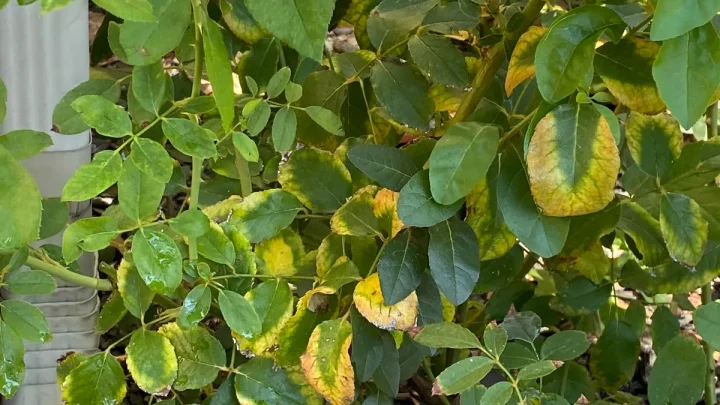
Frost damage is brutal and sudden. If temperatures dip below 31°F (-0.5°C), the water inside the leaf cells freezes and expands. This ruptures the cell walls completely.
When the sun comes up, the dead tissue turns black almost immediately.
This type of blackening usually hits the outer margins of the leaves first. It affects the parts most exposed to the cold night air. The tissue will feel crispy once it dries out in the morning sun.
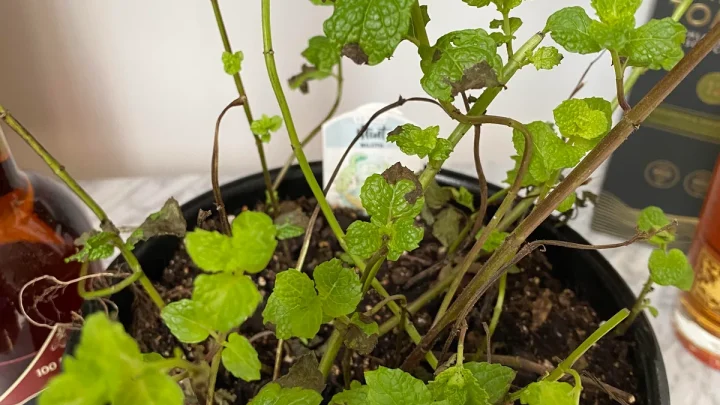
Overwatering creates a totally different problem. Sunflowers hate sitting in soggy soil. Heavy clay soils trap water around the roots, causing root hypoxia.
That simply means the roots are suffocating from lack of oxygen.
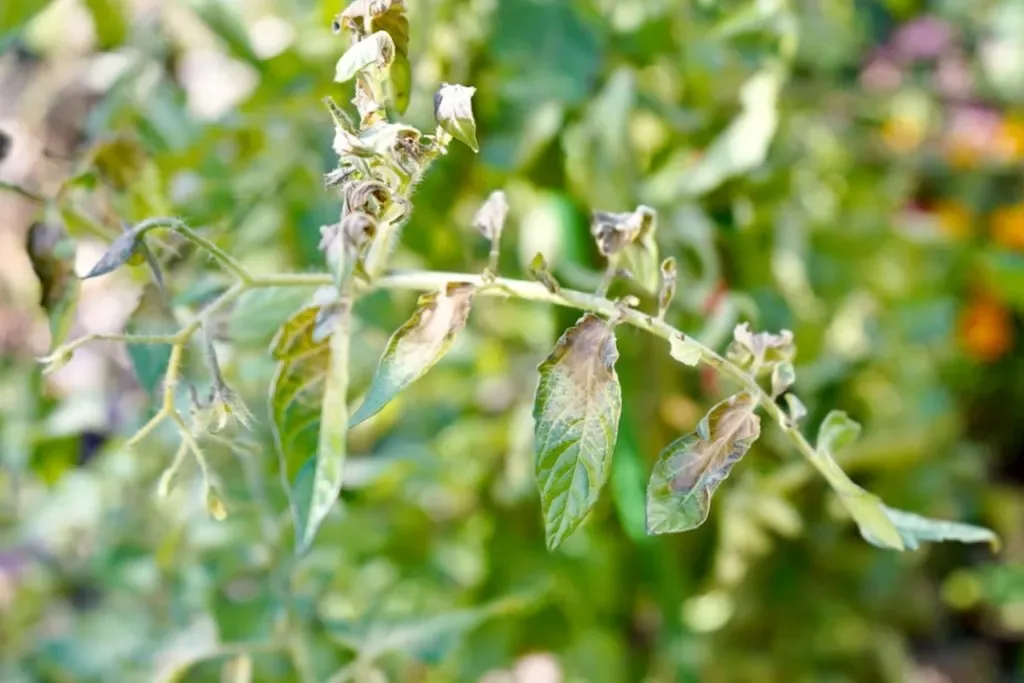
Image source: Web (Bing) / gardeningknowhow.com (Web image (fair-use with source credit))
When roots suffocate, they stop pulling nutrients and water up the stem. The leaves respond by turning dark, wilting, and collapsing. Use this if/then flow to separate weather from water issues:
- If the blackening happened overnight after a cold snap, then it is frost damage.
- If the soil is constantly muddy and the lower leaves are dying first, then it is overwatering.
- If the top two inches of soil never fully dry out between waterings, then your roots are suffocating.
- If only the side of the plant facing the open yard is black, then cold wind exposure is the likely cause.
Per USDA planting guidelines, sunflowers perform best in well-draining soil with deep, infrequent watering. Shallow daily watering is a recipe for root failure.
Branch 3: Pests and Sooty Mold
Sometimes the leaf itself is perfectly healthy, but something is covering it. If your sunflower leaves look like they are coated in black ash, you are dealing with sooty mold.
Sooty mold does not actually infect the plant. It is a fungus that grows on honeydew. Honeydew is the sticky, sugary waste left behind by sap-sucking insects like aphids.
Check the undersides of your leaves. If you see clusters of tiny green, black, or white bugs, you have found your root cause. The insects feed on the plant, excrete honeydew, and the black mold colonizes that sugar.
Follow this pest diagnostic path:
- If the black substance rubs off on your fingers like powder, then it is sooty mold.
- If the leaves are curling and sticky before turning black, then aphids are present.
- If the black coating blocks sunlight from reaching the leaf surface, then photosynthesis is actively dropping.
Washing the leaves with a gentle spray of water often knocks aphids off. Removing the insects stops the honeydew production. Without honeydew, the sooty mold starves and flakes away on its own.
How to Fix Black Sunflower Leaves Based on Your Diagnosis
Once you run your plant through the decision tree, you need to act. The treatment depends entirely on which branch you landed on. Guessing here wastes time and money.
For fungal infections, prune the worst affected leaves immediately. Do not just rip them off. Use clean shears and wipe the blades with 70% isopropyl alcohol between every single cut.
This prevents you from dragging spores to healthy tissue.
Bag the diseased leaves and throw them in the trash. Never put infected sunflower debris in your home compost pile. Most backyard compost bins do not get hot enough to kill resilient pathogens like Alternaria or Sclerotinia.
If the fungal pressure is high, apply a copper-based fungicide. Read the manufacturer label carefully for application rates. Copper sprays work best as a preventive measure or at the very first sign of spotting.
Bacterial infections are harder to manage chemically. Your best move is removing infected tissue and stopping overhead irrigation immediately. Keep the foliage bone dry.
Bacteria need water films to swim from leaf to leaf.
Fixing environmental stress requires changing your habits. If you diagnosed overwatering, back off the hose. Let the top two inches of soil dry out completely before you water again.
For container sunflowers, ensure the pot has large drainage holes.
If frost caused the damage, the affected leaves will not recover. That tissue is dead. Focus on protecting the new growth.
You can cover young sunflowers with frost cloth if another cold night is forecasted.
For pest-driven sooty mold, treat the insects first. A strong blast from a garden hose dislodges aphids effectively. For heavier infestations, insecticidal soap works well without harming beneficial pollinators visiting the blooms.
Here is a quick action plan based on your diagnosis:
- Fungal disease: Prune infected leaves, sterilize tools, improve spacing to 18 to 24 inches, apply copper fungicide.
- Bacterial disease: Remove wet foliage, halt overhead watering, destroy heavily infected plants.
- Overwatering: Check soil drainage, extend time between waterings, amend heavy clay with organic matter.
- Frost damage: Leave dead leaves alone until danger passes, protect new growth with row covers.
- Sooty mold: Wash off aphids, apply insecticidal soap, wipe mold off leaves gently.
Consistency matters more than any single product. Adjusting your watering schedule and improving airflow solves the vast majority of black leaf problems we see in aggregate user reports.
Common Mistakes That Make Black Leaves Worse
Gardeners often panic when they see black foliage. That panic leads to actions that make the original problem significantly worse. Avoid these traps.
The biggest mistake is misdiagnosing frost damage as a fungal disease. You see black leaves, assume it is blight, and start spraying fungicides. The chemicals do nothing for dead frozen tissue.
You just wasted money and added unnecessary chemicals to your garden.
Another frequent error is cutting off too much of the plant at once. Sunflowers rely on their leaves for energy to produce seeds. If you strip the plant bare trying to chase a few fungal spots, you will stunt the flower head completely.
Only remove the worst damaged foliage.
Applying treatments too late is a harsh reality for many growers. By the time a fungal pathogen moves into the main vascular tissue of the stem, topical sprays cannot reach it. Early detection using the decision tree above is your only reliable defense.
Watering the leaves instead of the soil is a habit that invites disaster. Sunflowers have deep taproots. They want water delivered at the soil level.
Wet leaves overnight are an open invitation for every fungal spore drifting in the breeze.
Finally, do not ignore natural aging. The lowest leaves on a mature sunflower naturally turn yellow, then brown, then black as the plant pushes all its energy to the flower head. If only the bottom two leaves are dying while the top looks great, your plant is likely fine.
Spacing plays a massive role here too. Planting sunflowers six inches apart looks great for a dense border. But it traps humidity against the stems.
Standard varieties need 18 to 24 inches of space to let the wind dry the foliage naturally.

Similar Posts