Why Are My Eggplants Turning Yellow? Causes & Fixes
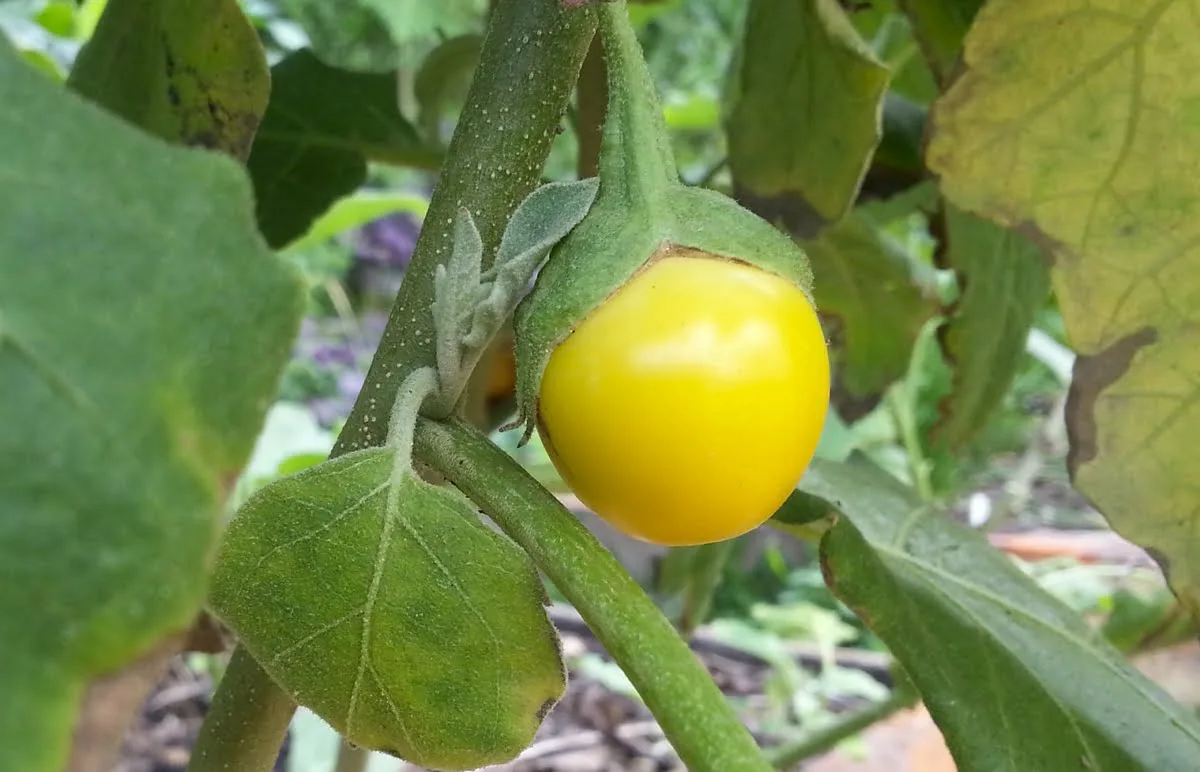
If you are asking why are my eggplants turning yellow, the answer depends on your specific variety. You might be looking at a perfectly ripe fruit or a plant under serious stress. Our research shows most gardeners misdiagnose this problem right away.
They assume disease when the real issue is simple timing.
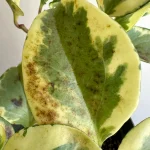
Image source: Web (Bing) / gardenershq.com (Web image (fair-use with source credit))
Eggplants belong to the nightshade family (Solanaceae) and demand very specific growing conditions. University extension data confirms they need a soil pH between 5.5 and 6.8 for proper nutrient uptake. We built this troubleshooting guide to help you identify the exact cause fast.
Let us walk through the decision tree step by step.
Quick Answer
Eggplants turn yellow for several distinct reasons. Purple varieties fade when left too long. Some varieties naturally ripen to bright yellow.
Nutrient deficiencies also cause premature yellowing. Check your seed packet first.
The Quick Answer: Why Purple Eggplants Turn Yellow
Purple eggplants turn yellow primarily because of overmaturity or natural pigment breakdown. If you planted a dark purple cultivar like Black Beauty, yellow skin means you waited too long to harvest. Anthocyanin is the chemical compound that gives these fruits their deep purple color.
That pigment degrades rapidly once the fruit passes its peak maturity window.
Sometimes the culprit is environmental stress rather than age. Intense afternoon sun causes localized bleaching known as sunscald. This creates pale yellow patches only on the side facing the light.
Cold snaps below 60°F trigger chlorophyll loss across the whole plant. Both issues disrupt normal fruit development.
You need to figure out which scenario applies to your garden. The fix for an overripe fruit is completely different from the fix for cold damage. Start by examining the physical characteristics of the eggplant itself.
The texture and weight tell you almost everything you need to know.
| Symptom | Likely Cause | Immediate Action |
|---|---|---|
| Dull skin, spongy feel | Overmaturity | Compost the fruit |
| Pale patch on one side | Sunscald | Add shade cloth |
| Entire plant looks pale | Cold stress | Apply row covers |
| Uniform bright yellow | Natural variety | Harvest and eat |
Do not guess when diagnosing your plants. Use the physical clues right in front of you. A quick squeeze test saves a lot of unnecessary worry.
We will break down exactly how to do that next.
Step 1: Verify Your Variety (Natural Ripening vs. Actual Problem)
Your first move is checking the seed packet or nursery tag. Not all eggplants are supposed to be purple. If you accidentally planted a naturally yellow cultivar, there is no problem to solve.
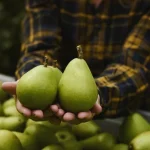
Varieties like Thai Yellow and Golden Egg mature into bright, vibrant gold fruits.
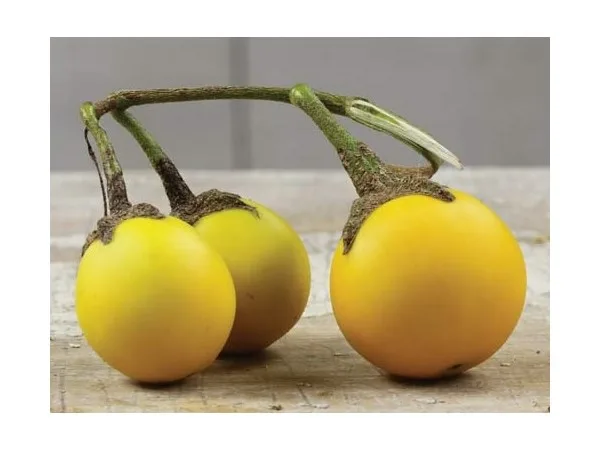
Image source: Web (Bing) / asiaseeds.com (Web image (fair-use with source credit))
This mixup happens constantly in home gardens. Nurseries often sell mixed flats of seedlings without clear labeling. You might think your purple eggplant is dying when it was never purple to begin with.
White varieties like Casper also shift toward a pale cream or yellowish hue at full ripeness.
Here is the decision logic you should follow. If your eggplant is uniformly yellow and feels dense and heavy, check your variety. If it matches a yellow or white cultivar, pick it immediately.
These fruits taste best when the skin still holds a slight shine.
If you are absolutely certain you planted a dark purple variety, move to the next step. A purple eggplant turning yellow means something interrupted its normal growth cycle. It could be age, weather, or missing nutrients.
Identifying the variety eliminates half the potential causes right away.
Never skip this basic verification step. Applying fertilizer to a healthy Thai Yellow eggplant wastes time and money. Knowing what you planted dictates every action that follows.
Keep your seed packets in a folder for the entire season.
Step 2: The Squeeze Test for Over-Maturity and Alkaloid Buildup
Overmaturity is the most common reason standard purple eggplants lose their color. Eggplants are technically berries and they mature incredibly fast. Leaving them on the vine too long causes the anthocyanin pigments to break down.
The glossy purple fades into a dull bronze and eventually a muddy yellow.
You can confirm this with a simple tactile test. Pick up the suspect fruit and squeeze it gently. A perfect eggplant feels dense, firm, and heavy for its size.
An overripe one feels spongy, hollow, or unusually light.
Next, look closely at the skin surface. Peak eggplants have tight, reflective skin. Overripe fruits look wrinkled and matte.
The discoloration usually starts near the blossom end at the bottom of the fruit. It creeps upward as the seeds inside continue to mature.
Cutting the fruit open provides final confirmation. Immature seeds are small, soft, and pale white. Seeds in an overripe yellow eggplant turn dark brown and hard.
At this stage, the plant produces high levels of solanine and other alkaloids. This makes the flesh intensely bitter and unpleasant to eat.
Harvest timing prevents this issue entirely. Pick standard purple varieties when they reach about two thirds of their expected full size. Do not wait for them to look massive.
Frequent harvesting signals the plant to produce more flowers. According to Cornell University's vegetable growing guides, regular picking extends your total yield significantly throughout the summer.
Step 3: Reading Leaf Symptoms to Diagnose Nutrient Lockout
If your eggplants are small, immature, and already turning yellow, look at the foliage. Fruit problems rarely happen without warning signs on the leaves. Eggplants are heavy feeders that drain soil nutrients quickly.
When the roots run out of food, the plant robs older tissues to support new growth.
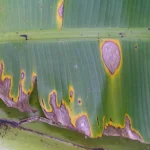
Nitrogen deficiency is the most frequent offender. It causes the oldest, lowest leaves to turn pale green and then solid yellow. The leaf veins sometimes stay slightly greener than the surrounding tissue.
The developing fruit stays stunted and takes on a sickly yellowish green tint.
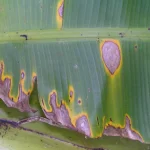
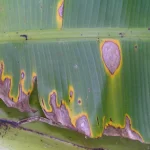
Magnesium deficiency presents differently. You will see interveinal chlorosis on the older leaves. This means the tissue between the leaf veins turns yellow while the veins themselves remain dark green.
It gives the foliage a distinct marbled appearance.
Potassium deficiency shows up as scorching along the outer edges of the leaves. The margins turn yellow and then crispy brown. Fruits affected by low potassium often color unevenly.
They might have patches of yellow mixed with normal purple.
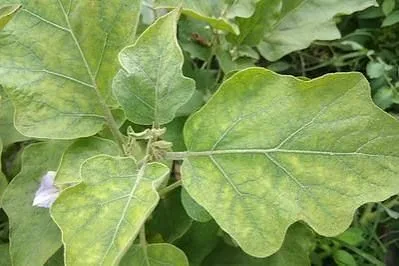
Image source: Web (Bing) / plantlyze.com (Web image (fair-use with source credit))
Soil pH lockout mimics all of these deficiencies. Even if your soil contains plenty of nutrients, the roots cannot absorb them if the pH is wrong. Eggplants require a soil pH between 5.5 and 6.8.
Outside this range, essential minerals bind tightly to soil particles.
Test your soil before adding random fertilizers. Side dress with a balanced organic 5-5-5 blend if nitrogen is truly low. For magnesium issues, dissolve one tablespoon of Epsom salts in a gallon of water.
Apply it directly to the soil around the base of the plant.
Step 4: Identifying Sunscald, Cold Stress, and Sap-Sucking Pests
Weather extremes and pests cause highly specific yellowing patterns. Learning to read these patterns helps you apply the correct treatment fast. Sunscald, temperature drops, and insect pressure all attack the plant differently.
Sunscald happens when intense ultraviolet light burns the fruit skin. It does not turn the whole eggplant yellow. Instead, you get a single bleached, pale yellow or white patch.
This spot always appears on the side facing the direct afternoon sun.
The burned area eventually feels papery or slightly sunken. This usually happens after aggressive pruning removes the protective leaf canopy. Those large leaves act as natural umbrellas for the developing fruit.
If you live in a brutally hot climate, install a 30 percent shade cloth during peak summer.
Cold stress triggers a completely different reaction. Eggplants shut down physiologically when temperatures drop below 60°F. Chlorophyll production halts, causing both leaves and young fruit to take on a yellowish cast.
This usually happens uniformly across the entire plant overnight.
Cover your plants with floating row covers if an unexpected cold snap arrives. Remove the covers during the day so pollinators can access the flowers. The plants will resume normal pigment production once the soil warms back up.
Pest pressure adds another layer of complexity. Spider mites are tiny sap sucking arachnids that thrive in hot, dry weather. They cluster on the undersides of leaves and drain the plant fluids.
Heavy infestations destroy the leaf tissue needed for photosynthesis.
Without adequate energy production, the fruit yellows prematurely. Flip a damaged leaf over and look for fine silk webbing or moving specks. Aphids and whiteflies cause similar stress but usually stunt the plant first.
Blast the leaf undersides with a sharp stream of water to dislodge them.
Apply neem oil or insecticidal soap if water alone fails. Only spray these treatments in the early evening. Direct sunlight reacts with the oils and burns the foliage.
Encouraging natural predators like ladybugs keeps mite populations manageable long term.
Common Mistakes That Cause Premature Yellowing
Gardeners often cause their own yellowing problems through basic maintenance errors. The biggest mistake is waiting too long to harvest standard purple varieties. Eggplants mature much faster than tomatoes or peppers.
Leaving them on the vine guarantees pigment breakdown.
Overwatering creates a silent secondary problem called root suffocation. Soggy soil prevents roots from absorbing oxygen and nutrients properly. The plant responds by dropping chlorophyll production in both leaves and fruit.
You will see a generalized pale yellow cast across the entire plant.
Pruning too aggressively exposes developing fruit to direct ultraviolet light. We covered sunscald earlier, but it bears repeating here. Those large lower leaves exist specifically to shade the heavy fruit.
Removing them for better airflow often backfires completely during peak summer heat.
Ignoring early pest pressure lets spider mite populations explode unnoticed. By the time you see visible webbing, the damage to photosynthesis is severe. The fruit simply lacks the energy required to maintain its dark purple color.
Routine underside leaf checks prevent this entirely.
Finally, applying fertilizer without testing soil pH wastes your money. Nutrient lockout happens when the soil chemistry blocks absorption. You can pour on all the nitrogen you want.
If the pH sits outside that 5.5 to 6.8 window, the roots ignore it.
Avoid these habits as of 2026 and your harvests will stay consistently dark and glossy. Prevention always beats trying to reverse environmental damage later. Keep your watering consistent and your pruning conservative.
Troubleshooting Decision Guide and FAQs
Use this final decision tree whenever you spot a suspicious eggplant. Match your specific symptoms to the correct branch. Then apply the targeted fix immediately.
- If the fruit is fully sized, dull, and spongy: Then it is overripe. Compost it and harvest earlier next time.
- If the fruit is bright yellow but dense and heavy: Then check your variety tag. It might be a Thai Yellow or Golden Egg ready to eat.
- If only the sun-facing side has a pale bleached patch: Then you have sunscald. Stop aggressive pruning and consider 30 percent shade cloth.
- If small fruit turns yellow alongside pale lower leaves: Then suspect nitrogen deficiency or pH lockout. Test your soil before adding fertilizer.
- If the whole plant turned pale overnight after a cold snap: Then it is temperature stress. Cover with row fabric until nights stay above 60°F.
- If leaves look dusty and stippled while fruit struggles: Then inspect for spider mites. Blast them off with water or apply neem oil at dusk.
Can you eat an eggplant that turned yellow?
You can eat naturally yellow varieties like Thai Yellow without any issues. However, do not eat a purple variety that faded to yellow from overmaturity. The flesh becomes intensely bitter due to high solanine levels.
It tastes terrible and causes stomach upset in sensitive people.
How often should I pick my eggplants?
Harvest standard purple eggplants every three to five days during peak summer. Pick them when they reach about two thirds of their maximum expected size. Frequent harvesting prevents the skin from fading and turning yellow.
It also forces the plant to produce new flowers continuously.
Does Epsom salt stop eggplants from turning yellow?
Epsom salt only helps if magnesium deficiency causes the yellowing. Dissolve one tablespoon per gallon of water and drench the soil. It will not fix overmaturity, sunscald, or nitrogen depletion.
Always test your soil before applying random mineral supplements.
Why are my eggplant flowers falling off before fruiting?
Flower drop usually stems from extreme temperature swings or poor pollination. Nighttime temperatures below 60°F or above 75°F cause blossoms to abort. Inconsistent watering also stresses the plant enough to drop flowers.
Keep moisture even and protect plants from unexpected cold snaps.
Will yellow eggplants turn purple again?
A purple variety that already turned yellow will never regain its dark color. The anthocyanin pigment degrades permanently once the fruit passes maturity. Your only option is to remove the ruined fruit quickly.
This redirects the plant's energy into producing a fresh batch of purple blooms.

Similar Posts