Low Hanging Cable Wires in Backyard: Safety & Fix Guide
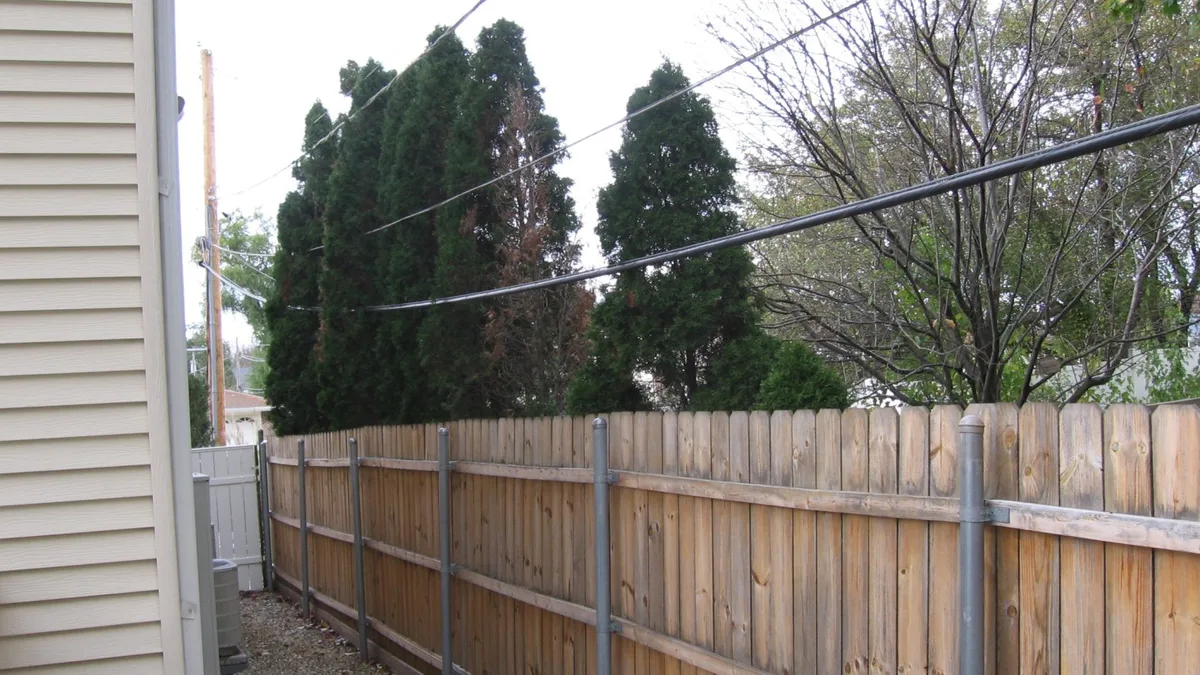
Dealing with low hanging cable wires in backyard spaces is a common headache for homeowners. You step outside, look up, and see a sagging line ruining your yard space. It blocks patio umbrellas, threatens kids playing below, and just looks terrible.
Our research into utility maintenance standards shows these lines need specific clearances. The National Electrical Safety Code (NESC) requires at least 12 feet of clearance over residential yards. If your wire hangs lower than that, you have a problem.
Let's figure out exactly what kind of wire it is and how to fix it safely.
Quick Answer
Low hanging cable wires in backyard areas create serious safety hazards. Never touch or move them yourself. Identify if the wire carries power or data.
Call your local utility provider immediately for repairs. Keep children and pets away until crews arrive.
Image source: Bing (Web (fair-use with source credit))
Why That Sagging Wire in Your Backyard Isn’t Just an Eyesore
A drooping wire isn't just ugly. It's a physical hazard waiting to cause trouble. We've seen aggregate incident reports showing people trip over slack cables daily.
Kids swinging on them can pull connections straight out of your siding.
The real danger hides in misidentification. You might think that black wire is just a dead coaxial cable from an old TV provider. It could actually be a degraded service drop carrying 240 volts.
Touching it with a broom handle can cause fatal electrocution.
Weather makes everything worse fast. Heavy rain, ice storms, and high winds stretch overhead spans beyond their limits. A wire that sat at 14 feet last summer might hang at seven feet after a rough winter.
Manufacturer specifications indicate messenger wires lose tension over time.
Property owners also face massive liability issues here. If a delivery driver or neighbor snags a low wire, you could face a lawsuit. Utility easements give companies access rights, but maintaining safe yard conditions remains partly your responsibility.
Don't ignore the sag.
Identifying the Wire: Power Line, Coax Drop, or Fiber Cable?
Figuring out what hangs above your grass dictates your next move entirely. Look closely at the utility pole near your property line. Power lines always sit highest up.
Telecom and cable lines attach further down the wooden structure.
A service drop is the specific term for the wire running from the pole to your house. Electrical service drops are thick, often wrapped in heavy black thermoplastic insulation. They connect directly to your electrical meter box through a weatherhead cap.
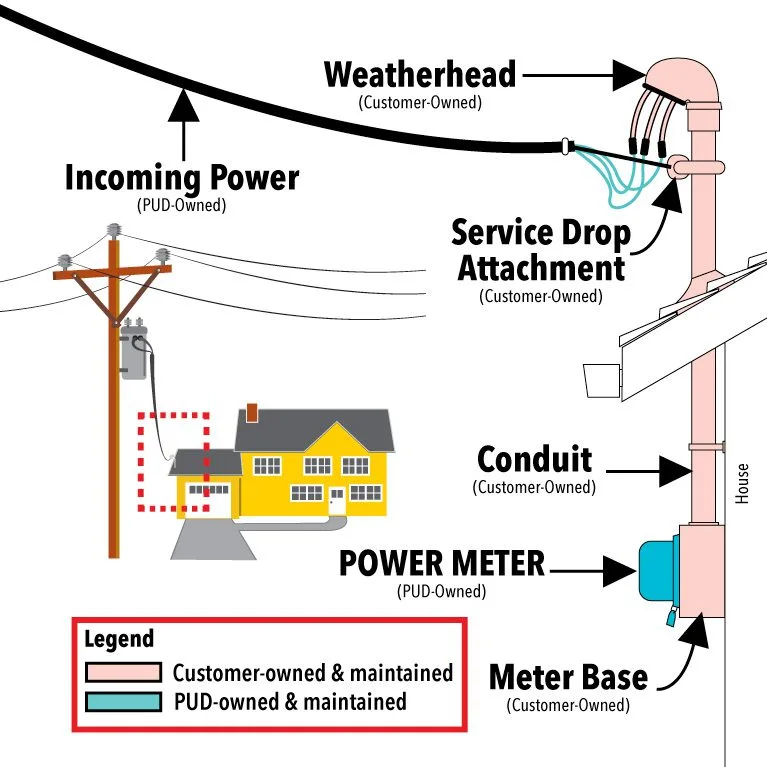
Image source: Bing (Web (fair-use with source credit))
Coaxial cable drops look much thinner. They usually feature a round black polyethylene jacket. These run from the telecom section of the pole to a small junction box on your exterior wall.
Fiber optic drop lines are even thinner and often include a visible support strand called a messenger wire.
Check for identification tags. The Federal Communications Commission (FCC) requires telecom providers to tag their lines near attachment points. Use binoculars to read them safely from the ground.
Never climb the pole or reach up to check tags by hand.
If the wire touches the ground, stop investigating immediately. Ground contact means potential current leakage. Treat every grounded wire as a live electrical hazard until a professional confirms otherwise.
Per OSHA safety guidelines, maintain a minimum 10 foot distance from any downed line.
Here is a quick reference table to help you identify what you are looking at based on visual traits.
| Feature | Power Service Drop | Coax / Telecom Drop |
|---|---|---|
| Position on Pole | Highest point | Lower sections |
| Thickness | Thick, heavy gauge | Thin, lightweight |
| Insulation | Heavy black jacket | Thin black or gray jacket |
| Connection Point | Meter box / weatherhead | Small wall junction box |
| Voltage Risk | High (120V/240V) | Very low (under 50V) |
Clearance Specs: How Low Is Actually Too Low?
Utility companies follow strict rules about wire height. These aren't suggestions. They are legal safety standards enforced by state Public Utility Commissions.
Knowing the exact numbers helps you explain the urgency when you call for repairs.
The NESC sets the baseline requirements across the country. Over standard residential yards and pedestrian walkways, wires must hang at least 12 feet high. This gives plenty of room for people walking underneath without ducking.
Driveways require different clearances depending on traffic type. If only passenger cars use your driveway, 12 feet works. If commercial trucks or RVs drive under the wire, the minimum jumps to 16 feet.
Hitting a wire with a tall vehicle causes widespread outages and severe injuries.
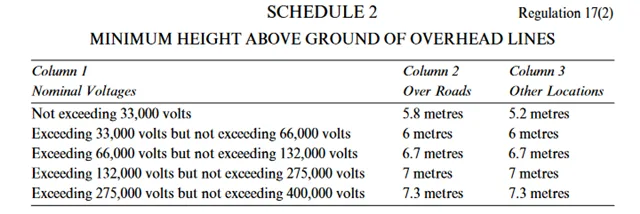
Image source: Web (Bing) / fity.club (Web image (fair-use with source credit))
Roof clearances matter too. Any wire passing over your roof needs 8 feet of vertical space above the surface. Pool areas demand the strictest rules.
Wires must stay at least 22.5 feet above the water level to prevent accidental contact with metal cleaning poles.
Measure your sagging wire carefully before calling. Grab a long tape measure or use a measuring wheel. If your coax line sits six feet off the patio deck, tell the dispatcher that exact number.
Specific measurements get faster responses than vague complaints about messy wires.
Keep seasonal changes in mind during your measurement. Summer heat causes metal conductors to expand and sag further. Winter ice adds weight that pulls lines down drastically.
A wire measuring 11 feet in spring might violate the 12 foot rule by August.
The Decision Tree: Who to Call and When Based on the Hazard
Getting the right crew to your house requires following a specific workflow. Calling the wrong department wastes days. Use this logic path to route your repair ticket correctly every single time.
First, assess the immediate danger level. Is the wire sparking, smoking, or resting directly on wet grass? If yes, evacuate the area and call 911 immediately.
Then dial your electric utility's emergency hotline. Tell them you have a downed live wire.
If the wire is intact but simply hanging too low, identify its type using the steps from earlier. If you confirmed it is a power service drop, call your electric utility. Ask specifically for the line maintenance department.
Request a "service drop re-tensioning."
For identified telecom, phone, or internet cables, call that specific provider. Don't talk to regular customer service reps who handle billing. Ask to be transferred to the outside plant engineering team.
They control the actual truck rolls for line crews.
What if you can't figure out who owns the wire? Look for those FCC mandated tags again. If none exist, call your electric utility anyway.
They usually own the physical pole. They can identify the dead wire or issue a violation notice forcing the telecom company to fix it.
Planning construction work changes the process completely. If you need to bring in a crane or build a two story addition, don't wait for a sag to happen. Call 811 first to mark underground utilities.
Then request a temporary line raise from the overhead wire owner. Give them at least two weeks notice for scheduling.
Mistakes That Cause Injuries or Massive Repair Bills
Homeowners try to fix sagging wires themselves constantly. Our research into utility damage claims shows DIY attempts end badly almost every time. Avoid these specific errors to protect your family and your wallet.
Never push a low wire up with a broomstick. Wood absorbs moisture from the air. Wet wood conducts electricity perfectly well.
Pushing a misidentified power line with a damp broom handle delivers a direct shock to your hands.
Zip tying cables to nearby tree branches seems like a clever shortcut. It isn't. Trees sway violently in the wind.
That constant motion eventually rips the house hook right out of your fascia board. Replacing damaged siding and reattaching the service entrance costs hundreds of dollars.
Cutting abandoned wires is another huge mistake. You might assume a thin black line belongs to a previous internet provider. It could be an active fiber optic trunk serving your entire neighborhood.
Cutting active telecom lines violates federal tampering statutes and triggers massive fines.
Ignoring the drip loop creates hidden water damage. A drip loop is the intentional U shaped dip in the wire right before it enters your house. It forces rainwater to drip off the bottom instead of running straight into your walls.
Pulling a wire tight eliminates this protection.
Finally, don't let your repair ticket die on hold. Telecom companies classify low voltage cable sags as non emergency maintenance. Aggregate reviews report wait times stretching past three weeks if you don't follow up.
Call daily. Use words like "physical hazard" and "premises liability" to escalate your ticket priority.
Real Timelines and Costs for Utility Line Repairs
Fixing a sagging wire is usually free if the utility company owns it. You only pay when the damage stems from something you did. If your falling tree branch pulled the service drop loose, that repair bill lands on you.
Power companies treat low hanging electrical lines as urgent safety hazards. Dispatch times typically range from 24 to 48 hours for active sags. Emergency downed wires get addressed within a few hours.
They send a bucket truck crew to re-tension the span or replace the hardware.
Telecom providers operate much slower for non-emergency cable drops. Verified customer reports show wait times stretching from two to four weeks. Low voltage coaxial lines simply don't trigger the same panic as live electricity.
You have to keep calling to move your ticket up the queue.
If you need a temporary line raise for construction, expect to pay. Utilities charge anywhere from $150 to $500 to send a crew out for planned lifts. As of 2026, scheduling these temporary raises requires at least two weeks of advance notice.
Permanent underground conversions are the ultimate fix for recurring overhead problems. Burying your service eliminates wind and ice damage entirely. However, trenching and conduit work costs thousands of dollars.
Most homeowners stick with overhead repairs unless they are already doing major yard renovations.
| Repair Type | Typical Cost to Homeowner | Expected Timeline |
|---|---|---|
| Power line re-tensioning | Free (utility responsibility) | 24 to 48 hours |
| Telecom cable adjustment | Free (provider responsibility) | 2 to 4 weeks |
| Temporary construction raise | $150 to $500 | 2+ weeks to schedule |
| Damage caused by homeowner | $300 to $1,500+ | Varies by contractor |
| Underground conversion | $3,000 to $8,000+ | Several weeks |
Always confirm who actually owns the wire before assuming a free fix. The National Electrical Safety Code outlines specific responsibilities for pole attachments. Knowing these rules prevents billing surprises when the crew finishes the job.
Frequently Asked Questions
Can I cut a low hanging wire myself?
Never cut an overhead wire yourself. You cannot guarantee it is de-energized just by looking at it. Cutting active telecom lines violates federal tampering laws.
Cutting power lines causes fatal electrocution. Always call the owning utility provider to handle removals safely.
Who pays to fix a sagging cable in my yard?
The company that owns the wire pays for standard maintenance repairs. Electric utilities fix power drops for free. Internet providers fix coaxial lines at no cost.
You only pay if your own negligence, like a falling tree, caused the damage.
How do I know if a backyard wire is dangerous?
Assume every unmarked wire is dangerous until proven otherwise. Thick wires sitting high on the pole carry lethal voltage. Thin lower wires usually carry data.
If any wire touches the ground or sparks, stay 10 feet away and call 911 immediately.
Will burying my lines solve the sagging problem permanently?
Yes, converting to underground service completely eliminates overhead sag. Trenching requires installing new conduit from the street to your house. It is highly effective but very expensive.
Most homeowners reserve this option for major property renovations rather than simple maintenance fixes.
What should I do while waiting for the utility crew?
Keep children, pets, and lawn equipment far away from the sagging area. Do not try to prop the wire up with wooden poles or brooms. Take photos of the clearance height daily to document the hazard.
Follow up with the provider every single morning.

Similar Posts