Bird Poop Caterpillar: The Butterfly That Mimics Droppings
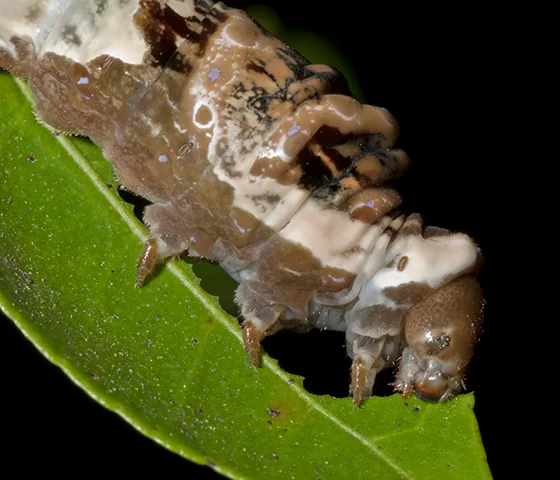
The bird poop caterpillar butterfly is actually the larval stage of the Giant Swallowtail. This remarkable insect uses aggressive mimicry to resemble fresh bird droppings on citrus leaves. You might mistake it for waste until you spot specific anatomical details up close.
Adults boast a wingspan reaching 5.5 inches across their black and yellow forewings. We rely on visual markers like the saddle patch for accurate field identification as of 2026. Let us break down exactly what to look for in your garden.
Quick Answer
The bird poop caterpillar butterfly is the Giant Swallowtail larva. It mimics bird droppings to avoid predators. Look for a white saddle patch on brown bodies.
Adults have distinct yellow bands on black wings. They feed exclusively on citrus family plants.
Spotting the Bird Poop Caterpillar: Key Visual Markers and Mimicry Cues
Identifying this caterpillar requires looking past the initial illusion of waste. The primary diagnostic feature is a large white dorsal patch. This marking sits centrally on the thorax and resembles a wet splash.
Early instars show high contrast between brown and white segments. Later stages develop more mottled textures that blend with bark or lichen.
Image source: Web (Bing) / bugguide.net (Web image (fair-use with source credit))
You should also check for false head markings near the rear. These ocelli spots confuse birds into attacking the less vital posterior end. Real eyes remain tiny and hidden near the mouthparts.
This defensive strategy works best when the larva stays perfectly still. Movement breaks the camouflage and reveals its true nature immediately.
Texture matters just as much as color pattern matching. The cuticle has a rough surface that scatters light like organic matter. Smooth shiny caterpillars are rarely bird dropping mimics.
Genuine specimens feel slightly granular if handled gently with care. Lighting conditions can alter perceived coloration significantly during field surveys. Overcast days often make the white patch appear brighter against dark foliage.
Direct sunlight may wash out subtle brown variations entirely. Always observe from multiple angles before confirming identification.
Chemical defense provides another confirmation clue for observers. Disturbed larvae extrude an orange osmeterium gland behind the head. This forked organ emits a strong fermented citrus odor.
The scent deters ants and small parasitic wasps effectively. Note that this gland retracts quickly once danger passes. Seeing this structure confirms you have found a swallowtail species.
Other droppings mimics lack this specific chemical weapon entirely.
Telling Giant Swallowtails Apart from Spicebush and Tiger Swallowtails
Confusion runs high among North American swallowtail larvae. Three species share similar habitats and host plant preferences regularly. Distinguishing them relies on precise visual comparisons rather than general impressions.
We have compiled key differences to streamline your identification process below.
| Feature | Giant Swallowtail Larva | Spicebush Swallowtail Larva | Eastern Tiger Swallowtail Larva |
|---|---|---|---|
| Primary Mimicry | Bird dropping | Snake head | Bird dropping / Twig |
| Dorsal Marking | White saddle patch | Large yellow eyespots | White transverse bars |
| Body Color | Brown and white mottle | Green or brown smooth | Green or brown smooth |
| Host Plants | Citrus / Rue family | Sassafras / Spicebush | Cherry / Ash / Tulip tree |
| Osmeterium Color | Orange-yellow | Orange-red | Orange-yellow |
Spicebush swallowtails are the most common misidentification in our research. Their large eyespots create a snake-like appearance unlike any bird dropping. They also turn bright green in later instars while Giants stay brown.
Check the host plant first since spicebush never eats citrus. Finding one on lemon or orange trees confirms Giant Swallowtail identity instantly.
Eastern Tiger Swallowtail larvae present another challenge for beginners. Young tigers mimic bird droppings but lack the distinct white saddle. Their white markings form complete transverse bands instead.
Older tiger larvae turn solid green with lateral stripes. Giants retain their mottled brown appearance throughout all developmental stages. This persistence of pattern is the most reliable differentiator.
Black Swallowtail larvae differ markedly despite sharing the same plant family. They display bold yellow and black banding without white patches. Their osmeterium smells distinctly of carrots or parsley.
Giants produce a sharper fermented citrus scent by comparison. Habitat overlap occurs frequently in suburban gardens across eastern regions. Careful observation of patterning prevents unnecessary pesticide application on beneficial insects.
Viceroy caterpillars also mimic bird droppings but belong to a different family. They possess a prominent hump on the third abdominal segment. Giants have a uniform cylindrical body shape without humps.
Viceroys feed on willow and poplar trees exclusively. Finding a mimic on citrus rules out Viceroy species immediately. Always verify host plant association before making final determinations.
From Larva to Adult: Visual Changes Across Each Life Stage
Metamorphosis transforms this cryptic larva into a striking flier. Understanding each stage helps you track development accurately over time. Eggs appear as small orange spheres on new leaf growth.
They measure roughly one millimeter in diameter at laying. Hatching occurs within four to ten days depending on temperature.
Early instar larvae maintain perfect bird dropping camouflage throughout feeding. Growth happens rapidly with molts occurring every few days. By the fifth instar they reach two inches in length.
This final larval stage shows the most pronounced saddle marking. Pupation follows after the caterpillar wanders from the host plant.
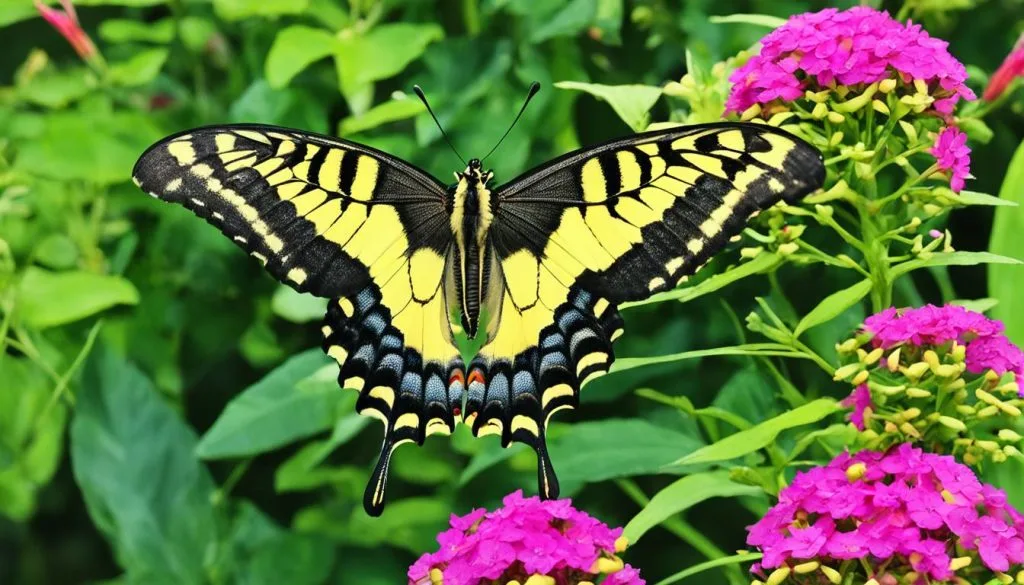
Image source: Web (Bing) / butterflyboogie.com (Web image (fair-use with source credit))
Chrysalises attach vertically to twigs via a silk girdle. They resemble dried sticks or broken branch stubs perfectly. Color varies from gray to brown based on attachment substrate.
Summer pupae emerge as adults within two weeks typically. Overwintering chrysalises delay emergence until spring temperatures rise consistently. This diapause ensures adults coincide with fresh host plant growth.
Adult Giant Swallowtails display unmistakable wing patterns upon eclosion. Black forewings feature diagonal yellow bands crossing the cell. Hindwings show parallel yellow stripes running perpendicular to the body.
Blue postmedian spots distinguish males from females reliably in hand. Females carry heavier blue scaling and broader yellow bands overall. Both sexes possess long tail filaments extending beyond the wing margin.
Wingspan measurements provide definitive size confirmation for collectors. Males average 90 to 140 millimeters across open wings. Females tend toward the upper end of this range.
No other North American swallowtail combines this size with diagonal banding. Flight style appears buoyant and deliberate compared to faster species. Observing these traits completes the full life cycle documentation.
Finding Them in the Wild: Host Plants, Habitats, and Seasonal Timing
Location dictates success when searching for these specialized herbivores. They depend entirely on plants within the Rutaceae family. Cultivated citrus trees serve as primary hosts in southern regions.
Wild members include hop tree and prickly ash species. Knowing local flora narrows search areas dramatically for field workers.
Geographic range spans eastern and central North America broadly. Populations extend southward through Florida and into Caribbean islands. Western populations occur sporadically in Arizona and California valleys.
USDA Hardiness Zones 4 through 10 support viable breeding colonies. Urban heat islands sometimes expand suitable habitat northward beyond normal limits. Microclimate effects matter significantly for marginal population persistence.
Seasonal activity peaks align with host plant phenology cycles. Spring generations emerge as new foliage flushes out. Summer broods exploit mature leaves during warm months.
Southern climates support three overlapping generations annually. Northern ranges typically produce only two complete cycles. Late season larvae face increasing predation pressure as resources decline.
Specific microhabitats concentrate larvae more than broad landscapes do. Sunny forest edges favor oviposition over deep shade interiors. Suburban gardens with ornamental citrus act as population sinks.
Abandoned orchards often harbor dense multi-generational colonies. South-facing slopes warm earlier and accelerate spring development rates. Wind-sheltered sites protect vulnerable early instars from dislodgement.
Scouting methodology improves detection odds substantially for researchers. Inspect new terminal growth where females preferentially lay eggs. Flip leaves to examine undersides for resting larvae.
Early morning surveys catch basking individuals before they hide. Beat sheets work well for sampling dense wild thickets. Consistent monitoring builds baseline data for population trend analysis.
Raising Bird Poop Caterpillars Safely: Enclosure Setup and Handling Tips
Captive rearing offers unmatched educational value for students and enthusiasts. Success depends on replicating natural conditions within controlled environments. Start with a ventilated mesh enclosure rather than sealed jars.
Airflow prevents mold growth on frass and uneaten foliage. Size should allow vertical climbing space for pupation site selection.
Fresh host plant material must be available continuously throughout development. Cut stems placed in water tubes keep leaves turgid longer. Replace food daily to prevent bacterial buildup on surfaces.
Remove frass promptly to maintain hygiene standards inside enclosures. Paper towel liners simplify cleaning without disturbing occupants unnecessarily. Never use pesticides on any foliage intended for larval consumption.
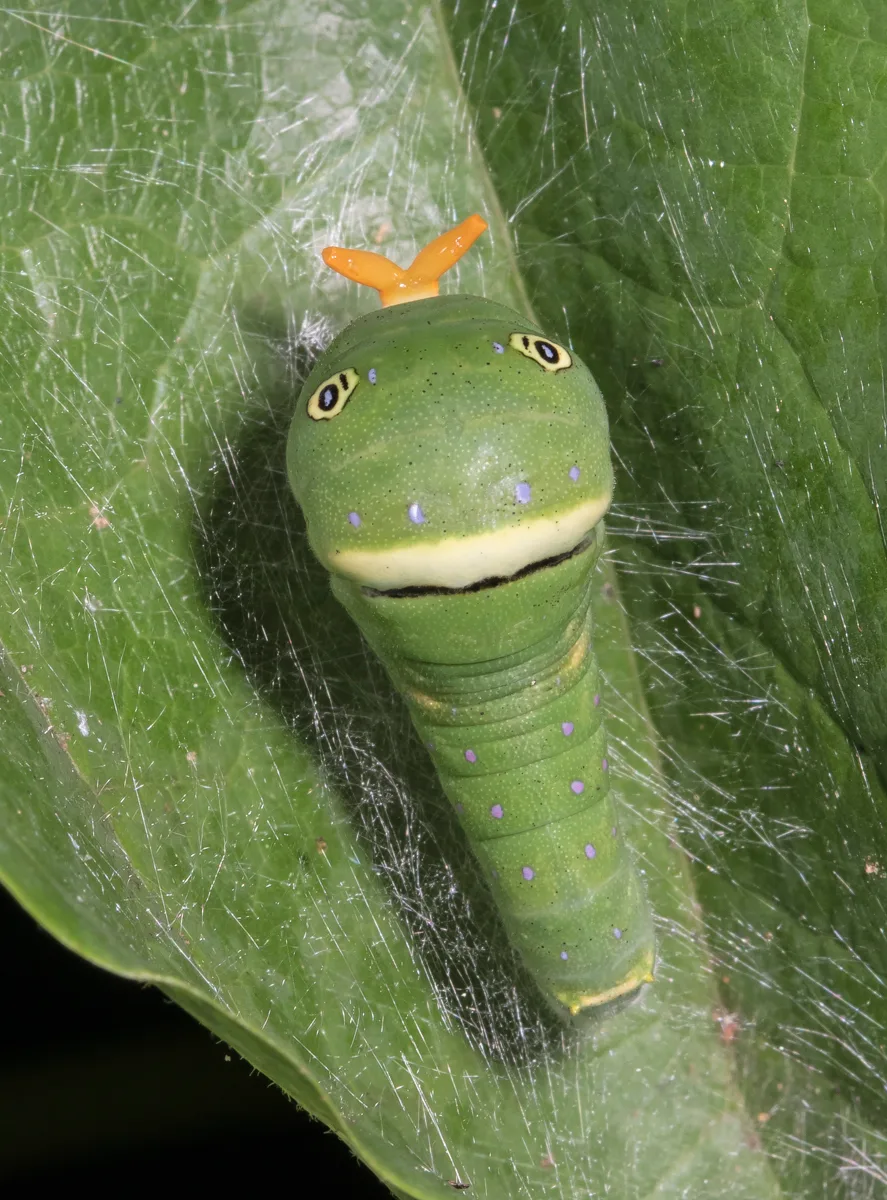
Image source: Bing (Web (fair-use with source credit))
Handling requires gentleness to avoid triggering defensive responses. Use soft brushes to transfer small larvae between containers. Larger individuals tolerate careful finger placement better than pinching.
Expect osmeterium deployment if stress levels exceed tolerance thresholds. Wash hands afterward since secretions irritate sensitive skin types. Teach children respectful interaction protocols before allowing direct contact.
Pupation preparation begins when wandering behavior becomes apparent. Provide upright twigs or textured surfaces for girdle attachment. Maintain moderate humidity to prevent desiccation during metamorphosis.
Avoid moving chrysalises unless absolutely necessary for safety reasons. Emergence timing varies based on temperature and photoperiod cues. Have nectar sources ready before anticipated adult eclosion dates.
Release captive-bred specimens near original collection sites only. Translocating insects risks introducing diseases to naive populations. Document rearing outcomes to contribute citizen science datasets responsibly.
Photography during each stage creates valuable reference material. Share observations with university extension programs supporting regional monitoring efforts. Responsible stewardship protects both individual specimens and wild gene pools.
Common Identification Mistakes and How to Avoid Them
Misidentifying actual bird droppings as caterpillars happens frequently. Real waste lacks consistent anatomical symmetry or texture patterns. Droppings appear random while larvae show deliberate bilateral design.
Check for prolegs or head capsules before getting excited. A gentle poke with a twig reveals movement instantly. Static lumps without response are almost certainly just waste.
Confusing citrus leafminer damage with larval feeding is another error. Leafminers create serpentine tunnels inside leaf tissue layers. Giant Swallowtail larvae chew irregular holes from outside edges.
Miners leave visible frass trails within transparent mines. Caterpillar damage shows clean bite marks along margins. Understanding this distinction prevents unnecessary panic about pest infestations.
Overlooking overwintering chrysalises during garden cleanup causes population loss. These pupae resemble dead twigs attached to stems vertically. Pruning without inspection destroys next year's generation accidentally.
Mark known pupation sites with flagging tape in autumn. Delay trimming those specific branches until spring emergence passes. Careful stewardship preserves local breeding stocks effectively.
Photographic challenges lead to false negatives in documentation. High contrast patterns fool camera autofocus systems regularly. Use manual focus locked on the white saddle patch.
Fill flash reduces harsh shadows that obscure key features. Shoot from directly above to capture dorsal markings clearly. Side angles often hide diagnostic traits behind body curvature.
Patience yields better reference images than rushed snapshots.
Assuming all brown caterpillars on citrus are Giants invites mistakes. Orange tortrix moth larvae also feed on these plants. They lack the distinctive white saddle marking entirely.
Tortrix larvae roll leaves into protective shelters while feeding. Giants feed openly without constructing silk retreats. Behavioral differences provide quick confirmation when visual cues fail.
Always cross-reference multiple identification characteristics before concluding.
Frequently Asked Questions About Bird Poop Caterpillars
Are bird poop caterpillars harmful to humans?
These caterpillars pose no danger to people or pets. They do not sting, bite, or carry toxins. The osmeterium secretion may irritate sensitive skin slightly.
Washing hands after handling prevents any minor reactions. They are completely safe for classroom observation projects. Supervised children can interact with them confidently under guidance.
What plants do Giant Swallowtail larvae eat?
Larvae feed exclusively on plants in the Rutaceae family. Cultivated citrus trees serve as primary hosts in gardens. Wild hosts include hop tree and prickly ash species.
They never damage vegetables or ornamental flowers. Planting native rutaceous shrubs supports wild populations naturally. Avoid pesticide use on these specific host plants.
How long does metamorphosis take for this species?
Summer pupae typically emerge as adults within two weeks. Overwintering chrysalises remain dormant for several months. Development speed depends heavily on ambient temperature conditions.
Warmer climates accelerate the complete life cycle significantly. Cooler regions extend pupal duration through winter diapause. Timing varies geographically across their broad North American range.
Why does my caterpillar smell like rotten oranges?
The fermented citrus odor comes from the osmeterium gland. This defensive organ extrudes when the larva feels threatened. Chemical compounds deter ants and parasitic wasps effectively.
The scent dissipates quickly once the gland retracts. Not all individuals produce equally strong odors consistently. Sensitivity to the smell varies among human observers too.
Can I move caterpillars to protect them from predators?
Relocating larvae short distances within the same property is acceptable. Moving them between properties or regions risks disease spread. Never transport insects across state or provincial boundaries.
Leave wild populations undisturbed whenever possible instead. Captive rearing should use locally sourced specimens only. Responsible practices protect genetic integrity of regional populations.

Similar Posts