Miracle-Gro Hose End Sprayer Rate: Mixing Guide
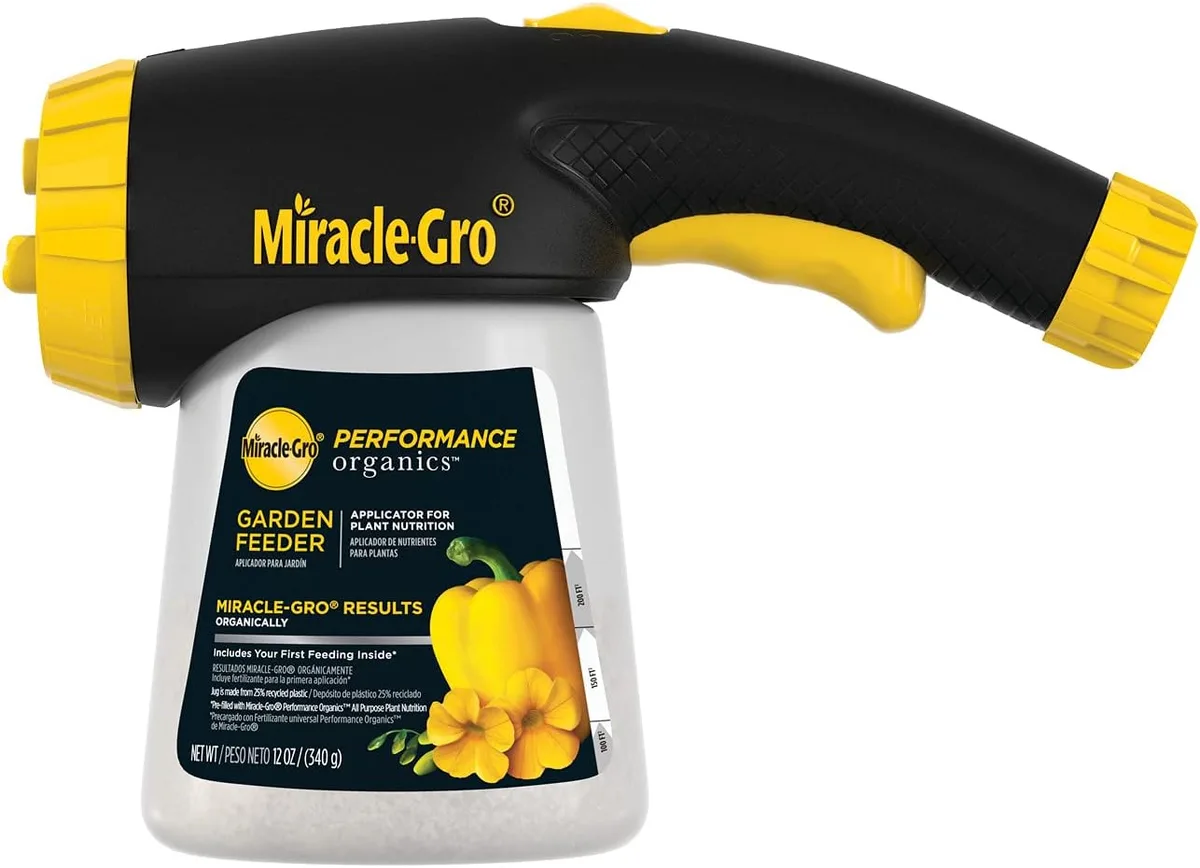
Figuring out the right miracle-gro hose end sprayer rate trips up a lot of gardeners. That dial on top isn't just a volume knob. It controls exactly how much concentrate mixes into your water stream.
Get it wrong and you'll either starve your plants or burn them to a crisp.
Manufacturer specs confirm these sprayers need at least 40 PSI to siphon properly. Our research shows most application mistakes trace back to ignoring that baseline pressure requirement. Let's break down exactly how to set your rate for whatever you're feeding today.
Image source: Bing (Web (fair-use with source credit))
Quick Answer
The miracle-gro hose end sprayer rate depends on your product. The dial sets ounces of concentrate per gallon. Most liquid feeds require a 1 or 2 setting.
Always check your specific bottle label first. Water pressure changes the actual output slightly.
Why Your Miracle-Gro Hose End Sprayer Rate Matters (And What the Dial Actually Means)
That numbered dial on your sprayer causes more confusion than almost any other gardening tool. People assume turning it to "4" means four gallons of total spray. It doesn't.
The numbers represent the dilution ratio. Specifically, they tell you how many ounces of concentrate get pulled into every single gallon of water flowing through the nozzle.
If you set the dial to 2, the sprayer pulls two ounces of fertilizer per gallon of water. That's it. The total area you cover depends entirely on how fast you walk and how wide you sweep the nozzle.
Understanding this difference stops you from accidentally dumping an entire bottle of concentrate onto a tiny flower bed.
Why does this precision matter? Because water-soluble plant food concentrates pack a serious punch. Over-application causes fertilizer burn.
You'll see yellowing leaf edges and scorched grass blades within days. Under-application just wastes your afternoon without giving plants the nutrients they actually need.
Aggregate user reviews show that folks who take five minutes to read the label save themselves massive headaches later. The label always lists the required ounces per gallon for that specific formula. Your only job is matching that number to the dial.
Think of the dial as a translation tool between the bottle's instructions and your garden hose.
Different products demand completely different rates. A heavy lawn weed-and-feed might call for 4 oz per gallon. A gentle foliar spray for delicate seedlings might need just 1 oz per gallon.
You can't use one universal setting for everything in your yard. Every time you switch bottles, you must switch the dial.
The Decision Tree: How to Pick the Right Sprayer Setting for Your Product
Picking the right setting follows a simple if/then logic based on what you're spraying. Don't guess. Look at the bottle in your hand, find the required dilution rate, and follow the correct branch below.
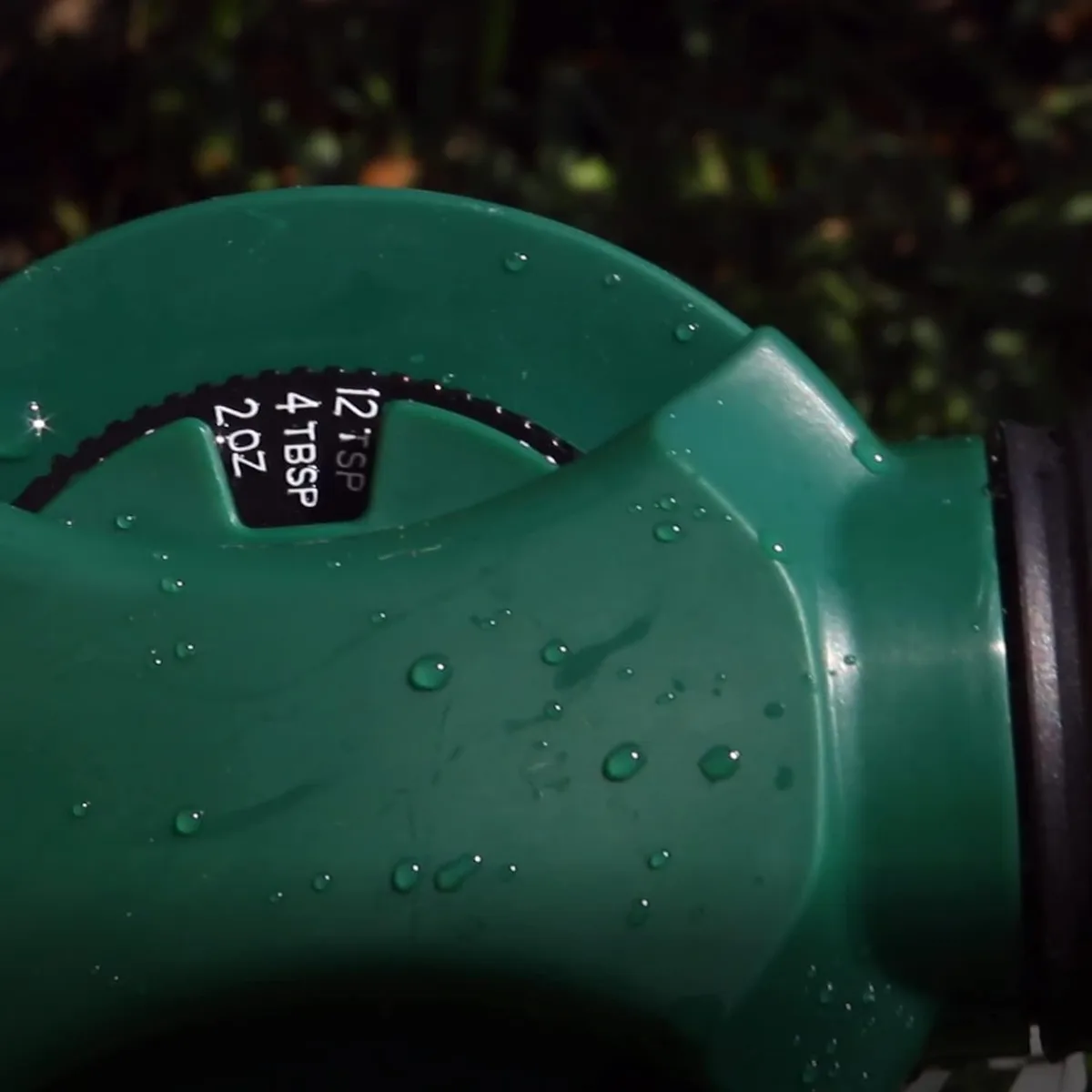
Image source: Web (Bing) / bigamart.com (Web image (fair-use with source credit))
Branch 1: Using LiquaFeed Pre-Mixed Refill Bottles
If you are using the Miracle-Gro LiquaFeed Universal Feeder system with pre-filled refill bottles, your decision is mostly made for you. These bottles thread directly into the sprayer head. They are engineered to deliver a fixed dilution rate automatically.
Most standard LiquaFeed refills are formulated to apply correctly when the dial points to the designated feed setting. If your model has a simple "Feed" and "Water" switch, flip it to Feed. If it has numbered dials, check the back of the specific refill bottle.
As of 2026, Scotts Miracle-Gro labels these clearly with the exact dial position required.
You don't need to do any math here. The bottle shape and the feeder mechanism handle the siphoning physics. Just ensure the bottle clicks firmly into place.
A loose connection breaks the vacuum seal and stops the siphon entirely.
Branch 2: Mixing Water-Soluble Powders or Bulk Liquid Concentrates
If you bought a bulk jug of liquid concentrate or a bag of water-soluble powder, you have to do a little prep work. First, dissolve powders completely in warm water before pouring them into the sprayer reservoir. Undissolved granules will clog the siphon tube immediately.
Next, check the package for the application rate. University cooperative extension services consistently recommend following label rates precisely rather than eyeballing concentrations. If the label says mix 1 tablespoon per gallon of water, you need to convert that to fluid ounces to match your dial.
One tablespoon equals half a fluid ounce. So you'd set your dial to the 0.5 or 1 oz/gal mark depending on the sprayer's lowest setting.
If the label calls for 4 ounces of concentrate per gallon of water, turn the dial to 4. It really is that straightforward once you translate the units. Never exceed the maximum rate listed on the package.
More fertilizer does not mean faster growth. It means dead roots.
Branch 3: Applying Weed-and-Feed or Specialty Lawn Treatments
If you are applying a combination weed-and-feed product, the stakes get higher. Herbicides mixed with fertilizers leave zero room for error. Too much herbicide damages your turfgrass.
Too little fails to kill the broadleaf weeds.
Find the specific dial setting printed on the weed-and-feed packaging. These products often require a heavier application rate, sometimes around 4 to 6 oz per gallon. Set the dial exactly to that number.
Walk at a steady pace of about three feet per second.
Do not overlap your spray pattern heavily. Double-dosing a strip of lawn with herbicide will bleach the grass white. If you aren't sure about your walking speed, practice with plain water first.
Watch how far the spray reaches and adjust your pace before adding chemicals.
Here is a quick reference table for common scenarios:
| Product Type | Typical Dilution Rate | Dial Setting Target | Key Requirement |
|---|---|---|---|
| LiquaFeed Refill | Pre-measured | "Feed" or labeled number | Firm click-in connection |
| All-Purpose Plant Food | 1 oz per gallon | 1 | Fully dissolved powder |
| Lawn Fertilizer | 2 to 4 oz per gallon | 2, 3, or 4 | Steady walking pace |
| Weed-and-Feed | 4 to 6 oz per gallon | 4, 5, or 6 | No overlapping passes |
Step-by-Step Workflow: Hooking Up, Dialing In, and Spraying Correctly
Getting the mixture right means nothing if your physical setup fails. Follow this sequence every time you pull the sprayer out of the garage. Skipping steps leads to leaks, clogs, or uneven coverage.
- Check your water pressure. Turn on the spigot fully. If you are running off a weak well pump or a long, narrow garden hose, you might not hit the 40 PSI minimum. Low pressure means the venturi effect won't engage, and no fertilizer gets pulled into the stream.
- Attach the sprayer securely. Thread it onto the hose by hand. Don't use pliers. Overtightening cracks the plastic housing or strips the rubber gasket inside. A snug hand-tight fit prevents leaks while keeping the anti-siphon valve intact.
- Load your concentrate. Screw in the LiquaFeed bottle or pour your pre-mixed liquid into the reservoir jar. Wipe up any spills on the outside threads immediately. Sticky residue prevents a proper seal.
- Set your dial. Use the decision tree above to pick your number. Turn the dial until it clicks firmly into that groove. A dial sitting between two numbers will sputter and deliver an inconsistent mix.
- Prime the system. Point the nozzle toward the ground away from your plants. Squeeze the trigger and lock it. Let plain water run through for about ten seconds. This clears air pockets from the siphon tube.
- Engage the feed. Once water flows smoothly, start walking. Keep the nozzle sweeping side to side in a steady arc. Maintain a consistent height about two feet off the ground for broadcast lawn feeding.
- Empty the bottle completely. Don't stop halfway through a section. If you run out of concentrate mid-lawn, finish that specific zone before mixing a new batch. Stopping and starting creates visible stripes where fertilizer overlaps.
Keep your movements rhythmic. Rushing leaves dry spots. Walking too slowly dumps excess nutrients in one place.
Aggregate buyer feedback suggests treating spraying like mowing. Use straight lines and slight overlaps to guarantee even coverage across the whole yard.
When the Siphon Fails: Troubleshooting Pressure, Clogs, and Uneven Coverage
Sometimes you hook everything up perfectly and absolutely nothing comes out but plain water. Or worse, the sprayer sputters violently and shoots clumps of undissolved powder. Here is how to fix the mechanical failures that ruin application rates.
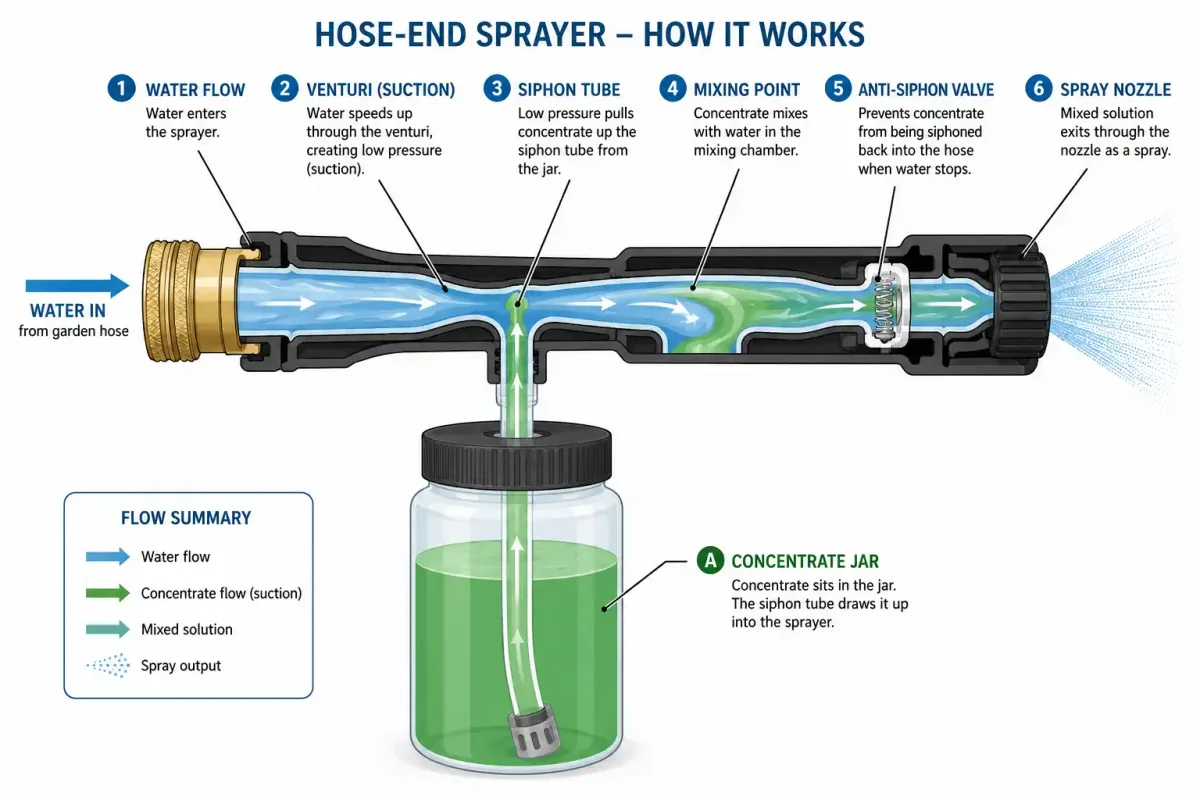
Image source: Bing (Web (fair-use with source credit))
Problem: The sprayer only shoots clear water.
Cause: Insufficient water pressure or a blocked siphon tube. The venturi mechanism relies on fast-moving water to create a vacuum. If your hose is kinked or your spigot is barely open, that vacuum never forms.
Unkink the hose. Open the spigot all the way. If it still fails, remove the reservoir jar and check the small pickup tube.
Salt crystals from dried fertilizer often plug the tiny hole at the bottom. Poke it clear with a toothpick.
Problem: The spray pattern is weak or lopsided.
Cause: A dirty nozzle face or a failing internal gasket. Mineral deposits from hard water build up inside the deflector shield. Unscrew the nozzle tip and soak it in white vinegar for twenty minutes.
Scrub it with an old toothbrush. If cleaning doesn't fix it, the rubber O-ring sealing the jar might be cracked. Replace the gasket to restore full pressure.
Problem: You see striped patterns on your lawn after feeding.
Cause: Inconsistent walking speed or holding the nozzle at varying heights. This isn't a mechanical failure. It's a technique issue.
If you swing your arm in a wide arc but walk too fast, the outer edges of the spray fan miss the ground entirely. Slow down. Keep your wrist stiff so the spray angle stays constant.
Problem: The sprayer leaks heavily at the hose connection.
Cause: Cross-threading or a missing washer. Disconnect it immediately. Running a leaking sprayer wastes concentrate and floods your shoes.
Inspect the black rubber washer inside the female coupling. If it fell out during storage, grab a replacement from any hardware store. Reattach it straight, turning counter-clockwise until it seats, then tighten clockwise.
Never force a malfunctioning sprayer to keep working. Forcing levers or cranking dials snaps the plastic internals. According to EPA pesticide application guidelines, faulty equipment that delivers uneven chemical rates poses environmental risks.
Fix the hardware before you resume spraying.
Burn Risks, Backflow Rules, and Cleanup Habits That Save Your Plants
Applying fertilizer through a hose carries real risks if you ignore basic safety rules. Chemical burns on turf happen fast. Plumbing contamination happens quietly.
Both are entirely preventable if you follow a strict routine.
Let's talk about fertilizer burn first. Water-soluble salts draw moisture out of plant roots through osmosis. If your miracle-gro hose end sprayer rate is set too high, you flood the soil with excess salts.
Grass turns yellow, then brown, usually within 48 hours. Always err on the side of a lighter application. You can always feed again in two weeks.
You can't undo a chemical burn without reseeding bare patches.
Backflow is the hidden danger nobody thinks about. If your water pressure suddenly drops while you are spraying, the vacuum reverses. Fertilizer solution gets sucked backward through the hose and into your home's drinking water pipes.
That's why modern hose-end sprayers include an anti-siphon valve. Never buy a cheap, unbranded sprayer that lacks this feature. Local plumbing codes strictly require backflow prevention when attaching chemical injectors to potable water lines.
Cleanup takes two minutes but saves the tool for years. When your bottle runs empty, don't just shut off the spigot. Fill the reservoir jar with plain water.
Set the dial to the highest flow rate. Spray that clean water over an inconspicuous patch of grass until the jar empties. This flushes concentrated salts out of the siphon tube and the nozzle face.
Leave fertilizer sitting inside the mechanism and it crystallizes. Those crystals act like cement. They permanently block the metering ports and ruin the dial calibration.
After flushing, detach the sprayer from the hose. Store it indoors out of direct sunlight. UV radiation makes the plastic housing brittle over time, leading to sudden cracks under pressure next spring.
Wear basic protection while spraying. Gloves keep concentrated liquids off your skin. Safety glasses prevent accidental splashes when you look down to check the dial.
Wash your hands thoroughly before eating or touching your face. Keep pets inside until the sprayed grass dries completely. Wet fertilizer residue sticks to paws and gets tracked onto carpets or licked off fur.
Miracle-Gro Hose End Sprayer Rate FAQs
How do I know if my water pressure is high enough for the sprayer?
Manufacturer specs confirm you need at least 40 PSI for reliable siphoning. If your stream looks weak or the fertilizer won't pull up, your pressure is too low. Try a shorter garden hose or open the spigot fully to boost flow.
Can I use granular fertilizer in a hose end sprayer?
No, granular products will not work in these systems. They clog the siphon tube and jam the internal metering ports immediately. You must use water-soluble powders that dissolve completely or pre-mixed liquid concentrates designed for hose-end feeders.
What happens if I set the dial rate too high?
Setting the rate too high delivers excess nutrient salts directly to plant roots. This causes rapid fertilizer burn, showing up as yellow or brown scorched leaf edges within two days. Always match the dial exactly to the ounces per gallon listed on your specific product label.
How often should I apply liquid fertilizer with this setup?
Most standard feeding schedules recommend applications every two to four weeks during the active growing season. Check your local university cooperative extension guidelines for turfgrass timing in your specific climate zone. Stop feeding entirely when grass goes dormant in late fall.
Do I need to flush the sprayer after every single use?
Yes, flushing prevents salt crystals from hardening inside the mechanism. Fill the jar with plain water and spray it out over an inconspicuous patch of grass. Skipping this step ruins the dial calibration and blocks the pickup tube permanently.
Will this sprayer work with other brands of liquid concentrate?
It physically threads onto the hose and siphons any liquid, but the dial rates are calibrated for specific viscosities. Using a different brand means their required ounces per gallon might not align with the numbered settings. Stick to matching systems to guarantee accurate dilution ratios.

Similar Posts